


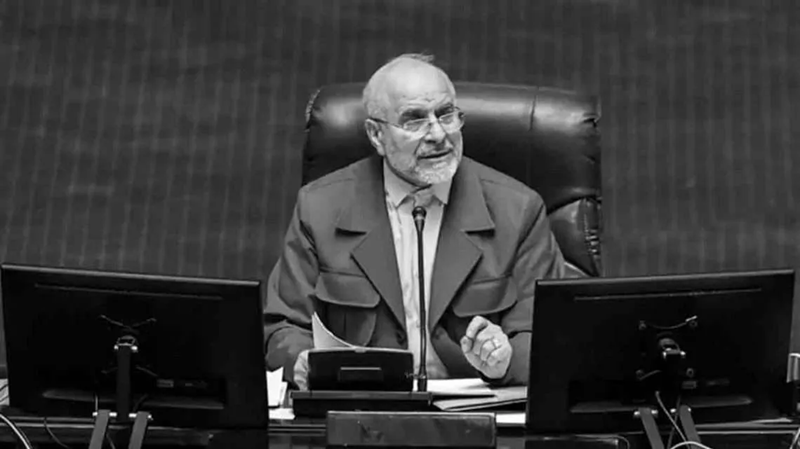

Official acknowledgment of 34% absolute poverty exposes the depth of Iran’s structural economic collapse and widening class divide.
New remarks by Mohammad-Bagher Ghalibaf, Speaker of Iran regime’s parliament, have laid bare the severity of the country’s economic breakdown. In recently published statements on household living conditions, Ghalibaf acknowledged that approximately 34 percent of Iran’s population is living in absolute poverty. In a country endowed with vast oil, gas, and mineral wealth, such an admission is striking and politically significant.
The comments were reported by the state-affiliated outlet Rouydad24 on 15 February 2026. According to the report, Iranian society has been divided into eight income “clusters.” Ghalibaf stated that the lowest cluster encompasses more than three income deciles, while the highest cluster includes only around 400,000 individuals. The implication is clear: poverty is no longer confined to the margins of society but has expanded deep into the broader population.
In economic terms, absolute poverty refers to the inability of households to meet basic subsistence needs such as adequate nutrition, housing, healthcare, and essential goods at prevailing prices. If 34 percent of the population falls below this threshold, this represents tens of millions of people struggling to secure minimum living standards. Such figures confirm that poverty in Iran is structural rather than temporary or cyclical.
The roots of this crisis lie in persistent macroeconomic instability. Iran has faced chronic high inflation for years, coupled with repeated currency devaluations and entrenched budget deficits. Inflation continuously erodes purchasing power, particularly when wage growth fails to keep pace with rising consumer prices. As the national currency weakens, the cost of imported goods and production inputs rises, further driving up domestic prices. Even households once considered lower middle class now face the risk of sliding into absolute poverty.
Ghalibaf proposed adjusting salaries twice annually to compensate for inflationary pressures. While periodic wage revisions may appear protective, their effectiveness depends on broader fiscal and monetary conditions. In an economy burdened by structural deficits and limited productive growth, wage increases that are not backed by sustainable revenue sources often translate into greater liquidity expansion. If financed through monetary means, such measures risk intensifying inflation, thereby neutralizing the intended benefit for workers.
Recent history supports this concern. Nominal wage increases in Iran have frequently lagged behind actual inflation rates, resulting in a continued decline in real incomes. Without controlling inflation and stabilizing the currency, administrative wage adjustments alone cannot reverse the downward trajectory of living standards.
Ghalibaf also emphasized better targeting of subsidies through welfare mechanisms. However, redistribution policies cannot succeed in isolation. Poverty reduction requires coherent coordination between fiscal discipline, monetary stabilization, anti-corruption measures, and structural reforms that stimulate productivity and investment. Statistical reclassification into income clusters, without systemic economic correction, cannot halt the expansion of absolute poverty.
The acknowledgment that one-third of the population lives in absolute poverty signals that the livelihood crisis has reached an undeniable stage. Rising costs of food, housing, and medical care now consume a disproportionate share of household income. Inequality is becoming more visible as wealth concentrates within a narrow upper stratum while the lower clusters expand.
In a resource-rich country, the spread of absolute poverty is not the result of natural scarcity but of governance failure and distorted economic management. Persistent inflation, institutional opacity, and entrenched corruption linked to power centers have undermined equitable distribution and sustainable growth.
The political implications are significant. When the Speaker of Parliament publicly concedes such figures, it reflects not transparency but the impossibility of denial. Prolonged economic hardship historically heightens social tension and unrest. If structural changes are not implemented and inflation remains uncontrolled, absolute poverty in Iran will likely deepen further, carrying consequences not only for economic stability but for the broader social and political future of the country.