


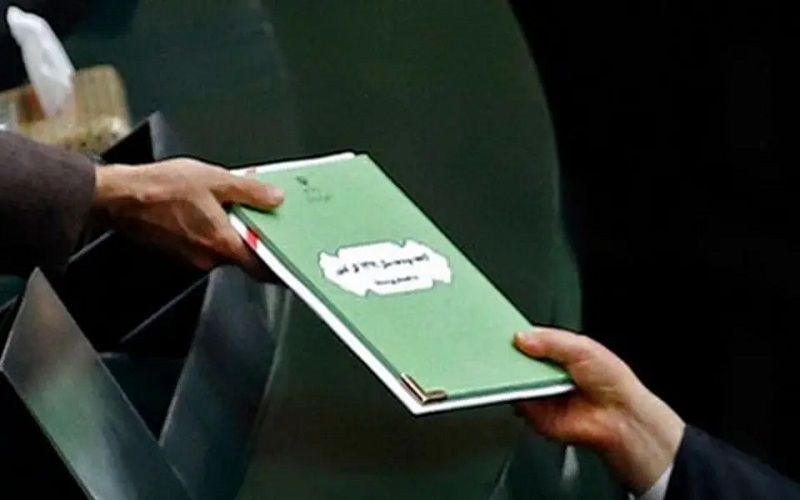

The Iranian regime’s 2025 budget bill reveals a significant increase in government ministry budgets, averaging a 40% rise compared to the previous year. Notably, alongside a sharp increase in military spending, the budget for the Islamic Republic of Iran Broadcasting (IRIB) alone surpasses the combined budgets of ten ministries.
Overview of Government Ministry Budgets
According to the 2025 budget bill, the total allocation for 19 government ministries stands at approximately 2.24 quadrillion tomans. The Ministry of Cultural Heritage and the Ministry of Intelligence have witnessed the most substantial budget increases, rising by 75% and 67%, respectively. The government’s proposal sets the 2025 budget for the Ministry of Intelligence at nearly 54 trillion tomans.
Several ministries have experienced budget increases exceeding 50%, including the Ministries of Labor, Energy, Education, and Sports and Youth. Meanwhile, four ministries—Industry, Mining and Trade; Roads and Urban Development; Culture and Islamic Guidance; and Science—have seen their budgets rise by 40% to 50%.
Other ministries, such as Health, Defense, Justice, and Interior, have budget increases between 30% and 40%. The budgets of the Ministries of Foreign Affairs, Economy, Communications, and Agricultural Jihad have increased by less than 30%.
However, in a striking contrast, the Ministry of Oil’s budget has plummeted by 92% compared to 2024, a decrease attributed to the separation of the National Oil Company’s finances from the ministry’s budget.
Budget Priorities and Employee Distribution
The three largest recipients of ministry funding are the Ministries of Health, Labor, and Education, which together account for over 63.5% of total government ministry allocations. Individually, the Ministry of Health receives 25.6%, Labor 20.2%, and Education 17.7% of the total ministry funds.
The Ministry of Education employs approximately 44% of all government workers, while the Ministry of Health accounts for around 23%.
Disproportionate Funding for State Broadcasting
The budget for the Islamic Republic of Iran Broadcasting (IRIB) has increased significantly, reaching 35 trillion tomans in 2025, compared to 24 trillion tomans in 2024. This means the IRIB’s budget surpasses the combined allocations of ten ministries and equals the total budget of the Ministry of Agricultural Jihad. Moreover, IRIB’s share of the general government budget is comparable to the total allocations for the Ministries of Oil, Justice, Foreign Affairs, and Cultural Heritage combined.
Pension Fund Allocations and Structural Reforms
The government has earmarked 777 trillion tomans for pension funds in 2025. Of this amount:
- 394 trillion tomans will be allocated to the National Pension Fund.
- 185 trillion tomans will go to the Military Pension Fund.
- 180 trillion tomans will be used to adjust the salaries of national, military, and steel pensioners.
- More than 16 trillion tomans will be allocated to the Steel Fund.
- Less than two trillion tomans will be provided to the Ministry of Intelligence Pension Fund.
The government has also announced plans to merge three pension funds—the Steel Fund, Government Fund, and Homa Fund—which collectively serve over 1.7 million pensioners. Economic hardship and inflation have led to a surge in protests by retirees in recent years, as pensioners struggle to meet their basic living needs.
Conclusion
Iran’s 2025 budget bill reflects significant shifts in government spending, with notable increases in military and intelligence budgets, as well as disproportionate allocations to state-run broadcasting. At the same time, pension funds continue to face financial strain, and the drastic budget cut for the Ministry of Oil highlights structural changes in the country’s economic planning. These budgetary decisions are likely to have profound economic and social implications, particularly for retirees, government employees, and the broader workforce.