


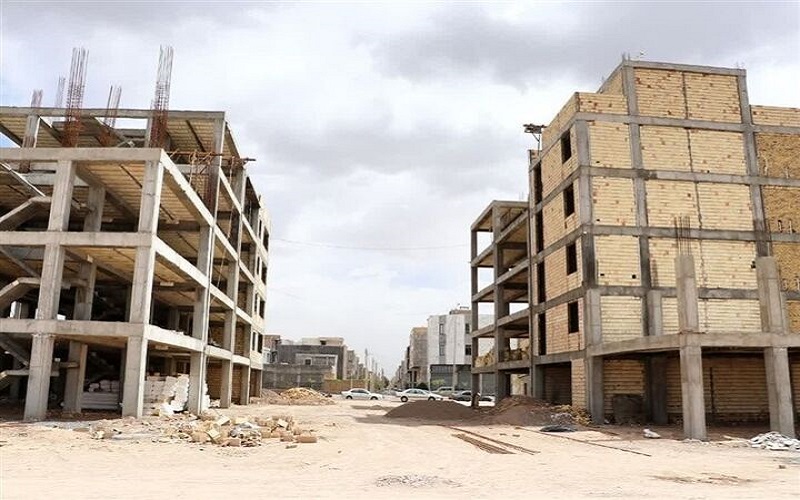

A recent report has shed light on the numerous challenges plaguing the “Iranian National Housing” initiative, including contractor disinterest, unaffordable costs for applicants, issues with bank financing, and difficulties in securing land. These challenges have hampered the project’s progress, raising questions about the feasibility of the government’s housing policies.
Historical Context
The Iranian National Housing project traces its roots to the Mehr Housing Project initiated under former President Mahmoud Ahmadinejad. Successive administrations, including those of Hassan Rouhani and Ebrahim Raisi, have continued similar programs. These projects rely on a model where the government provides free land, while construction costs are covered through bank loans and applicants’ contributions. However, the effectiveness of this approach has been undermined by various systemic issues.
Escalating Costs and Inflation
The report highlights the rising construction costs as a major obstacle. In 2020, construction costs were estimated at 2.7 million tomans per square meter, increasing to 4.5 million tomans in 2021. By the winter of 2023, these costs had surged to 8.3 million tomans per square meter due to inflation and economic adjustments. This sharp increase has discouraged contractors from participating and placed a significant financial burden on applicants.
Financial Burdens on Applicants
The financial strain on applicants is evident. Of the 5.5 million individuals registered in the “National Housing Movement Plan,” only 805,000 have managed to open accounts, and just 204,000 have signed contracts. High interest rates on bank loans and limited financial resources further exacerbate the problem, making housing inaccessible for many, especially low-income families.
Land Provision and Project Delays
Securing land for these projects has proven challenging in certain areas, leading to delays and escalating costs. This issue has been particularly pronounced in newly developed regions and cities, further complicating project timelines.
Legislative and Expert Concerns
Nadergholi Ebrahimi, a member of parliament representing Arak, voiced concerns about the poor progress of national housing projects. He highlighted the 8100-unit housing project in Arak, which has seen less than 20% completion after three years. Ebrahimi also advocated for changes in the operating bank for a segment of the project to alleviate stagnation in financing.
Independent analysts and economic experts paint an even grimmer picture. They note that rising costs and stagnant wages have forced many potential applicants out of the housing market. According to Khabar Online, a housing analyst stated that the primary driver of “housing poverty” is the disproportionate rise in housing expenses compared to incomes. The situation is particularly dire for the lowest four income deciles, who have entirely lost the ability to purchase homes.
Widening Poverty Gap
Speaker of Parliament Mohammad Bagher Ghalibaf highlighted that up to 70% of household income in Tehran is spent on rent. Official statistics further reveal a sharp decline in living standards. Between 2016 and 2022, over 48% of Iranian tenants fell below the poverty line. By the end of 2022, the overall poverty rate in Iran exceeded 33%, a figure many experts believe has since surpassed 50% due to inflation, currency devaluation, and declining real wages.
Distrust in Official Statistics
Experts have expressed skepticism regarding government-reported statistics, accusing authorities of manipulating data to present a more favorable image of the housing crisis. The gap between official narratives and on-the-ground realities underscores the deepening housing crisis.
A Longstanding Policy Failure
The housing crisis in Iran reflects decades of ineffective policies that have failed to address the root causes of the problem. Instead of improvement, the situation has steadily deteriorated, leaving millions of Iranians struggling to secure adequate housing. Comprehensive reforms and a reevaluation of the current housing strategy are essential to address these persistent issues effectively.