


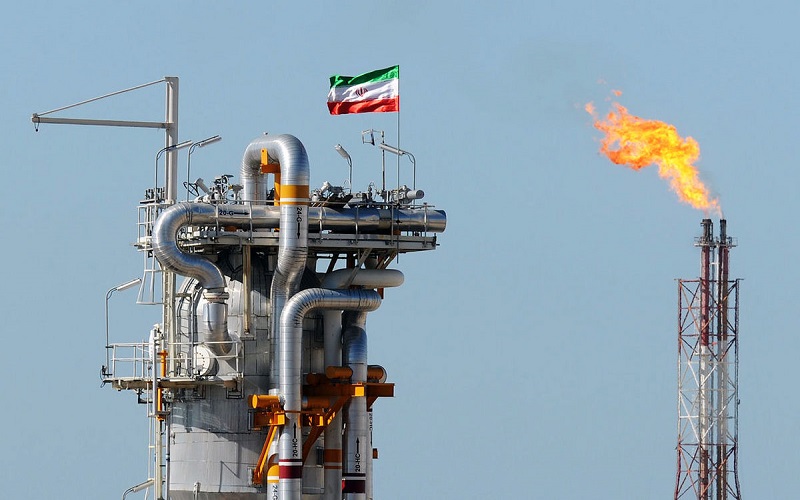

The Iranian regime is grappling with mounting pressure on its oil trade as new measures by China and the United States threaten to tighten the stranglehold on its primary source of income. Recent developments in China’s Shandong port and heightened U.S. sanctions have created significant obstacles for Tehran’s oil exports.
China’s Shandong Port Blocks Sanctioned Oil Tankers
China’s Shandong province, which plays a critical role in importing oil from Iran, Russia, and Venezuela, has announced a ban on U.S.-sanctioned oil tankers entering its port complex. Shandong, a hub for independent refiners, accounted for nearly 1.74 million barrels per day of oil imports from these three countries last year—representing about 17% of China’s total oil imports, according to Kpler, a global trade intelligence company.
The directive, issued on Monday, prohibits the docking, discharging, or servicing of tankers listed by the U.S. Treasury Department’s Office of Foreign Assets Control (OFAC). The Shandong Port Complex, which oversees key terminals like Qingdao, Rizhao, and Yantai, is central to the importation of heavily discounted embargoed oil. The ban comes after the sanctioned tanker Elise 2 unloaded its cargo in Yantai earlier this month.
While a subsequent statement from Shandong Port indicated that the ban’s impact on independent refineries would be limited, the policy is expected to increase transportation costs for refiners reliant on discounted crude from Iran, Russia, and Venezuela.
U.S. Sanctions Further Squeeze Iranian Oil
Adding to Tehran’s woes, the United States recently imposed sanctions on 35 tankers linked to Iran’s shadow fleet, which facilitates covert oil shipments. The fleet, comprising approximately 669 tankers, has been instrumental in transporting Iranian crude to global markets under the radar. The new sanctions have already driven up logistics costs and caused the price of Iranian crude sold to China to hit multi-year highs.
Donald Trump, who will assume the U.S. presidency on January 20, is expected to reinstate his administration’s “maximum pressure” strategy. During his first term, Trump’s policies drastically reduced Iran’s oil exports, depriving the regime of critical revenue. Analysts anticipate that his return to power will usher in an era of even stricter enforcement measures.
Stranded Iranian Oil Highlights Longstanding Challenges
Compounding the Iranian regime’s difficulties is the issue of 25 million barrels of oil stuck in Chinese ports since 2018. Valued at $1.75 billion at current prices, this oil remains unsold due to sanctions. Initially delivered under waivers granted by the Trump administration, the oil was stored in tanks in Dalian and Zhoushan. However, after the waivers were rescinded in 2019, the oil failed to find buyers and has since accrued significant storage fees.
Negotiations between Iranian officials and Chinese storage operators have intensified in recent weeks. Iran’s Foreign Minister Abbas Araghchi’s recent visit to Beijing reportedly yielded some progress, though details remain sparse. The Iranian regime faces logistical hurdles in re-exporting the stranded oil, as it would require ship-to-ship transfers and redocumentation to circumvent sanctions.
Tehran’s Reliance on a Shadow Fleet
Despite the challenges, the Iranian regime has developed a robust shadow trade network to sustain its oil exports. Most Iranian crude destined for China is redocumented as non-Iranian to evade sanctions. However, the stranded oil, documented as Iranian at the time of delivery, underscores the limitations of these covert operations.
China, which rejects unilateral sanctions, continues to buy about 90% of Tehran’s oil exports, benefitting from steep discounts. Yet the storage fees and logistical challenges associated with the stranded oil highlight the precarious nature of Iran’s reliance on shadow trade.
Outlook
The Iranian regime’s ability to navigate these challenges will significantly impact its economic stability. As China tightens its regulations on sanctioned oil and the U.S. ramps up pressure, Tehran faces an uphill battle to sustain its oil revenues. The convergence of global actions against Iranian crude underscores the increasing isolation of the regime in international markets.