


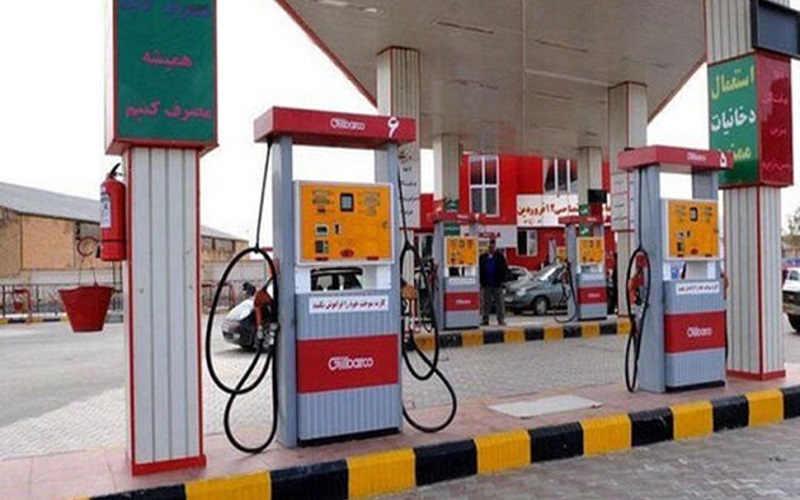

The issue of gasoline shortages and pricing has come under intense scrutiny in Iran, with rising consumption and limited production creating a serious imbalance. This challenge, exacerbated by holiday traffic surges and long-standing infrastructure problems, has brought the topic of gasoline price hikes back into the spotlight. Amid this, officials are beginning to hint at possible solutions, including controversial price increases, which could provoke public backlash reminiscent of past unrest.
Gasoline Shortages and Public Frustration
In recent weeks, social media has been flooded with images and videos showing long lines at gas stations, many of which were closed due to fuel shortages. The problem has been particularly acute in Iran’s northern provinces, where summer travelers encountered severe shortages, leading to kilometers-long queues at petrol stations and gridlocked highways.
Critics have pointed out the government’s failure to invest in tourism infrastructure in these provinces. This has drawn unfavorable comparisons to the extensive planning for religious events like the Arbaeen pilgrimage. Even some members of parliament, such as Jabar Kuchakinejad, have admitted that gasoline supplies could have been better managed, noting that some regions went two days without fuel, which led to the closure of gas stations in Gilan Province.
Blame Game and Deflection
In response to the gasoline crisis, some members of the current administration have placed blame on the previous government, claiming that gasoline reserves have dropped by 40% compared to the previous year. Others speculate that the shortages may be part of a strategy to justify an upcoming price hike. President Masoud Pezeshkian has hinted at this, stating in a press conference that while price increases may trigger protests, “we cannot ignore imbalances just because some will protest.”
Currently, Iran consumes an average of 120 million liters of gasoline per day, while domestic production hovers around 102 million liters. This 18-million-liter gap is bridged by imports, which can increase to as much as 30 million liters daily during peak periods like the Nowruz holiday. In late August, reports showed consumption spiking to 142 million liters per day—well beyond the country’s production capacity.
Underlying Causes of the Gasoline Crisis
While regime officials have frequently blamed the public for “misuse” of resources, experts argue that the real issue lies in the inefficiency of domestically produced vehicles. Iranian-made cars consume between eight and twelve liters of gasoline per 100 kilometers, far higher than the international standard of around five liters.
With over 21 million light vehicles and 12.5 million motorcycles in use—many of them outdated—high fuel consumption has become a persistent problem. Statistics show that over 11 million motorcycles and 1.3 million old cars consume approximately 46 million liters of gasoline daily, adding to both the fuel crisis and the nation’s growing air pollution problem. For many low-income Iranians, these old vehicles are a necessity, serving as their primary mode of transport and, in many cases, their source of livelihood. Without sufficient government support, replacing these vehicles with more fuel-efficient models is simply not an option for many.
Experts suggest that replacing outdated vehicles with more efficient ones could save up to 27 million liters of gasoline per day. However, even with such a replacement, the core issue—high consumption rates from domestically produced vehicles—would persist. Initiatives like increasing the use of compressed natural gas (CNG), which could have mitigated the imbalance, have either stalled or failed to materialize.
Investment Failures and Future Risks
The gasoline crisis, much like Iran’s electricity and gas shortages, can be traced back to the regime’s refusal to make necessary investments in production infrastructure. Ahmad Maroufkhani, head of the Oil, Gas, and Petrochemical Products Exporters Union, has warned that Iran could face a daily gasoline shortfall of 10 million liters by 2025. He also predicted that diesel shortages will emerge during the winter months.
According to Maroufkhani, poor planning in consumption management and inadequate investment in refineries are the primary drivers of the crisis. Despite the country’s growing need for gasoline, many petrochemical companies continue to export production additives, further worsening the situation.
In an interview with ILNA, Maroufkhani supported a gasoline price hike as a means of controlling consumption but emphasized the need to minimize its ‘negative effects’ through ‘cultural and social measures.’ President Pezeshkian has echoed these sentiments, suggesting that any economic ‘surgery’ will only take place with the public’s ‘information and consent.’
Price Hike Controversy and Public Sentiment
Many Iranians remain deeply skeptical of any proposed price increases. They argue that the government could better address budget shortfalls by cutting funding to proxy groups, religious institutions, and state-sponsored media, rather than burdening the public with higher fuel costs. These concerns are grounded in the memory of the November 2019 protests, when the government unexpectedly tripled gasoline prices. The resulting public outrage led to widespread protests, which were brutally suppressed by the regime, leaving thousands dead, injured, or imprisoned.
As Iran continues to grapple with gasoline shortages, the regime’s approach—whether through price hikes or other measures—remains a point of contention. With public dissatisfaction already at a high point, any missteps could lead to further unrest, reminiscent of the protests of 2019.