


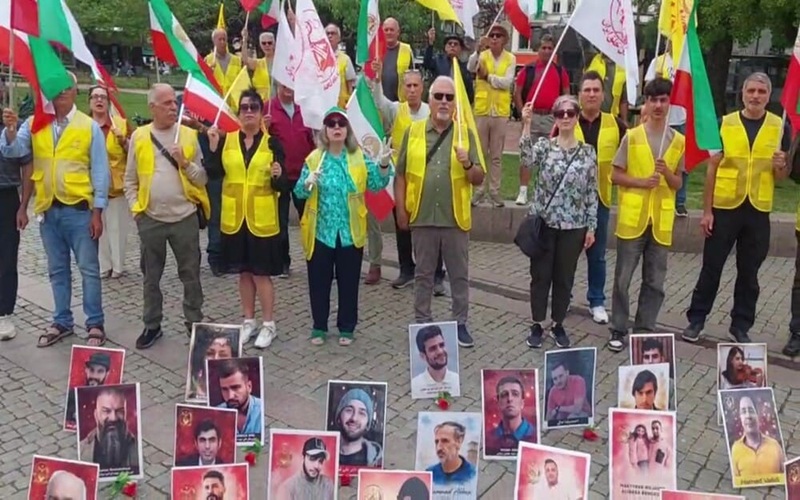

As Iran faces a decisive moment in its modern history, the upcoming June 20 gathering in Paris represents more than a commemoration of resistance. It is a demonstration that the struggle for a democratic republic remains alive, organized, and determined.
Every nation has moments that transcend the calendar and become part of its political identity. For the Iranian people and their organized resistance, June 20 is one of those moments.
It is not simply the anniversary of a historical event. It represents a defining line between submission and resistance, between accommodation with tyranny and the determination to confront it regardless of the cost.
This year, as thousands prepare to gather in Paris, the significance of that choice is more relevant than ever.
The Iranian regime is facing one of the most profound crises in its history. Years of economic collapse, political repression, corruption, regional adventurism, and international isolation have eroded its legitimacy. Yet history repeatedly demonstrates that the weakening of a dictatorship alone does not guarantee freedom. The decisive question is what political alternative stands ready to shape the future.
That is why the Paris gathering matters.
A Demonstration of Political Continuity
For decades, the Iranian Resistance has endured executions, imprisonment, exile, torture, and relentless repression. Entire generations have paid a heavy price simply for insisting that the Iranian people deserve the right to choose their own future.
The significance of June 20 lies precisely in that continuity.
The gathering is not an exercise in nostalgia, nor is it merely a memorial for those who sacrificed their lives. It is a public demonstration that the movement they built continues to exist and continues to pursue the same objective: a democratic republic based on popular sovereignty.
The regime has spent decades attempting to erase this history through censorship, propaganda, and violence. Yet every year the memory survives because it is rooted not only in the past but also in the unresolved demands of the present.
Rejecting Both Forms of Dictatorship
The political importance of this year’s rally extends beyond opposition to the current regime.
Iran today faces competing visions for its future. One seeks to preserve authoritarian rule under the banner of religion. Another seeks to revive hereditary rule under the banner of nostalgia.
Both claim to offer solutions. Both ultimately deny the Iranian people full ownership of their political destiny.
The central message emerging from the democratic opposition remains clear and consistent: Iran needs neither a supreme leader nor a monarch.
The debate is not merely about personalities or political factions. It is about the principle of sovereignty itself.
A free Iran cannot belong to a ruling cleric, a royal family, or any unelected authority. It must belong to its citizens.
That principle has become increasingly important as some political actors attempt to present monarchy as a democratic alternative to the current regime. The experience of Iran’s modern history demonstrates that replacing one form of authoritarianism with another cannot resolve the country’s fundamental crisis.
Why Paris Matters Now
The timing of the gathering is particularly significant.
Inside Iran, political prisoners continue to face severe repression. Families of executed dissidents continue to seek justice. Women continue to challenge institutionalized discrimination. Young people continue to demand freedoms that remain systematically denied.
At the same time, the regime’s internal vulnerabilities are increasingly visible.
Under these circumstances, international demonstrations serve a critical political function. They provide a platform for amplifying the voices that the regime seeks to silence. They remind democratic governments that the Iranian people possess an organized alternative to both religious dictatorship and monarchist restoration. They also send a message to those inside Iran that their struggle has not been forgotten.
Mass mobilization matters because visibility matters. Dictatorships thrive when they convince people that resistance is isolated and futile. Large-scale demonstrations challenge that narrative.
A Gathering With Strategic Consequences
The Paris rally should therefore be understood not simply as an event but as a political statement.
Every participant represents a rejection of historical amnesia. Every banner represents a refusal to normalize repression. Every voice contributes to a broader declaration that the struggle for freedom in Iran remains active and organized.
For supporters of democracy, the gathering offers an opportunity to reaffirm a vision of Iran that rejects both theocracy and monarchy, embraces political pluralism, and places sovereignty firmly in the hands of the people.
The event also serves as a reminder that genuine democratic change requires more than criticism of the existing regime. It requires commitment, organization, and sustained political engagement.
The Choice Facing Iran
The central question confronting Iran today is not whether change will come. The pressures facing the regime make that increasingly difficult to deny.
The real question is what kind of change will emerge.
Will Iran move toward a democratic republic founded on the principles of popular sovereignty, equality, and political freedom? Or will old forms of authoritarianism attempt to repackage themselves as solutions to the country’s crisis?
That debate will shape Iran’s future for years to come.
The June 20 gathering in Paris is important because it places that choice before the international community and before Iranians themselves. It declares that there is an alternative to both the ruling theocracy and the politics of restoration.
For that reason, Paris this year is more than a city and more than the site of a demonstration.
It is a political crossroads.
It is where the memory of sacrifice meets the demands of the present.
And it is where thousands will gather to affirm that the future of Iran belongs neither to the turban nor to the crown, but to the people themselves.