


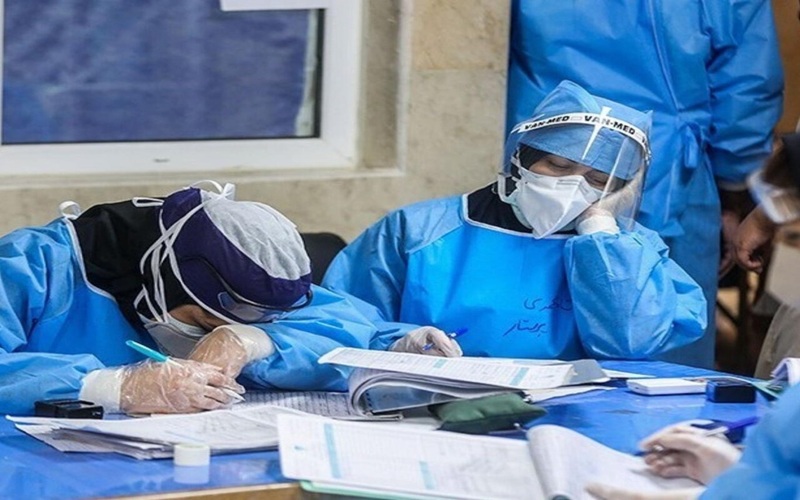

Officials acknowledge that low wages, poor working conditions, and economic hardship are driving trained nurses out of hospitals, threatening the future of healthcare across the country.
A Healthcare Workforce in Retreat
Iran’s healthcare system is confronting an increasingly severe staffing crisis as growing numbers of nurses leave hospitals, abandon the profession, or seek opportunities abroad.
What was once described by officials as a manageable workforce challenge has evolved into a structural crisis that threatens the long-term stability of the country’s healthcare sector. Recent remarks by senior representatives of the Nursing Organization suggest that the problem extends far beyond emigration. A significant number of trained nurses are now choosing to leave healthcare altogether because the profession no longer provides economic security or acceptable working conditions.
The admission is particularly significant because it comes from within the regime’s own healthcare establishment, underscoring the scale of a problem that nurses and labor activists have been warning about for years.
Migration Is Only Part of the Story
According to comments published by the state-affiliated newspaper Tose’e Irani on June 3, 2026, Yusef Rahimi, First Vice Chairman of Iran’s Supreme Nursing Council, warned that the loss of nursing personnel is accelerating and cannot be explained solely by migration.
He acknowledged that many healthcare professionals are abandoning nursing entirely and pursuing alternative occupations that offer better financial prospects.
The statement highlights a troubling reality: for many young Iranians who invested years in nursing education, remaining in the profession is no longer viewed as a rational economic choice.
Rahimi explained that numerous nursing students and graduates now prefer working in private clinics, providing independent healthcare services, or entering completely unrelated occupations rather than continuing employment in hospitals. Some, he noted, have even turned to brokerage and intermediary businesses that offer higher earnings than healthcare work.
Such admissions reveal a profound imbalance within Iran’s labor market, where highly trained medical professionals increasingly find greater financial rewards outside the healthcare system than within it.
The Global Competition for Healthcare Workers
The crisis is unfolding at a time when healthcare workers are in high demand worldwide.
Rahimi cited estimates from the World Health Organization indicating that the world faces a shortage of between 12 and 15 million nurses. As countries compete to recruit qualified healthcare personnel, Iranian nurses have become attractive candidates for international employers seeking skilled workers.
This global demand has created powerful incentives for migration, particularly when combined with deteriorating domestic conditions.
For many nurses, the choice is increasingly straightforward: remain in an overburdened healthcare system with low pay and limited prospects, or seek professional opportunities abroad where compensation, working conditions, and career development are substantially better.
The result is a growing outflow of human capital that Iran can ill afford to lose.
The Real Problem Is Retention, Not Recruitment
One of the most revealing aspects of Rahimi’s remarks was his criticism of policies aimed at increasing student admissions to nursing programs.
According to him, Iran already has more than 200 nursing schools and no fundamental shortage of nursing students. The real challenge is not attracting new entrants to the profession but retaining those who have already been trained.
He argued that expanding enrollment without addressing workplace conditions fails to solve the underlying problem.
This assessment exposes a recurring pattern in the regime’s approach to public-sector crises. Rather than addressing structural deficiencies such as low wages, excessive workloads, inadequate staffing levels, and declining professional standards, authorities often attempt to compensate through numerical expansion.
Yet producing more graduates does little to resolve a crisis when growing numbers of qualified professionals are choosing not to remain in the field.
Rahimi also warned that overcrowded classrooms, in some cases containing up to 80 students, are negatively affecting educational quality, raising concerns about the future training of healthcare workers.
A Crisis Years in the Making
The nursing shortage did not emerge overnight.
For years, healthcare workers and labor organizations have reported worsening conditions across Iranian hospitals. Chronic staff shortages have led to mandatory overtime, excessive workloads, burnout, and declining morale.
Many nurses have repeatedly staged protests over unpaid wages, poor compensation, and difficult working conditions. Others have described working under intense pressure while struggling to meet their own basic living expenses.
The COVID-19 pandemic further exposed the vulnerabilities of the healthcare system, placing extraordinary demands on medical personnel while doing little to address long-standing structural problems.
Today, the consequences of those failures are becoming impossible to ignore.
The Human Cost of Policy Failure
At its core, the nursing crisis is not simply a labor-market issue. It is a warning sign about the broader condition of Iran’s public services.
Every experienced nurse who leaves a hospital represents not only a loss of expertise but also a reduction in the quality and accessibility of care available to patients. As staffing shortages grow, the burden on remaining healthcare workers increases, creating a cycle that encourages even more departures.
The consequences ultimately fall on ordinary citizens, who face longer waiting times, reduced access to care, and greater pressure on an already strained healthcare system.
A System Unable to Retain Its Talent
The recent statements by senior nursing officials reveal a reality that can no longer be denied: Iran’s healthcare crisis is not primarily caused by a lack of trained personnel. It is the result of a system that has become increasingly incapable of retaining its most valuable professionals.
Whether through emigration or career abandonment, the steady departure of nurses reflects deeper economic and institutional failures that extend far beyond the healthcare sector.
Unless meaningful improvements are made to wages, working conditions, professional recognition, and economic stability, the exodus is likely to continue.
And as more nurses walk away from the profession, the cost will be measured not only in lost talent, but in the future health and well-being of millions of Iranians who depend on a functioning healthcare system.