


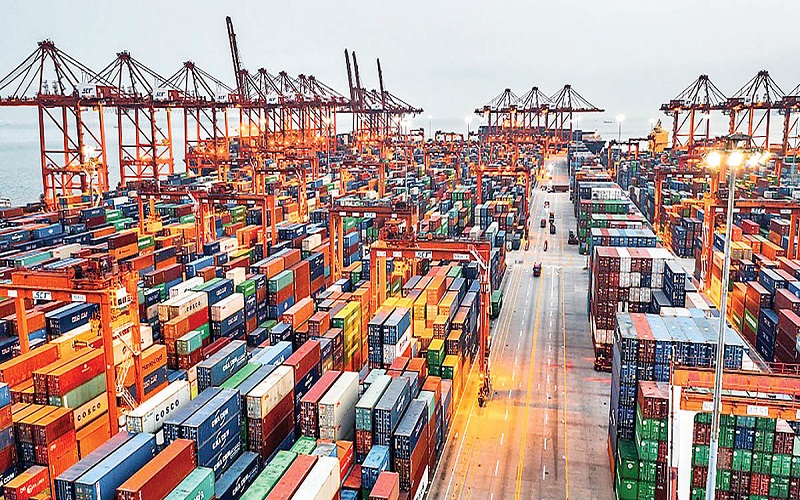

A new report by the Iranian Parliament Research Center reveals that the Iranian regime recorded a trade deficit of $7 billion in the first half of the Persian year 1403 (March–September 2024), marking the worst six-month trade balance in recent years.
According to the report, Iran’s imports during this period reached $33 billion, while exports amounted to just $26 billion. This growing trade imbalance, the report notes, is part of a trend that began in 2021 and shows no signs of reversal.
A Shift from Surplus to Deficit
Between 2011 and 2018, Iran maintained a relatively balanced or positive trade position. However, this changed dramatically after 2018, when U.S. President Donald Trump unilaterally withdrew from the Joint Comprehensive Plan of Action (JCPOA) and reimposed sweeping sanctions under a “maximum pressure” campaign against the Iranian regime.
This campaign, widely credited with restricting Iran’s access to global markets, has been reactivated during Trump’s second term, which began in January 2025, even as new rounds of negotiations are reportedly underway.
Import Costs Rise, Export Revenues Fall
Another key factor contributing to the widening trade deficit is the declining value of Iran’s exports relative to the rising cost of its imports. As the report highlights, Iran is increasingly paying more for what it brings in than it earns from what it sells abroad. This unfavorable shift in terms of trade reflects both external sanctions and internal inefficiencies.
Overreliance on a Handful of Trade Partners
The report, titled “A Review of the Status of Iran’s Foreign Trade in the First Half of 1403”, also criticizes the regime’s overdependence on a limited number of trading partners. More than 60 percent of Iran’s total foreign trade is concentrated with just three countries: the United Arab Emirates, China, and Türkiye. This figure has more than doubled since 2003, when their combined share was significantly lower.
Such heavy reliance on a few partners leaves Iran vulnerable to economic and political shifts in these countries and limits its flexibility in international trade.
Export and Import Highlights
Iran’s main export commodities in the first half of 2024 included natural gas, petrochemical products, and steel. Agricultural goods and construction materials like stone made up a smaller portion of exports.
On the import side, the top three commodities were gold, corn, and mobile phones. Notably, gold imports surged to over $3 billion—up from just $466 million during the same period in 2023—raising concerns about capital flight and currency instability.
Fuel Smuggling: The Shadow Export
The report also sheds light on one of Iran’s most lucrative unofficial exports: fuel smuggling. Thanks to fixed domestic fuel prices and a rising exchange rate, smuggling fuel across borders has become highly profitable.
In 2016, when exchange rates were relatively stable and fuel prices had been partially adjusted, fuel smuggling was estimated at $500 million. By 2022, that figure had skyrocketed to approximately $11 billion, illustrating the scale of economic leakage from the official economy.
Conclusion
Iran’s widening trade deficit is the result of a confluence of structural weaknesses, including sanctions, poor trade diversification, and misaligned pricing policies. Without meaningful economic reform and improved international relations, the country’s trade performance is likely to remain under strain—further deepening the challenges facing its already struggling economy.