


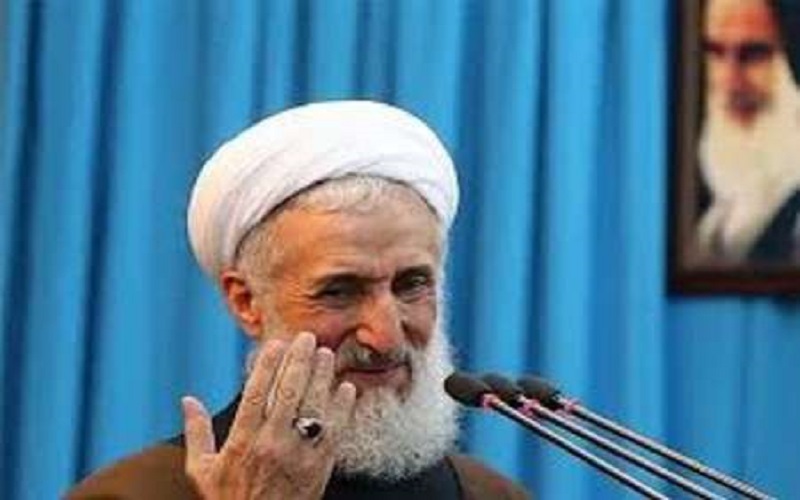

The recent arrest of the two sons of senior Iranian cleric Kazem Seddiqi has ignited widespread reactions across state-run Iranian media and social platforms, shedding light once again on the deep-rooted corruption within the Iranian regime’s power structure.
Kazem Seddiqi, the interim Friday Prayer Imam of Tehran and head of the Headquarters for Encouraging Good and Forbidding Evil, is a well-known loyalist to Supreme Leader Ali Khamenei.
Yet reports confirm that his sons, Mohammad Mehdi and Mohammad Hossein Seddiqi, were arrested on charges of financial misconduct. The arrests were carried out by the IRGC’s Intelligence Organization in coordination with the judiciary, according to a June 9 report by the state-run Defa Press News Agency.
The report stated plainly that the arrests were “on economic charges,” adding that the process of addressing corruption had gained momentum following Khamenei’s recent speech to provincial governors. In that speech, Khamenei warned regime officials and their relatives about engaging in financial dealings and emphasized the need to combat corruption. However, critics argue that these arrests serve more as a diversion than a genuine crackdown, pointing out Khamenei’s own entanglement in numerous major corruption scandals.
Fars News Agency, affiliated with the Revolutionary Guards, also reported the arrests, citing “informed sources” and noting that they occurred approximately two weeks prior. The agency said the charges involve “violations” and “confiscation” and promised that the judiciary would act decisively once legal proceedings are complete.
While official details remain scarce, the accusations reportedly relate to economic projects and questionable financial dealings. One of the most controversial incidents linked to the Seddiqi family involves the suspicious transfer of a valuable 4,200-square-meter garden in Tehran’s Ozgol district. Despite being valued at over one trillion tomans, the land was transferred to a family company, Followers of Ghaem’s Thoughts, for just 6.6 billion tomans—a fraction of its actual worth.
This company was established in June 2023 under the names of Kazem Seddiqi and his two sons, along with several close associates, including Javad Azizi, the former head of the Tehran Municipality’s Real Estate Department. Just one month after its registration, ownership of the land—originally under the Imam Khomeini Seminary, which is managed by Seddiqi—was transferred to the company.
Documents exposed by investigative journalist Yashar Soltani further raised suspicions of forgery and document tampering, although Seddiqi was reportedly present during the company’s founding and signed the transfer deed himself.
Despite regime media claims of impartial judicial handling, many observers remain skeptical. Fars News quoted judiciary sources asserting that the case is being pursued “with special care and sensitivity” and will be resolved in an “independent manner, unaffected by media controversies.” The regime, they insisted, has “zero tolerance” for corruption and will act “regardless of individuals or their affiliations.”
Yet public opinion tells a different story. The arrest has sparked a backlash that highlights a growing disconnect between the regime’s rhetoric and reality. Critics were quick to point out the hypocrisy of Seddiqi, who has often used his Friday sermons to call on parents to instill virtue in their children and steer them away from corruption. The irony of his sons being implicated in a major corruption case was not lost on the public.
Some see the episode as emblematic of a broader crisis within Iran’s religious and political institutions. Calls have emerged for Seddiqi to resign from his religious, political, and administrative roles. Many Iranians believe that this arrest is less about genuine accountability and more about internal power struggles or attempts to deflect attention from the regime’s wider corruption.
Social media reactions have been sharply divided. While pro-regime voices argue the arrests demonstrate a sincere effort to fight corruption—even among elite circles—many others believe the publicity around this case is a distraction. They warn that it should not overshadow the far larger and more systemic corruption scandals that plague the regime’s upper echelons.
Kazem Seddiqi’s long-standing loyalty to Khamenei has been well documented. He once famously proclaimed that in the absence of the Hidden Imam, Iran’s Supreme Leader is the “guardian” of the people. This allegiance has made his current predicament all the more politically sensitive.
As public pressure mounts and the legal proceedings unfold, a critical question looms: can Kazem Seddiqi maintain his influential position on the Friday prayer pulpit, or will the weight of public scrutiny and scandal force his resignation? The answer may depend less on the outcome of a judicial process and more on the regime’s need to maintain its already fragile legitimacy.