


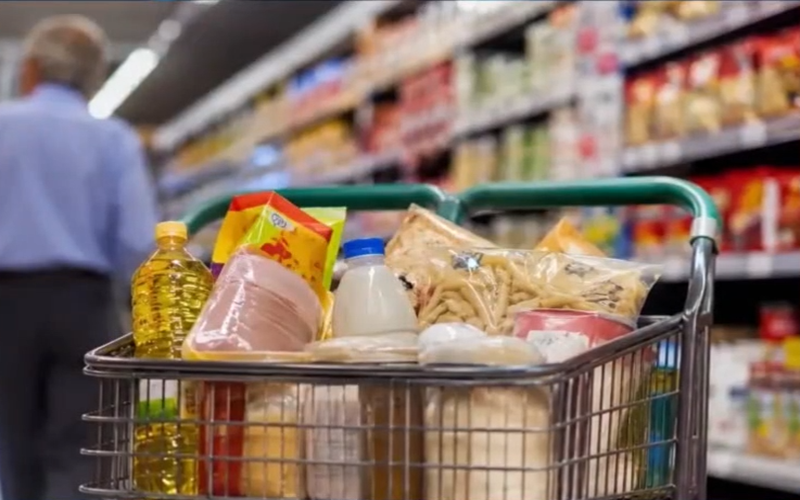

Despite promises to increase food subsidies, the regime is narrowing eligibility for food vouchers, leaving millions without assistance while those who remain eligible receive benefits that cannot keep pace with inflation.
Iran’s deepening economic crisis is shrinking household food budgets, forcing millions of families to cut back on basic necessities. Despite government promises to ease the pressure through a food voucher scheme known as Kalabarg, the program has failed to provide meaningful relief. Instead, the regime is preparing to exclude millions more people from eligibility while the purchasing power of existing benefits continues to erode.
The crisis comes as the regime’s own media acknowledge persistently high inflation and warn of the threat of hyperinflation. Yet beyond the headline inflation figures, the most immediate consequence is visible in Iranian households: families are increasingly unable to afford basic food items.
President Masoud Pezeshkian’s government has presented the Kalabarg scheme as a means of protecting vulnerable households. However, the gap between official promises and actual implementation reveals the limited reach and declining value of the assistance.
Food Vouchers Promised to Offset Rising Prices
The Kalabarg program was introduced in response to deteriorating economic conditions and the growing difficulty families face in purchasing essential food products.
The scheme was designed to help cover the cost of basic necessities, including milk, cheese, yogurt, eggs, chicken, beef, cooking oil, pasta, rice, sugar, and legumes. Purchases were to be made through large retail chains participating in the program.
However, financing the scheme has increasingly become a problem for the government. Since last year, officials have repeatedly announced plans to increase voucher payments and adjust their value in line with inflation and rising food prices.
The issue became particularly acute in January 2026, when the government removed preferential exchange-rate arrangements, triggering sharp price increases. Officials promised that the resulting pressure on household budgets would be offset through higher food voucher payments.
In practice, the promised increases did not materialize. Families continued to face higher food prices without receiving the corresponding adjustment in assistance.
Government Changes Eligibility Instead of Delivering on Its Promises
In October 2026, officials again announced that the voucher program would be expanded financially, while simultaneously proposing significant changes to its eligibility and payment structure.
Under the proposed criteria, households with monthly incomes exceeding 20 million tomans would no longer qualify. Vehicle ownership was also cited as a potential ground for exclusion.
The government further proposed replacing its existing ten income-based deciles with three broader categories: low-income, middle-income, and high-income households.
These changes came alongside an announcement that approximately 40 to 44 million people had been identified as eligible for the program. Given Iran’s population, this would leave a substantial portion of the country outside the scheme.
A November 5 report by Voice of America examined the proposed exclusions, reporting that the government was considering removing approximately 30 percent of the population from the program, including sections of Tehran’s population.
Rather than extending meaningful assistance to households struggling with rising living costs, the proposed changes risk excluding millions of people who also face the consequences of inflation.
Even Eligible Families Receive Little Relief
The problems with the Kalabarg scheme are not limited to eligibility. The purchasing power of the vouchers themselves has also deteriorated as food prices continue to rise.
Even households that remain eligible find that the assistance covers only a small portion of their essential expenses. The value of the vouchers has not kept pace with the rising cost of food and other necessities, leaving families to shoulder most of the additional burden themselves.
This creates two distinct groups of victims. Millions risk losing access to the program altogether, while those who retain eligibility receive benefits that are increasingly inadequate.
The contrast between official announcements and household realities is stark. The government speaks of increasing assistance, but families are still waiting for meaningful improvements in their purchasing power.
Iran’s Food Crisis Exposes the Failure of Economic Relief Measures
The Kalabarg scheme illustrates the growing disconnect between government economic promises and the daily lives of ordinary Iranians.
A food assistance program can provide meaningful protection only if its benefits reflect actual living costs and reach the households that need them. When eligibility is narrowed while inflation erodes the value of payments, the program loses much of its intended protective effect.
For millions of Iranian families, the central concern is no longer the technical design of the subsidy system. It is whether they can afford basic food items at all.
As prices continue to rise and household purchasing power declines, the regime’s promises of relief offer little comfort to those forced to make increasingly difficult choices about what they can afford to put on their tables.