


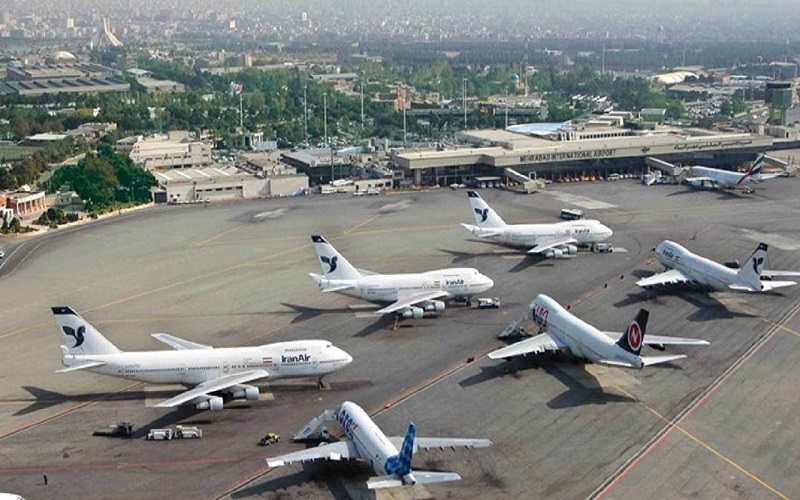

Iran’s aviation industry has grappled with restrictions and structural challenges for decades, but the events of March 21, 2025, serve as a stark symbol of its accelerating collapse.
According to a recent report by Cann News, a leading Iranian aviation website, Iran Aseman Airlines—once one of the country’s most active domestic carriers—was forced to cancel 10 scheduled flights on March 21 due to a technical malfunction in its sole remaining active aircraft.
The airline’s only operational plane, a Fokker 100 registered as EP-ASR, experienced a sudden deployment of oxygen masks during a flight from Shiraz to Tehran, forcing it to return to the origin airport. Following this incident, all subsequent flights planned for that day, including routes to Tehran, Ilam, Rasht, Ahvaz, and Sari, were canceled. Disturbingly, the same malfunction had occurred just 10 days earlier on the Mashhad-Ramsar route.
Once boasting a fleet of 40 aircraft, Iran Aseman Airlines now operates with just a single Fokker 100, despite employing approximately 2,500 personnel. This drastic reduction has caused widespread disruption for passengers and intensified the workload for airline staff.
The roots of Iran’s aviation crisis lie in the regime’s belligerent policies, which have triggered years of international sanctions. These sanctions have severely restricted the industry’s ability to purchase new aircraft, obtain spare parts, or access essential support services from reputable suppliers. As a result, Iranian airlines have been forced to rely on aging, leased planes and secondhand components.
According to Iran’s former representative to the International Civil Aviation Organization (ICAO), over 90 percent of the aircraft parts used in Iran are imported. Domestic production, meanwhile, is limited to generic parts that lack serial numbers and fail to meet global aviation standards. Airlines are also struggling to maintain adequate spare parts inventories; the soaring costs of imports and chronic liquidity shortages have made even the acquisition of basic components, such as tires, a formidable challenge.
A particularly alarming phenomenon that has emerged from this crisis is known as “part theft”—the practice of transferring intact parts from one leased aircraft to another. Although technically a form of recycling, this measure has further destabilized Iran’s already fragile air fleet and contributed to a rise in aviation incidents. In effect, this practice places passengers’ lives at continual risk.
Another bitter outcome of the crisis has been the importation of aircraft solely for spare parts. Over the past year, at least 10 aircraft have been brought into Iran for cannibalization purposes and have never been used for actual flights. Critics argue that while Iran’s aviation infrastructure deteriorates, the regime has offered no clear strategy for modernizing the fleet, and private airlines—starved of investment, support, and coherent policy—have been left to wither.
Today, a toxic combination of spare parts shortages, financial instability, sanctions, and mismanagement has created a perilous environment for Iran’s aviation industry. Flights are either canceled or operated under unsafe conditions, and flight safety has been reduced to a gamble—one that the regime continues to play with the lives of the Iranian people.