


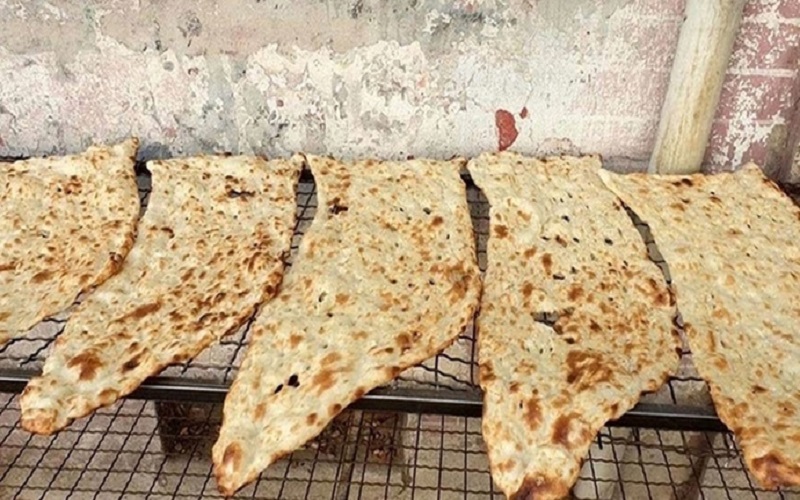

On Monday, September 9, the Iranian regime implemented a significant increase in bread prices, deepening concerns about the country’s ongoing economic challenges. According to state-run media, including IRIB, the updated prices have been integrated into all smart card readers used for bread distribution in Tehran.
Bread Price Hikes in Tehran
The price of various types of bread in the capital has surged dramatically. For instance:
- Sangak bread: The price has risen from 3,000 tomans to 5,000 tomans.
- Barbari bread (type one flour): Increased from 1,800 tomans to 2,500 tomans.
- Barbari bread (type two flour): Increased from 2,500 tomans to 3,500 tomans.
This represents a 40-66% increase in bread prices in the capital, a change that follows similar price hikes across most provinces in Iran.
Nationwide Impact
Bread price increases were already being felt in most regions of the country prior to the Tehran adjustment. On August 28, the judiciary-affiliated Mizan News Agency reported on a pattern of irregular price hikes at local bakeries, warning that these changes would have a direct impact on people’s daily lives. According to their report, the price of Sangak bread had doubled from 5,000 tomans to 10,000 tomans, while Barbari bread saw an increase from 3,000 tomans to 5,000 tomans.
The report also noted that the price of Tafton bread had increased from 1,000 tomans to 2,000 tomans. Furthermore, online sellers have been pricing Sangak bread as high as 15,000 tomans.
Despite official claims of a 50% increase, many reports indicate that the price hikes in some areas have surpassed 100%. The Noor News website, which is affiliated with Iran’s Supreme National Security Council, confirmed these unofficial price hikes in a report at the end of August, noting that in some areas of Tehran, Barbari bread prices had risen from 5,000 tomans to 7,000 tomans, and Tafton bread had jumped from 700 tomans to 1,500 tomans.
Bread Price Increases in Other Provinces
According to the Noor News report, the price of bread has risen by 25% in at least ten provinces, including Qazvin, Khorasan Razavi, South Khorasan, Lorestan, Chaharmahal and Bakhtiari, Hormozgan, and Yazd. This trend is part of a broader pattern of escalating food prices across Iran, exacerbating the financial strain on many households.
Widespread Discrepancies in Official and Actual Prices
The state-run Aftab News highlighted a growing discrepancy between the bread prices announced by authorities and the prices being charged at bakeries. In many cases, the actual prices are significantly higher than the official figures, deepening frustration among the population.
A Failed Government Policy?
Criticism has also been directed at the Iranian government’s “smartening” plan for bread and flour, which was introduced under Ebrahim Raisi administration. The initiative, intended to stabilize prices and improve distribution, has been widely regarded as a failure. In its report, Nour News quoted a flour industry expert who stated that “the government has lost control over bread prices due to flawed subsidy policies.”
This comes amidst speculation about potential further price hikes for essential goods, including gasoline and bread. Some of the regime’s officials have warned that these increases could exacerbate the already dire economic situation.
The Human Cost of Rising Prices
The ongoing rise in bread prices has brought renewed attention to the broader economic crisis in Iran, where many citizens are struggling to meet basic needs. Sociologist Maqsood Farasatkhah recently spoke to Ham Mihan newspaper, revealing troubling findings from his research: “One-third of Iranian households are, in some way, living at or below the absolute poverty line.”
Farasatkhah also pointed out the stark reality that many Iranians are suffering from malnutrition. “We are faced with a group that is starving and living with the lowest amount of calories,” he warned. Despite official statistics, which placed Iran among the ten countries with low hunger levels in the global hunger index last year, field reports suggest that millions of people in the country are now living in hunger.
Conclusion
The recent surge in bread prices is yet another sign of Iran’s deepening economic crisis. With many households already struggling to make ends meet, the rising cost of basic necessities like bread is likely to worsen the situation. As the regime grapples with the fallout from years of economic mismanagement, it remains to be seen how these challenges will be addressed, and whether relief will come for the millions of Iranians living in poverty.