


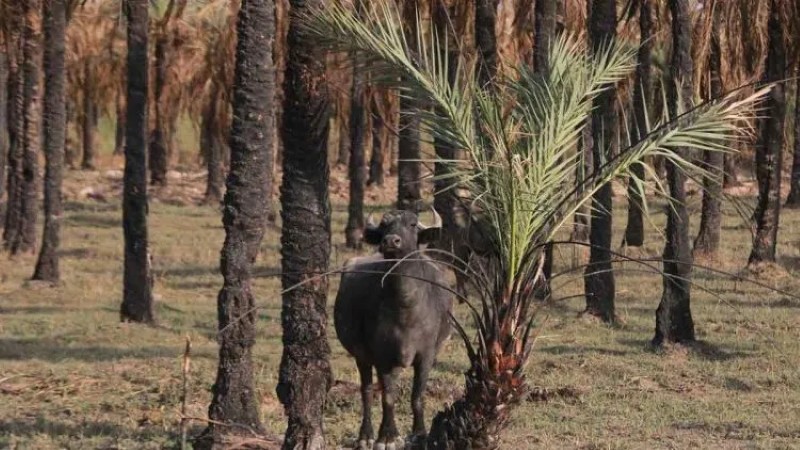

Once a symbol of pride and livelihood for southern Iran, Khuzestan’s date industry is now on the brink of extinction due to severe environmental degradation, economic pressure, and years of government neglect.
Once a cornerstone of Khuzestan’s economy and culture, Iran’s date industry now stands on the edge of collapse. Once celebrated as a vital part of local livelihoods and non-oil exports, the province’s date cultivation is being devastated by drought, soil salinity, pests, and years of failed government policies.
According to a report published by the state-run Borna news agency on October 21, 2025, the situation of Khuzestan’s palm groves has reached an alarming stage. The report acknowledged that preserving palm plantations is essential not only for local livelihoods but also for national food security and exports. It warned that without immediate action, Iran risks losing an invaluable cultural and economic legacy.
The crisis runs deep. Years of recurring droughts, declining water quality, the spread of industrial wastewater, and destructive pests have severely damaged thousands of hectares of date palms. Among the most serious threats is the wood borer pest—dubbed the “cancer of palm groves”—which has infected vast areas of southern Khuzestan, particularly in Shadgan, Abadan, and Khorramshahr.
Khuzestan’s palm varieties—such as Estameran, Barhi, Berim, Deiri, Zahedi, and Gantar—represent an important genetic resource for Iran’s agriculture. The Estameran date, valued for its long shelf life and ability to be exported without refrigeration, has traditionally been one of Iran’s leading export products. Yet despite the province’s vast cultivation area, yields have fallen sharply, revealing a severe decline in productivity.
Many farmers complain about rising production costs, unfair pricing, and exploitation by middlemen. As a result, much of the industry’s profit bypasses growers and ends up in the hands of intermediaries. The state’s lack of effective support has pushed many small farmers into debt or forced them to abandon their land altogether.
The Borna report further admitted that Khuzestan’s groves face a combination of environmental crises—salinity caused by reduced rainfall, declining water quality, and industrial contamination. These factors have accelerated the destruction of palm trees and driven entire rural communities into poverty.
Despite the worsening crisis, regime officials held a “National Date Conference” on October 21–22, claiming that the government recognizes the need to “save the industry” through water desalination projects and emergency funding. However, experts emphasize that such promises, unless turned into concrete actions, remain hollow. Previous pledges—such as securing water rights for farmers or revising irrigation tariffs—have repeatedly gone unfulfilled.
In reality, the date industry in Khuzestan is no longer merely “at risk”—it is collapsing. Groves that sustained local families for centuries are now dying one by one under the combined weight of mismanagement and environmental neglect. While regime institutions continue to talk about “urgent action,” their policies have prioritized export revenues and propaganda over the well-being of farmers.
Reviving Khuzestan’s date industry demands more than slogans. It requires transparent governance, scientific management, and genuine support for producers—elements that remain absent under the clerical regime. As corruption, exploitation, and poor planning dominate every sector, few places remain untouched by the destructive reach of the ruling system.
If no meaningful action is taken, all that may remain of Khuzestan’s date palms will be the memory of a heritage that once symbolized life, pride, and resilience—a heritage now fading in the shadow of the regime’s ruinous rule.