


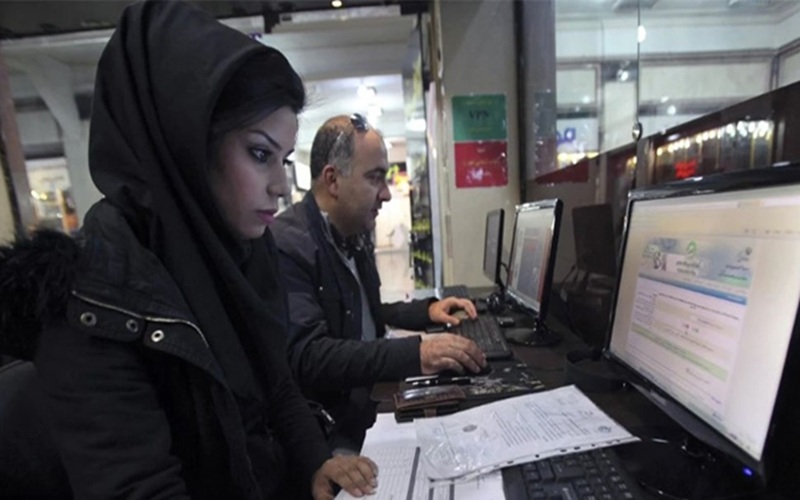

Economists inside Iran increasingly point to governance failures, political uncertainty, and decades of mismanagement as the drivers of a worsening economic emergency.
Iran is facing one of the most severe economic crises in its modern history. While the country possesses vast natural resources, a strategic geographic location, and a large, educated workforce, economists and policy experts increasingly warn that these advantages are being overshadowed by deep structural weaknesses, policy failures, and mounting political uncertainty.
Recent discussions among economists inside Iran suggest that the country’s economic difficulties are no longer viewed as temporary disruptions or the product of a single crisis. Rather, they are seen as the result of decades of accumulated problems that have steadily undermined economic growth, investment, and public welfare.
These concerns were prominently featured during the “Iran Economic Outlook 1405” conference, organized by the economic newspaper Donya-e-Eqtesad. Economists, researchers, and business experts gathered to assess the country’s prospects and discuss challenges ranging from inflation and currency instability to investment, employment, trade, and the future of Iran’s digital economy.
Inflation Remains the Most Immediate Threat
For ordinary Iranians, perhaps the most visible consequence of the current crisis is the relentless rise in prices.
In the weeks following the recent ceasefire, inflation and the declining purchasing power of households have become major public concerns. Participants at the conference repeatedly identified government fiscal policies as a central factor behind inflationary pressures.
Economists argued that persistent budget deficits have forced the government to rely heavily on the banking sector to finance its expenditures. While legal restrictions have reduced direct borrowing from the central bank, state institutions continue to draw on the resources of commercial banks, creating additional pressure on the financial system.
This process contributes to monetary expansion, higher borrowing costs, and continued inflation. Several experts warned that without significant policy changes, inflation could rise to unprecedented levels, potentially reaching triple-digit territory.
Economic analyst Ali Saadvandi cautioned that policymakers should avoid inflationary financing mechanisms and instead pursue more sustainable fiscal solutions, including broader use of debt instruments and structural reforms.
A Resource-Rich Country with a Fragile Economy
One of the recurring themes of the conference was the paradox of Iran’s economic model.
Economist Masoud Nili argued that Iran differs significantly from many successful economies because household welfare remains heavily dependent on the distribution of oil and gas revenues rather than productivity-driven growth.
In most developed economies, rising living standards are closely linked to investment, innovation, productivity, and employment. In Iran, however, the state’s role in allocating resource revenues has historically played a much larger role in determining economic outcomes.
Nili also highlighted another structural weakness: labor market participation.
With a population of approximately 87 million people, fewer than one-third are formally employed. This is significantly below the employment rates found in many comparable economies, where roughly half of the population participates in the labor market.
The result is greater pressure on workers, lower productivity, and reduced economic resilience.
The Cost of Uncertainty
Perhaps the most damaging feature of Iran’s current economic environment is uncertainty.
Years of economic instability, political tensions, social unrest, sanctions, and inconsistent policymaking have created conditions in which both households and businesses increasingly postpone major financial decisions.
Investment slows. Consumption declines. Entrepreneurs delay expansion plans. Skilled workers seek opportunities elsewhere.
The cumulative effect is a cycle of stagnation that becomes increasingly difficult to reverse.
Many economists at the conference emphasized that uncertainty now functions as a major economic risk in its own right.
Poverty on the Rise
Several experts presented alarming forecasts regarding poverty and economic contraction.
Former pension fund executive Hojjatollah Mirzaei warned that economic pressures could push millions of additional Iranians below the poverty line. According to his projections, economic growth could fall into deeply negative territory under pessimistic scenarios, while inflation could accelerate dramatically.
Such outcomes would further reduce household purchasing power, widen inequality, and place additional strain on already vulnerable social groups.
Mirzaei also warned that prolonged uncertainty could accelerate migration, weaken social cohesion, and contribute to a further erosion of public confidence in economic institutions.
For many observers, these warnings illustrate how economic problems increasingly extend beyond traditional indicators and affect broader social stability.
Investment Continues to Decline
Another major concern is the deterioration of the investment climate.
Experts noted that many industries continue to face significant challenges, including declining profitability, financing constraints, and uncertainty about future economic conditions.
Hossein Rajabpour, head of the Saba Research Institute, argued that attracting new investment requires more than temporary stimulus measures. Sustainable investment depends on broader economic stability, predictable regulations, and confidence in long-term policymaking.
Without these conditions, businesses remain reluctant to commit capital to new projects, limiting economic growth and job creation.
The labor market reflects similar pressures. Economists pointed to declining formal employment opportunities and reduced private-sector activity as evidence that uncertainty continues to weigh heavily on economic performance.
Trade Vulnerabilities and Economic Dependence
Participants at the conference also highlighted vulnerabilities in Iran’s trade structure.
Several economists noted that a large share of the country’s external trade remains concentrated among a limited number of partners and transportation routes. This concentration increases economic exposure to disruptions in logistics, payments, and supply chains.
Experts warned that interruptions to key maritime trade routes could have consequences extending far beyond transportation costs. Supply chains, access to foreign currency, industrial inputs, and inventory management could all be affected simultaneously.
At the same time, alternative overland transportation corridors currently lack the capacity to fully replace existing trade flows, making diversification a strategic economic priority.
The discussions underscored a broader concern: Iran’s economy remains vulnerable not only because of external pressures, but also because of structural dependencies that have developed over many years.
Governance at the Center of the Debate
Perhaps the most significant conclusion emerging from the conference was that many economists increasingly view governance challenges as central to Iran’s economic difficulties.
Economist Mousa Ghani-Nejad argued that years of highly centralized and interventionist policymaking have weakened investment incentives, reduced economic efficiency, and undermined public trust.
He pointed to widespread state intervention in markets, administrative price controls, non-transparent allocation of resources, politically motivated subsidies, and restrictions on economic activity as examples of policies that have distorted economic incentives.
Ghani-Nejad also cited internet restrictions as an illustration of how centralized decision-making can impose significant costs on businesses, innovation, and economic development.
His broader argument was that sustainable economic recovery requires more than short-term stabilization measures. It requires predictable institutions, transparent rules, accountability, and a stronger commitment to the rule of law.
An Economic Crisis Rooted in Structure, Not Circumstance
The challenges confronting Iran today cannot be explained solely by recent events or short-term shocks. Inflation, declining investment, rising poverty, and weak growth are symptoms of deeper structural problems that have accumulated over decades.
While economists may differ on specific policy prescriptions, there is growing agreement on one point: economic recovery cannot be achieved without addressing the underlying governance and institutional issues that continue to shape the country’s economic trajectory.
As uncertainty grows and living standards continue to deteriorate, the debate inside Iran is increasingly shifting from how to manage individual crises toward a more fundamental question—whether the current economic model is capable of delivering sustainable growth, stability, and prosperity for the country’s future.