


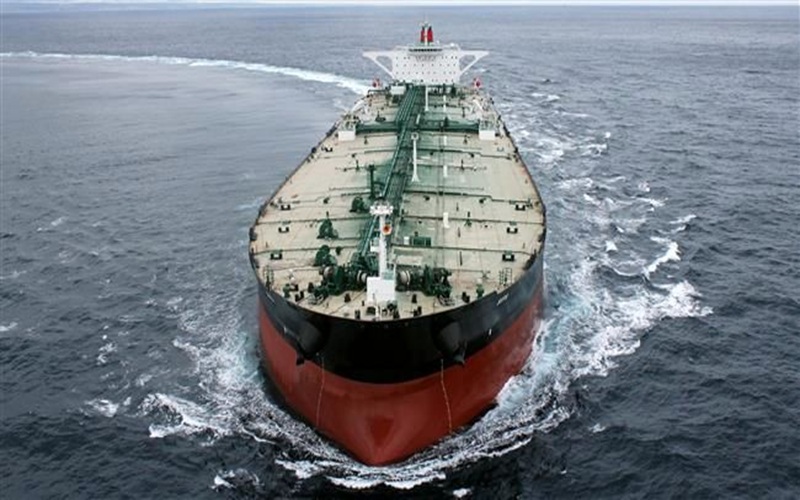

The case of oil broker Hossein Aghayari sheds new light on a sanctions-evasion system that has transferred billions of dollars in public wealth into opaque networks tied to the regime’s power structure.
Fresh revelations about Hossein Aghayari, one of the largest oil brokers operating within Iran’s sanctions-evasion network, have once again exposed a system that has become synonymous with corruption, lack of accountability, and the diversion of national wealth.
Presented for years by the Iranian regime as a necessary mechanism for “circumventing sanctions,” the network of oil intermediaries and trust companies has instead evolved into a vast parallel economy where billions of dollars in public assets are transferred through opaque channels beyond meaningful oversight. Today, even regime officials acknowledge that enormous sums of oil revenue have failed to return to the country.
The latest disclosures suggest that the problem is not the misconduct of a few rogue middlemen. Rather, it reflects a deeply entrenched structure in which politically connected individuals are entrusted with vast national resources while ordinary Iranians bear the burden of economic collapse, inflation, poverty, and declining living standards.
The rise of an oil broker
According to information published by the Iranian Labor News Agency (ILNA), Hossein Aghayari was born in Tehran in 1982, holds both Iranian and Afghan passports, and was reportedly based in Dubai before the recent 40-day war. He is linked to OPS, a logistics and transportation company, and Vaio, a trading firm.
What makes his case particularly striking is the speed of his rise.
Aghayari reportedly began as the operator of a small currency exchange business in Tehran’s iron market. Within just two years, however, he became a major player in the regime’s oil trade.
During this period, he acquired approximately 40 oil tankers and commercial vessels, some of which were reportedly obtained from the Oil Ministry at prices comparable to scrap metal.
Even more remarkable was the volume of oil entrusted to him.
ILNA reported that in a single year, Aghayari received contracts to sell more than 90 million barrels of Iranian oil. Given his limited commercial background, such access raises obvious questions about who authorized these deals and why.
Several members of parliament have reportedly acknowledged that assigning such volumes of oil to an individual without extensive experience would have been impossible without support from influential networks inside the Oil Ministry and the banking sector.
Billions missing from the public treasury
The precise amount of revenue that Aghayari failed to return remains unclear.
However, officials have indicated that the trust network associated with him accounts for the largest known volume of unreturned oil revenues. Even more troubling, reports suggest that additional oil shipments continued to be allocated to him despite existing debts and minimal financial guarantees.
The question naturally follows: How can an individual with substantial outstanding obligations continue receiving access to valuable state assets?
The answer lies not merely in Aghayari’s personal conduct but in the broader structure of the regime’s sanctions-evasion apparatus.
For more than a decade, sanctions have provided the regime with a justification for conducting significant portions of its oil trade outside transparent financial systems. Under this arrangement, selected intermediaries sell oil or transfer revenues through a web of exchange houses, shell companies, offshore accounts, and commercial fronts.
The lack of transparency has effectively placed billions of dollars of public wealth under the control of individuals whose assets, guarantees, political connections, and contractual arrangements remain hidden from public scrutiny.
Officials admit billions have disappeared
The scale of the problem has become so large that regime officials no longer deny its existence.
Zabihollah Khodaeian, head of the State Inspection Organization, recently acknowledged that approximately $11 billion belonging to Iran remains in the hands of trust networks. He further stated that around $1.6 billion had been subject to abuse or misuse.
In one case cited by Khodaeian, a trust operator reportedly received $200 million, failed to return the funds, and subsequently left the country.
Meanwhile, Tehran’s prosecutor has announced the opening of 59 judicial cases involving trust-company managers. According to official statements, 22 defendants have been imprisoned, while at least 15 trust operators have fled Iran. Authorities claim that Interpol red notices have been requested for these individuals.
These admissions are remarkable because they come not from opposition sources but from institutions within the regime itself.
A system designed for opacity
At the center of many of these controversies stands NICO, the international trading arm of the National Iranian Oil Company.
Former NICO chief executive Ali-Akbar Pour-Ebrahim previously stated that approximately $11 billion in oil revenues remained in the hands of trust networks by the end of Ebrahim Raisi’s administration.
He also described a mechanism known as khali-khani (“empty accounting”), whereby oil buyers and intermediaries could acknowledge receipt of funds without any actual transfer taking place. Through this practice, large sums could remain outside Iran’s control for weeks or months while official records suggested otherwise.
Reports within Iran have also linked several former NICO executives to the period during which these trust networks expanded significantly.
The recurring appearance of senior oil-sector officials in these cases has fueled suspicions that the missing billions are not simply the result of individual fraud but of a system that was structured to operate without meaningful transparency.
Corruption reaches the highest levels
The sanctions-evasion network extends beyond oil executives.
In recent years, the names of individuals connected to some of the regime’s most powerful figures have repeatedly surfaced in relation to sanctioned oil trade.
One prominent example is Hossein Shamkhani, the son of former Supreme National Security Council secretary Ali Shamkhani. Western sanctions documents have cited networks of shipping and trading companies linked to him and their alleged role in facilitating Iranian oil exports.
Such cases raise broader questions about how trust operators are selected.
Former Central Bank governor Valiollah Seif stated that oversight of these intermediaries falls under the authority of the Special Economic Measures Headquarters, a body that includes senior officials from the government, Oil Ministry, Central Bank, Intelligence Ministry, Foreign Ministry, Planning and Budget Organization, and other state institutions.
The structure suggests that decisions regarding oil intermediaries are not made by isolated individuals but involve multiple centers of power within the regime.
This makes it difficult to portray the scandal as merely the betrayal of a few dishonest businessmen.
The people pay the price
The significance of the Aghayari case goes far beyond one individual.
While millions of Iranians struggle with inflation, unemployment, declining purchasing power, and growing poverty, billions of dollars in oil revenues have disappeared through networks operating under the banner of sanctions resistance.
The regime has consistently justified extraordinary economic controls and sacrifices by claiming that sanctions require exceptional measures. Yet the result has been the creation of an opaque economic system in which a small circle of politically connected actors gains access to enormous national resources with little accountability.
The pattern is not new.
It closely resembles the case of Babak Zanjani, the notorious sanctions-era oil broker who failed to return more than $2.3 billion in oil revenues after being entrusted with major oil transactions.
More than a decade later, despite repeated scandals, the same model continues to operate.
Corruption as a governing mechanism
The revelations surrounding Hossein Aghayari illustrate a broader reality about the Iranian regime’s economic structure.
The issue is not simply corruption occurring within the system. Corruption has increasingly become part of how the system functions.
When individuals with limited commercial backgrounds gain access to tens of millions of barrels of oil, provide minimal guarantees, accumulate massive debts, and still receive additional shipments, the central question is no longer who the intermediaries are.
The more important question is who selected them, protected them, and entrusted them with the nation’s wealth.
The regime’s recurring response has been to denounce intermediaries only after billions of dollars have vanished and public outrage becomes impossible to ignore. By that stage, the money is often gone, the operators have fled, and responsibility is shifted onto a handful of convenient scapegoats.
The Aghayari case is therefore not merely another financial scandal. It is a window into a system that has spent years using sanctions as justification for secrecy while allowing vast public resources to flow through networks shielded from transparency and accountability.
For ordinary Iranians, the consequences are clear: while the regime claims to defend the country against external pressure, the nation’s wealth continues to disappear into the hands of insiders and middlemen, leaving the public to shoulder the costs through poverty, inflation, and economic hardship.