
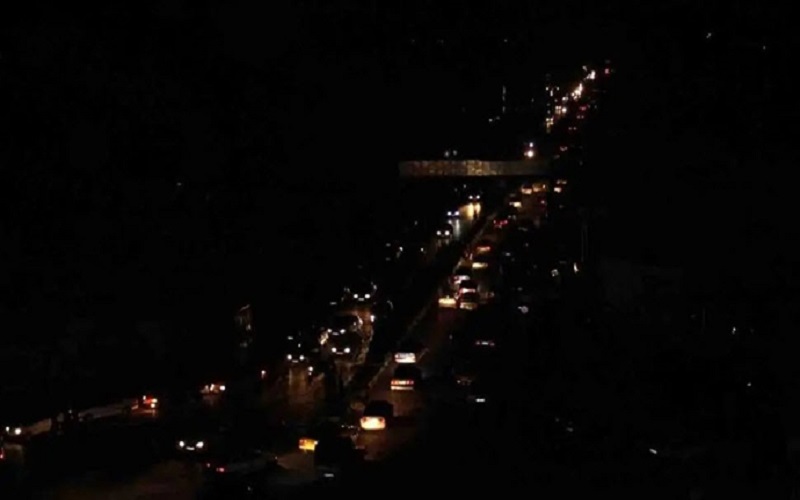

As summer heat grips Iran, daily and prolonged power outages have once again become a harsh reality across the country. Despite decades of investment in nuclear energy—amounting to at least one trillion dollars by 2021, according to former Foreign Minister Mohammad Javad Zarif—the regime has failed to deliver reliable electricity to its citizens.
For over thirty years, Iranian officials have insisted that their nuclear program is purely peaceful, aimed in part at generating electricity. However, data from the Ministry of Energy reveals that nuclear power contributes a mere 1.1% to the nation’s total electricity output. Meanwhile, the country’s electricity shortage is projected to grow from 25,000 to 30,000 megawatts, leading to even longer blackouts for households and industries alike.
Majid Dabirian, a member of the Syndicate of Iranian Electricity Generating Companies, previously estimated that building a 10,000-megawatt power plant would cost approximately €5 billion. Based on this figure, achieving energy self-sufficiency would require an investment of around €15 billion. Factoring in fuel infrastructure for fossil sources like gas and diesel, experts estimate that Iran’s entire energy crisis could be resolved for under €50 billion.
In stark contrast, the regime has spent over twenty times that amount—$1 trillion—on its nuclear pursuits. With such funds, Iran could have completely modernized its energy infrastructure many times over, providing stable electricity and revitalizing its industrial base.
Adding to the inefficiency, the cost of constructing a 1,000-megawatt nuclear power plant is roughly equivalent to building an 8,000-megawatt combined-cycle plant using fossil fuels and solar energy. Given Iran’s vast oil and gas reserves, many experts argue that nuclear power is neither cost-effective nor strategically logical for electricity production in the country.
Yet, the government’s insistence on uranium enrichment—despite global concerns over potential weaponization—has resulted in heavy international sanctions. These sanctions have severely restricted Iran’s ability to invest in essential infrastructure, leaving the country’s power grid outdated and overwhelmed.
Public frustration is growing. Last week, widespread protests erupted across the country, with business owners, bakers, and metalworkers in Tehran’s Grand Bazaar voicing anger over power cuts lasting up to 12 hours a day. In response, Fatemeh Mohajerani, the government’s spokeswoman, announced on May 7 a shift in the working hours of government offices. Starting Saturday, May 10, public institutions will operate from 6:00 a.m. to 1:00 p.m.—a move that forces many employees to begin commuting around 4:00 a.m., especially those living on the capital’s outskirts due to soaring housing costs.
Meanwhile, Mostafa Rajabi Mashhadi, CEO of the Tavanir electricity company, claimed that power had been cut to 700 bank branches in Tehran to curb excessive consumption. Energy Minister Abas Aliabadi also announced a new tiered pricing system designed to penalize heavy users and encourage conservation. However, critics point out that Iran’s per capita electricity consumption remains lower than that of many European and Persian Gulf nations, calling into question the fairness and effectiveness of these measures.
As blackouts intensify and the government deflects responsibility, the Iranian public is left to grapple with the consequences of a costly and controversial nuclear policy that has delivered little in return.