


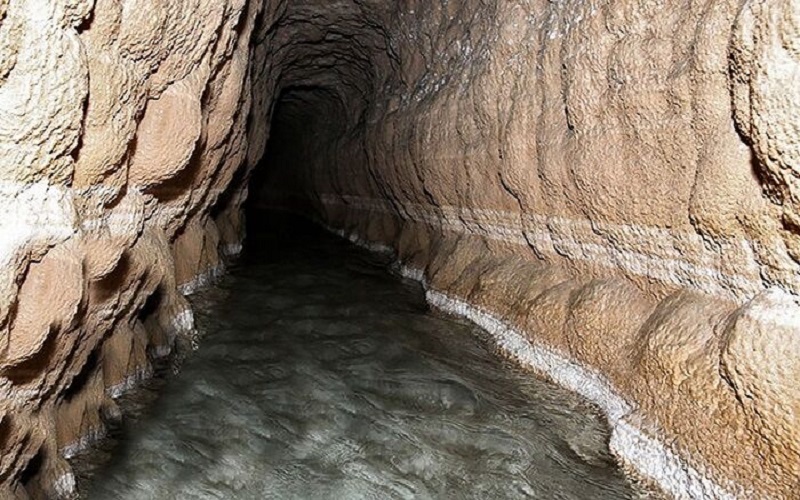

Iran is home to one of the world’s most extensive networks of ancient aqueducts, known as qanats. These underground water channels, a testament to Persian ingenuity, have sustained life in arid regions for over two millennia. Yet today, they are rapidly disappearing. Environmental reports reveal that at least half of Iran’s qanats have been destroyed over the past five decades, raising alarm about both ecological sustainability and cultural preservation.
According to Mohammad Barshan, director of the Qanat Center in Kerman Province, approximately 35,000 qanat systems have been lost over the past 50 years due to a combination of climate change, unregulated well drilling, and environmental degradation. He emphasizes that while Iran once had nearly 70,000 functioning qanats, poor environmental policies and widespread neglect have led to the loss of at least half.
Qanats are intricate systems of underground channels designed to transport water from subterranean sources to the surface using gravity alone. These channels connect a series of vertical shafts and typically originate from a “mother well” deep within the ground. Unlike modern wells or pumps, qanats represent a sustainable method of water extraction, especially suited to Iran’s arid landscape.
Historians such as Herodotus have credited ancient Iranians with the invention of the qanat system—also referred to as horizontal wells. These aqueducts have historically been most prominent in desert provinces such as Khorasan, Yazd, Kerman, Markazi, and Fars. However, in recent decades, the proliferation of shallow, semi-deep, and deep wells, coupled with the widespread use of electric water pumps, has led to the marginalization of this traditional system.
“The increasing reliance on mechanical pumps is one of the main reasons the construction of new qanats has been neglected,” Barshan explains. “Yet they remain the best solution for Iran’s ongoing water crisis.”
Barshan also warns that Iran’s qanats face more danger from “sinkholes” than from land subsidence. These sinkholes, often forming in limestone or other soluble rock formations, pose a serious threat to the structural integrity of qanat systems.
Despite the Iranian constitution emphasizing the Ministry of Energy’s role in water conservation, Barshan argues that the ministry has shown “practically no real commitment” to protecting the qanats. He has also strongly criticized government-led relocation projects, stating they have inflicted irreversible damage. “History will never forgive us for what these projects have done to our qanats,” he warns.
Instead of government intervention, Barshan advocates for grassroots participation in preservation efforts. He stresses that the destruction of qanats is more than the loss of a water system—it is the erasure of an entire cultural heritage. “Preserving qanats is not just about water,” he says. “It’s about safeguarding a way of life, a deep-rooted tradition.”
Currently, Iran is estimated to have around 40,000 remaining qanats, 11 of which have been recognized by UNESCO as World Heritage sites. According to the Ministry of Agricultural Jihad, Iran is home to 60 percent of the world’s qanats across 35 countries. Nonetheless, the challenges are mounting. A recent report revealed that in the past decade alone, 30 percent of the water flow in Iranian qanats has dried up due to prolonged droughts. Additionally, around 50 percent of the remaining qanats are experiencing water shortages, even though they still irrigate approximately 14 percent of the country’s agricultural land.
Tehran alone has around 220 qanats, but more than 90 percent have fallen into disuse, largely due to rapid urban expansion. Remarkably, just seventy years ago, these underground channels were the primary source of water for the capital city.
As Iran grapples with a growing water crisis, the fate of its qanats remains a stark symbol of both environmental mismanagement and cultural neglect. Their decline is not just an ecological loss, but a cultural one—threatening to erase a system that has sustained communities for centuries.