



New official data reveals a dramatic rise in the cost of essential goods, with low-income families bearing the heaviest burden amid the regime’s new gasoline pricing scheme.
Iran’s economy has entered another phase of accelerating inflation, as new data from the Statistical Center of Iran shows sharp and widespread increases across essential goods. The report for November 2025 (Aban 1404) reveals that annual inflation has climbed to 40.4%, the highest level since early 2024, while point-to-point inflation has surged to 49.4%, meaning Iranian households now pay nearly 50% more than last year for the same basket of goods and services.
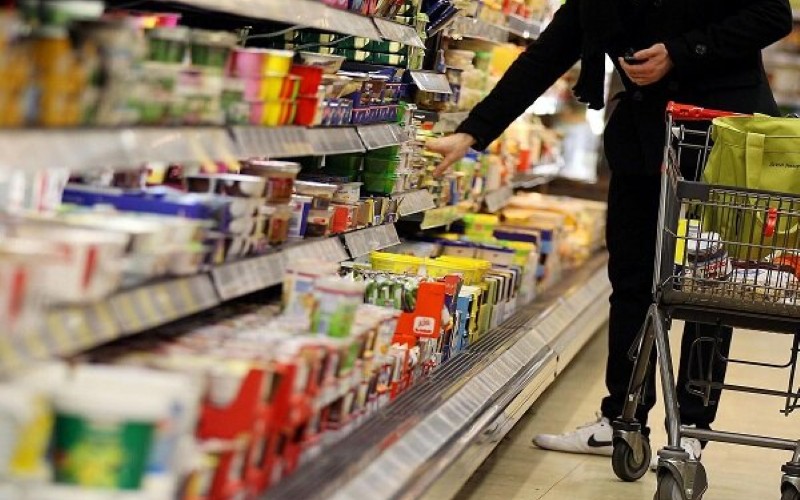
The most alarming trend is the dramatic escalation in food prices—core components of daily consumption that disproportionately affect low-income families. According to the official data, the price of food and beverages increased 66.2% over the past year, with some categories experiencing extreme spikes. Fruit and nuts, for example, have risen 108.3%, becoming more than twice as expensive in just twelve months. Even staples like bread, grains, vegetables, dairy, eggs, and legumes saw steep monthly and annual gains that have pushed basic nutrition out of reach for millions.
The Monthly Shock: Highest November Inflation in Five Years
The consumer price index rose 3.4% compared to October, marking the highest monthly inflation for November in the past five years. Food prices alone increased 4.7% in one month, nearly twice the rate of non-food goods and services. Vegetables and legumes led the surge with 7.8% monthly inflation, followed by fruit and nuts at 6.7%.
These increases are not uniform across the country. Year-over-year food inflation ranges from 55.7% in Semnan to 79.4% in Alborz, further deepening regional inequalities.
Low-Income Families Hit Hardest
The new report confirms that inflation is not evenly distributed among income groups. The poorest decile experienced 41.7% annual inflation, compared to 39.5% for the wealthiest. Economically, this gap is severe: low-income households spend about 42% of their total expenses on food, more than double the 21% spent by the top decile. With food prices rising far faster than other categories, inflation for the poor is structurally higher and more destructive.
As a result, many families are now forced to reduce or eliminate protein, dairy, fresh produce, and even basic grains from their diets—raising serious concerns about long-term public health.
Government Claims vs. Economic Reality
These inflationary pressures come only weeks after the regime implemented a three-tier gasoline pricing system, including a new “third rate” that directly increases transportation costs and is widely expected to fuel additional price hikes across food and essential goods.
The regime continues to insist that such measures will “manage energy consumption” and “protect household welfare” through electronic vouchers. Senior officials have publicly acknowledged rising prices, with government spokesperson Fatemeh Mohajerani stating that the administration is “aware of the increasing costs and ready to apologize wherever necessary.” However, no substantial policy has been introduced to shield lower-income groups from the crushing impact of inflation.
The widening gap between official promises and economic realities has become increasingly difficult to ignore. The regime’s president Masoud Pezeshkian repeatedly claimed he would keep gasoline prices stable, yet the new fuel structure marks a clear reversal, setting the stage for higher transportation, wholesale, and retail costs in the coming weeks.
Structural Drivers of the Inflation Surge
Several underlying factors continue to push prices upward:
- Currency devaluation: The dollar reached 114,300 tomans in Tehran’s market, and the effects of earlier exchange-rate shocks have not yet fully materialized in consumer prices.
- Regime-driven budget deficit: The government faces a massive budget shortfall, estimated between 400 trillion and 1,800 trillion tomans, driven by weak oil revenues and economic stagnation. Officials recently admitted they were forced to request advance funds from the Central Bank—an inflationary move—just to pay wheat farmers.
- Energy price hikes: Rising prices for gasoline, electricity, gas, and water—policies initiated by the Pezeshkian administration—will inevitably push production and transportation costs higher.
- Deepening structural recession: Low productivity, declining investment, and persistent sanctions continue to choke the economy and limit the government’s ability to control prices without printing more money.
Daily Life Under 50% Inflation
For many Iranian families, the data merely confirms what they experience every day. Food items that once formed the foundation of a basic diet—bread, rice, vegetables, dairy, legumes, fruit—now come with price tags that change weekly. Iranian rice has tripled in price within a year. Vegetables and fruit fluctuate daily at rates unprecedented in recent decades. Even low-cost proteins and essential oils are no longer affordable for large segments of the population.
The situation is so dire that even regime-aligned media outlets have begun to acknowledge the severity of the crisis. Meanwhile, long-term indicators like the price of gold underline the scale of Iran’s economic collapse: the Bahar Azadi gold coin, priced at 1,300 tomans in 1979, now sells for 112.5 million tomans, reflecting an astronomical increase of more than 8.6 million percent.
A Crisis Without a Strategy
The Statistical Center’s report leaves little room for optimism. Monthly inflation is accelerating, annual inflation is rising again after months of alleged “stability,” and essential goods are increasing at rates far higher than the national average. All indicators point toward continued inflationary pressures in the coming months, possibly pushing the year-end inflation rate into the 44%–47% range.
The Pezeshkian administration’s policies—fuel price increases, inconsistent subsidy programs, and reliance on Central Bank financing—are widely viewed as either ineffective or counterproductive. Without structural change or meaningful economic stabilization, Iran faces a prolonged and intensifying inflation crisis that threatens both economic security and social stability.