



Disciplinary summonses, economic pressure, and security controls reveal the regime’s fear of universities becoming centers of renewed protest
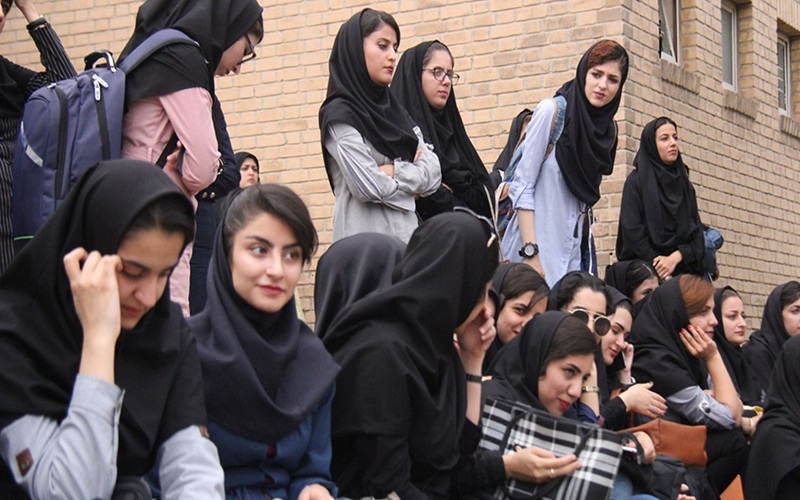
As universities across Iran reopen for the new academic year, the regime is moving quickly to reassert control over campuses. Instead of allowing students and faculty to return to academic life, authorities are reviving disciplinary cases, summoning students before university committees, and tightening an already heavily securitized environment.
The timing is significant. After months of disruption and closures, the reopening of universities provides an opportunity for students from different campuses to reconnect, exchange experiences, and revive networks of solidarity. For Iran’s regime, however, that same environment represents a potential threat.
A report published by the state-run Shargh newspaper on October 1 acknowledged that large numbers of students at Tehran University of Medical Sciences had been summoned to disciplinary committees over various allegations. The report also raised concerns about the way these cases were being handled, including indications that some decisions may have been predetermined.
The pattern suggests that these proceedings are not simply routine disciplinary matters. They function as a preventive mechanism designed to intimidate students before campus life fully resumes.
Disciplinary committees as instruments of political control
The cases reportedly concern incidents dating back to the final months of the previous academic year. Rather than establishing an independent process to determine what happened during those events, authorities have moved to process students through disciplinary mechanisms.
Short intervals between summonses and hearings, inadequate opportunities for students to defend themselves, and even preliminary expulsion orders point to a process in which the outcome can be determined before a meaningful review takes place.
This approach exposes a broader contradiction within the regime’s system of control. Students are subjected to extensive ideological and security screening before entering universities, yet even after passing those filters they remain vulnerable to arbitrary security allegations.
The objective is therefore not merely to punish individual students. It is to create an atmosphere in which every student understands that political expression, protest, or even association with an oppositional environment can result in academic consequences.
The message is unmistakable: the regime wants students to think about security files before they think about organizing, protesting, or speaking out.
Economic pressure adds another layer
Security repression is occurring alongside mounting economic pressure on students.
Tuition, housing, food, and other university-related costs have become increasingly difficult for students and their families to absorb. Student protests have increasingly connected these economic grievances to broader criticism of the university system.
Recent campus slogans have included demands rejecting the commercialization of education and opposition to turning universities into institutions focused primarily on extracting money from students. Other slogans have challenged the militarization of campuses and demanded universities that serve educational and academic purposes rather than functioning as extensions of the security apparatus.
These grievances matter because economic hardship and political repression are no longer separate issues for many students. The same system that restricts their political freedoms also places increasing financial burdens on them while failing to provide adequate educational and social services.
Why the regime fears the university
Iranian universities have repeatedly played a prominent role in periods of political unrest. Their importance lies not simply in the number of students involved, but in the universities’ ability to connect different sections of society.
Students are highly educated, connected to broader social networks, and capable of rapidly communicating information. University campuses also bring together young people from different cities and social backgrounds. When political grievances emerge, these networks can turn isolated acts of protest into coordinated expressions of dissent.
This explains why the regime reacts so sensitively to even relatively small demonstrations or slogans.
A government confident in its political legitimacy would not need to begin an academic year by surrounding students with disciplinary threats. The decision to preemptively intimidate them instead reveals profound insecurity.
The regime appears particularly concerned that the reopening of universities could provide a new point of connection between students and the wider population after a period of intense political and social pressure.
A sign of weakness, not strength
The escalation of pressure against students ultimately reveals the regime’s vulnerability.
By treating universities as security threats, authorities acknowledge the political potential of an educated and increasingly discontented generation. Disciplinary summonses, expulsions, surveillance, economic pressure, and restrictions cannot eliminate the grievances that have brought students into the streets.
They can only push those grievances beneath the surface.
The reopening of universities therefore represents more than the beginning of another academic year. It places Iran’s regime before a familiar dilemma: allow students the freedom necessary for a functioning university, or impose such extensive controls that the campus itself becomes another symbol of repression.
The regime’s early response suggests that it has already chosen the latter.
For students and faculty, the university remains a space for knowledge, critical thought, and the pursuit of freedom. For the regime, it increasingly appears to be a potential source of political challenge. That contrast explains why the first response to the new academic year has been repression—and why the regime’s fear of universities may itself be one of the clearest signs of its underlying weakness.