

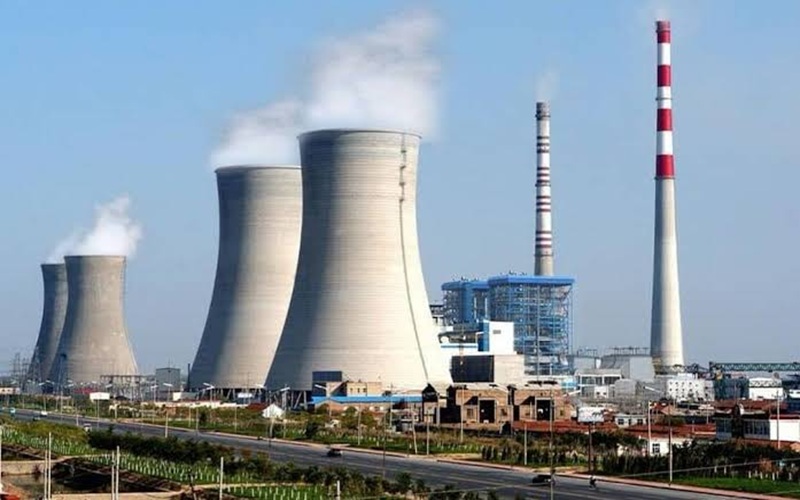

Despite holding some of the world’s largest natural gas reserves, Iran faces recurring winter shortages as gas flaring, declining production capacity, deteriorating infrastructure, and inadequate investment undermine the country’s energy security.
This recurring crisis is not simply a consequence of seasonal demand. It reflects years of underinvestment, wasted resources, deteriorating infrastructure, and the failure to develop the country’s energy capacity. The contradiction is particularly striking: while millions of cubic meters of natural gas are burned or lost before reaching consumers, industries and power plants face shortages that disrupt production and deepen economic pressures.
Billions of cubic meters wasted before reaching consumers
One of the clearest examples of the mismanagement of Iran’s energy resources is the enormous volume of associated natural gas burned during oil production instead of being captured and put to productive use.
According to the World Bank’s satellite-based Global Gas Flaring Tracker, Iran burned approximately 20.2 billion cubic meters of gas in 2023, equivalent to an average of around 55.5 million cubic meters per day. This represented a substantial increase from the 17 billion cubic meters recorded in 2022.
The World Bank has linked the increase in flaring intensity to insufficient investment in the infrastructure needed to collect and utilize associated gas. Aging facilities, inadequate processing capacity, and the absence of modern recovery technologies prevent Iran from converting a significant share of this resource into usable energy.
The scale of this waste becomes particularly consequential during winter, when the country struggles to meet domestic demand. Gas that could help supply households, industries, and power plants is instead burned at production sites.
South Pars decline raises the stakes
The problems extend beyond the failure to capture associated gas. South Pars, the country’s principal natural gas field and the backbone of domestic supply, is also facing the challenge of declining reservoir pressure after years of intensive extraction.
Maintaining production from this giant field requires substantial investment in infrastructure, particularly pressure-boosting technology and associated facilities. Without these investments, sustaining output becomes increasingly difficult, threatening the country’s ability to meet future demand.
Yet the investment required to maintain production capacity has not materialized at the necessary scale. International restrictions have complicated access to advanced technology and financing, while years of economic mismanagement and the diversion of national resources toward military, nuclear, and regional priorities have further constrained investment in the oil and gas sector.
The result is a widening structural gap between the country’s actual production capacity and its growing energy requirements.
Deteriorating infrastructure compounds the crisis
The energy crisis is not confined to gas extraction and production. Inefficiencies in transmission, distribution, and consumption further reduce the amount of energy that ultimately reaches users.
World Bank data put Iran’s electricity transmission and distribution losses at approximately 10.1 percent of output in 2024. These losses reflect inefficiencies across the electricity network, including technical losses and other distribution-related problems.
Buildings represent another major source of wasted energy. The absence of sufficiently enforced insulation and energy-efficiency standards in construction means that substantial amounts of heating and cooling energy are lost. During winter, poorly insulated buildings increase demand for natural gas, placing additional pressure on an already strained supply system.
At the same time, inadequate investment in renewable energy, particularly solar and wind power, and the failure to modernize power plants have prevented alternative sources and efficiency improvements from making a meaningful contribution to easing the shortages.
Rather than addressing these interconnected problems through a comprehensive modernization program, the authorities repeatedly resort to short-term appeals for households to reduce consumption. Such measures may temporarily ease pressure on the system, but they do nothing to resolve the underlying structural failures.
An energy crisis rooted in political priorities
Iran’s recurring winter shortages are the cumulative result of years of policy failures. The country has lost enormous quantities of recoverable gas through flaring, failed to make the necessary investments to sustain production at South Pars, neglected transmission and distribution infrastructure, and allowed inefficient consumption to become deeply entrenched.
These failures cannot be separated from the broader priorities of the ruling establishment. Instead of consistently directing national resources toward infrastructure modernization, economic development, and public welfare, the regime has maintained spending priorities that have left critical sectors underfunded.
Energy is not merely a commodity. It is the foundation of industrial production, economic development, employment, and social stability. When a country with Iran’s natural resources cannot reliably supply its own population and industries, the consequences extend far beyond winter heating shortages.
The central issue, therefore, is not a lack of natural resources but the political and economic structures governing their exploitation and distribution. As long as the regime’s priorities remain centered on preserving its power rather than developing the country’s productive capacity and safeguarding national wealth, the underlying causes of the energy crisis will remain unresolved.
Iran’s energy resources could underpin a modern economy and improve living standards. Realizing that potential, however, requires fundamental political and economic change, accountable management of national wealth, and a system that places the interests of the Iranian people and the country’s development above the preservation of the ruling establishment.