


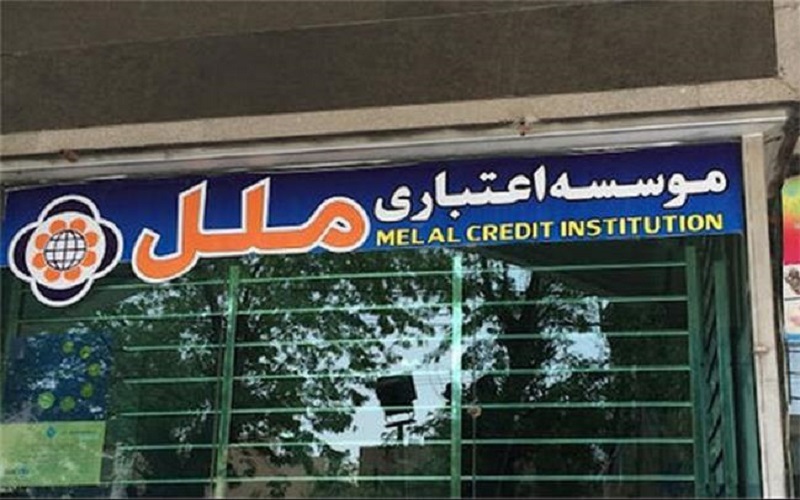

Survivor of Ahmadinejad-era banking network reports 24 trillion tomans in losses as insider lending and regulatory failure deepen crisis
The Melal Financial and Credit Institution, a controversial relic of Iran’s Ahmadinejad-era banking experiment, has reported staggering losses totaling 24 trillion tomans for the fiscal year 2024. As the only surviving institution of its kind—once part of a wider network of quasi-banks that flourished under the regime’s president Mahmoud Ahmadinejad—Melal’s ongoing financial turmoil is reigniting concerns over systemic corruption and instability in Iran’s banking sector.
Alarming Financial Disclosures
The latest financial statements released for the year ending 2024 show that Melal’s accumulated losses have now surpassed 24 trillion tomans (approximately $480 million USD), marking a steep and troubling trajectory. In 2022, the institution reported losses of under 8 trillion tomans. That figure more than doubled in 2023 to around 17 trillion, and now, just one year later, it has reached new highs.
These losses reflect a sustained period in which the institution has consistently spent more than it has earned. The accumulation of such losses—remaining unresolved on the balance sheet—highlights a chronic failure to recover funds or stabilize operations. Iranian financial media have sounded fresh warnings about the institution’s risk to the broader banking system.
A Legacy of Political Patronage
Melal’s roots date back to 1987, when it began operating under the name Askariyeh in a limited capacity. However, during Ahmadinejad’s presidency in the mid-2000s, the regime pursued an aggressive policy to create a parallel banking system, allowing institutions like Askariyeh to expand with the blessing of the Central Bank.
These institutions operated through opaque financial mechanisms, often lacking transparency and proper oversight. Their unchecked growth eventually posed major risks to depositors and the broader economy. When the regime’s president Hassan Rouhani took office in 2013, one of his administration’s early reforms was to dissolve or forcibly merge these institutions.
Yet the aftermath proved turbulent: millions of Iranian citizens had deposited money in these semi-official credit institutions. As the state moved to shut them down, widespread protests erupted. In 2017, depositors from institutions such as Caspian, Afzal Toos, Arman Vahdat, Samen Al-Hajj, and others held demonstrations and sit-ins, including in front of the regime’s parliament, demanding the return of their savings.
A Name Change, But No Reform
In 2016, the institution rebranded from Askariyeh to Melal (meaning “Nations”), shedding its overtly religious identity in favor of a more neutral brand. Melal would become the only institution from its cohort to survive the Rouhani-era purge and even gained access to the Tehran Stock Exchange.
However, this survival appears to have come at a cost. In 2023, the Central Bank of Iran revealed that Melal had directed over 60% of its loan portfolio to its own subsidiary companies and individuals linked to the institution. This degree of insider lending signals an alarming concentration of risk, pointing to deep-rooted cronyism and possible embezzlement.
Despite these revelations, the regime has not announced any formal investigations or restructuring plans for Melal. Observers warn that the institution’s financial health continues to deteriorate, with each passing year adding more complexity and opacity to its operations.
A Warning Sign for Iran’s Fragile Banking System
Melal’s ongoing crisis is not just a story of mismanagement—it is a symbol of deeper structural flaws in Iran regime’s financial system. It exposes how political patronage, regulatory failure, and a lack of accountability have allowed some institutions to operate beyond the reach of reform or oversight.
Unless decisive action is taken, Melal could become yet another case where the burden of financial collapse is passed on to other banks—and ultimately, to ordinary Iranian citizens.