



Revelations of a high-tech espionage case show how an Iranian engineer used Swiss institutions, including ETH Lausanne and Armasuisse, to acquire sensitive Western technology for Tehran’s drone program.
By NZZ | Translated and adapted – July 5, 2025
In December 2024, Italian authorities arrested 38-year-old Iranian engineer Mohammad Abedini Najafabadi in Rome. Abedini is the CEO of SDRA, a company that develops navigation systems for Iranian drones and missiles. Its main client: the Islamic Revolutionary Guard Corps (IRGC), the elite military force of the Iranian regime.
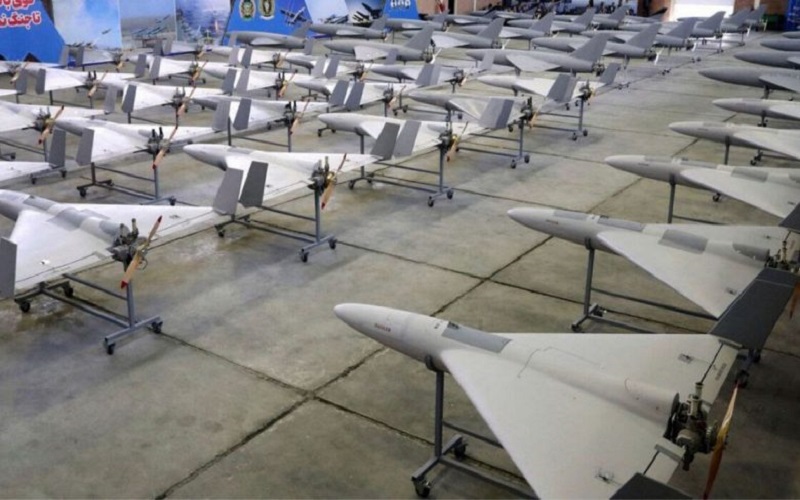
Iranian drones have become a powerful export product. Russia uses them in Ukraine; Iran and its allies deploy them in attacks on Israel. These drones are cheap, effective—and powered by Western high technology. That includes components from the United States, whose origin has led investigators directly to Switzerland, and specifically, the Swiss Federal Institute of Technology in Lausanne (EPFL).
From Seminary to Silicon: The Rise of a Drone Engineer
Born in 1986 into Iran’s religious elite, Abedini’s father, Ayatollah Ahmad Abedini, was a professor at the theological seminary in Qom. But Abedini chose engineering over clerics, enrolling at Tehran’s Sharif University of Technology—an institution closely tied to Iran’s security establishment and under international sanctions since 2014.
At Sharif, Abedini pursued a Ph.D. in robotics, becoming an expert in microelectromechanical systems (MEMS), crucial for drone navigation. In 2011, while still a student, he co-founded SDRA with colleagues from Iran’s elite circles. However, international sanctions made it difficult to acquire many critical electronic components.
Swiss Access Opens the Gate
In 2015, Abedini secured a research position at EPFL in Lausanne. According to the FBI, he was not only a scientist but also an active figure in Iran’s weapons program. His firm had already secured contracts with the IRGC.
His arrival coincided with a thaw in Western-Iranian relations. In July 2015, the Iran nuclear deal was signed in Vienna. By October, Swiss university delegations, including EPFL president Patrick Aebischer, visited Tehran. In February 2016, Swiss President Johann Schneider-Ammann also traveled to Iran, deepening bilateral cooperation in science. EPFL soon signed cooperation agreements with two Iranian universities, one being Abedini’s alma mater, Sharif University.
As a researcher in Switzerland, Abedini gained access to cutting-edge Western technology. According to U.S. investigators, he ordered MEMS components to his university address and smuggled them back to Iran in his luggage—all while continuing his scientific work.
Publicly Funded Research, Secret Objectives
By 2019, Abedini was working with Professor Jan Skaloud at EPFL’s Geodetic Engineering Laboratory. The two collaborated on a project called “Droning,” funded with over 300,000 Swiss francs by the Swiss National Science Foundation (SNSF). Its goal: to enhance real-time drone navigation without GPS—a feature essential for drones operating in war zones where GPS signals may be jammed or unavailable.
Skaloud’s lab also received substantial support from Innosuisse (Switzerland’s innovation agency), the European Union, and most notably, Armasuisse—the Swiss federal armaments office. Armasuisse had backed nine of Skaloud’s projects between 2017 and 2024, all focused on autonomous drone navigation without satellites. Though results were publicly published, these projects were deeply intertwined with Swiss defense research.
In the middle of this high-security collaboration worked Abedini—now suspected of espionage.
A Systemic Failure in Oversight
The Abedini case reveals a comprehensive breakdown in Swiss security controls. University hiring processes, research funders, and government agencies failed to flag any concerns. EPFL conducted no security vetting. Neither did SNSF or Armasuisse, citing lack of legal authority and standard practices, respectively.
Switzerland’s Federal Intelligence Service (NDB) runs a program called “Prophylax” to raise awareness about espionage risks in academia, including a specific module, “Technopol,” targeted at universities like EPFL. However, this system relies entirely on voluntary compliance. Whether EPFL received and ignored warnings remains undisclosed due to privacy protections.
It wasn’t until February 2023 that SNSF began advising on espionage risks in international collaborations—19 years after the Prophylax program began.
Too Little, Too Late
Following Abedini’s arrest, the Swiss Attorney General launched an investigation, triggered by a complaint from the State Secretariat for Economic Affairs. The office noted that even the transfer of research findings can be subject to export controls and sanctions law. However, details of the investigation remain sealed.
Signs of policy change have only recently emerged. In November 2024, the Swiss Conference of Higher Education Institutions created a task force on “knowledge security.” A month earlier, ETH Zurich imposed stricter admission criteria for applicants from high-risk countries, including Sharif University.
But these measures came too late in Abedini’s case.
In 2018, Abedini co-founded Illumove SA with a business partner. Based on EPFL’s innovation campus, the startup was even advised by Vaud’s economic promotion agency. Abedini told his supervisor the company would develop motion trackers for equestrian sports. In reality, according to the FBI, Illumove served as a front to smuggle U.S.-made components to Iran.
A Network Reaching Across Continents
According to U.S. prosecutors, Abedini’s activities were supported by Mahdi Mohammad Sadeghi, a U.S.-Iranian electrical engineer who entered the U.S. on a student visa and worked for a semiconductor firm. Like Abedini, he specialized in MEMS. The two reportedly met multiple times in Switzerland.
Demand for MEMS in Iran has soared since Russia’s 2022 invasion of Ukraine. Iran now supplies thousands of drones to Russia, especially the low-cost Shahed kamikaze drones, which have caused widespread destruction in Ukraine. Their navigation system? SDRA’s Sepehr—built on Western components.
According to the FBI, SDRA’s sales increased nearly sixfold thanks to this conflict.
Political Fallout and Iranian Retaliation
Just days after Abedini’s arrest, on December 19, 2024, Italian journalist Cecilia Sala was detained in Tehran under pretexts and sent to the notorious Evin prison. She was released after 21 days. Despite international protests, Abedini was released from custody on January 12, 2024, after only three days. Italy’s Justice Ministry stated it found no grounds for extradition based on the U.S. indictment.
Meanwhile, Mahdi Sadeghi remains in custody in the U.S., awaiting trial. Swiss federal prosecutors continue their investigation.
Ongoing Threats, Limited Powers
In its latest intelligence report published Wednesday, the NDB warned that while Iran has reduced some of its reliance on Western technologies, procurement efforts in Switzerland continue. The agency again stressed its lack of enforcement powers—advisory only—and urged greater vigilance among academic institutions.
The Abedini case stands as a stark warning: in an increasingly connected world, cutting-edge research without adequate safeguards can be weaponized—not just in theory, but in practice.