


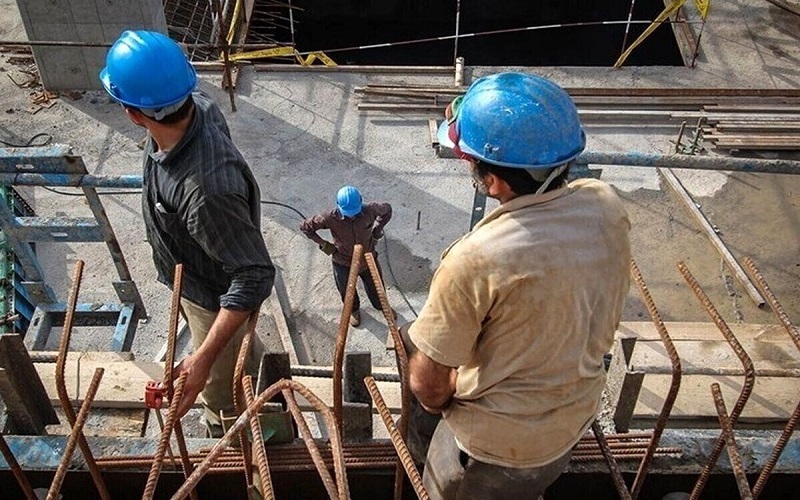

On Wednesday, January 29, an Iranian government agency reported a significant decline in the real value of workers’ wages, stating, “With less than 50 days remaining until the end of the Persian year 1403, the real value of wages has fallen to $86.” This marks a stark contrast to March of the previous year when, despite a nominal wage growth of over 35%, the real value stood at $119.
Currently, the base wage for workers under Iran’s labor law is approximately 7.166 million tomans per month. According to Iran Newspaper, “The fluctuation of the exchange rate over the past year has led to a sharp drop in the real value of workers’ wages.” The report compared Iran’s current wage levels to Afghanistan, where workers earn $80 per month, while regional counterparts such as Saudi Arabia ($1,065) and Oman ($844) offer significantly higher wages.
Official Responses and Worker Reactions
Amid growing concerns, the Deputy Minister of Cooperatives, Labor, and Social Welfare expressed hope that the Supreme Labor Council would set workers’ wages next year “differently than in previous years.” However, Ali Asghar Ahaniha, an employer representative, downplayed expectations, stating, “In the current economic war, we cannot expect all household expenses to be covered through wages.”
Nasrollah Bazvand, a government official, attempted to shift responsibility away from the government, claiming, “We are seeking to set wages realistically; we must consider workers’ livelihoods. If this issue is ignored, we will lose productivity at work.” However, he did not clarify what he meant by “realistic wages.”
Workers took to social media to express their frustration. One user on Telegram stated, “Even if wages increase by 100%, it still won’t be enough.” Another added, “Goods have already doubled in price before Nowruz. Even a 50-60% wage increase won’t cover the costs.”
The Debate Over Wage Determination
Bazvand also referenced a proposal by Welfare and Social Security Minister Ahmad Meydari, who suggested a “new and effective method for determining wages,” though he provided no further details. In previous months, Meydari had supported wage-setting based on industry sectors, while other controversial proposals, such as regionalizing wages, had drawn criticism from labor activists. Critics argue that these measures violate Article 41 of Iran’s Labor Code and accuse the government of attempting to sidestep legal obligations.
As discussions on potential wage adjustments continue, the ILNA news agency reported a striking statistic: “Over the past decade, workers’ wages have fallen by more than 400%—an unprecedented phenomenon in the history of the Iranian economy.” ILNA emphasized that restoring the purchasing power of 2014 would require a minimum wage of nearly 49 million tomans for a worker with two children. However, under current conditions, the minimum wage, including benefits, stands at only 10.9 million tomans.
Economic Hardships and Public Backlash
Faramarz Tofighi, a labor activist and wage expert, pointed out the increasing costs of essential goods. “Bread, meat, and dairy prices have surged, and eggs have become 80% more expensive in just the past two months. The real inflation rate for workers’ lives exceeds 50-60%,” he stated.
Employer representatives, such as Ahaniha, have faced widespread criticism. When he argued that “in the current economic war, one cannot expect all household expenses to be covered through wages,” many questioned why businesses continuously raise prices in response to the dollar’s fluctuations while resisting fair wage increases. One frustrated citizen wrote on the Tabnak news website, “If there are war conditions, they should apply to everyone—not just the poor.”
Public discontent is mounting, with many questioning the government’s priorities. A comment addressed to authorities read, “We do not want economic war; we want economic peace. We are tired of all wars. Hold a referendum and see how many people actually support this so-called economic resistance.”
Escalating Worker Protests
Jafar Azimzadeh, head of the Free Workers Union of Iran, condemned the employer representative’s remarks, accusing him of “whitewashing the slavery system.” He asserted that for 47 years, an “inhumane system” has systematically violated workers’ rights. Predicting further unrest, he warned, “The days are not far when our separate protests, like small streams, will merge into a devastating flood.”
Iran has witnessed a surge in labor protests in recent years, driven by stagnant wages, soaring inflation, and economic mismanagement. Despite increasing repression by the security and judicial apparatus, demonstrations continue to spread, highlighting the growing discontent among Iranian workers and the broader population. As the economic crisis deepens, the government faces mounting pressure to address the severe decline in living standards before frustration boils over into larger, more organized resistance.