


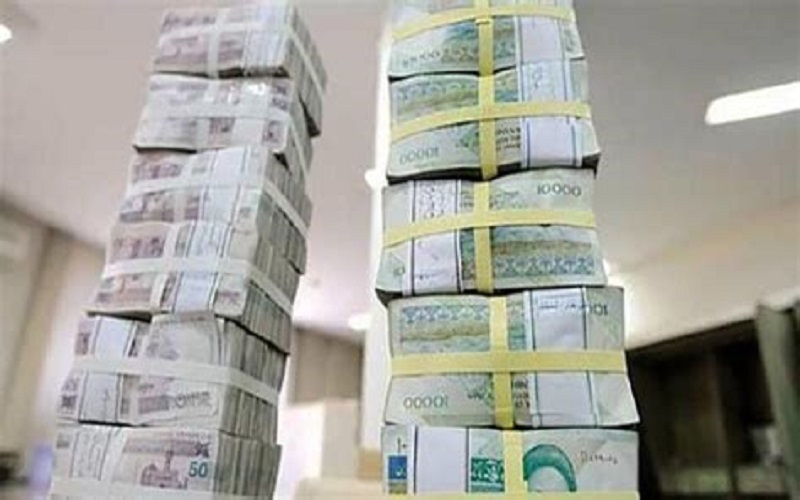

In recent years, the governments of Iran, including the administrations of Presidents Rouhani, Raisi, and now Pezeshkian, have been grappling with severe financial difficulties. To manage these challenges, these administrations have relied heavily on borrowing, particularly from domestic banking sources, as permitted by existing financial regulations.
Reliance on Government Securities
One of the key strategies these governments have adopted to address revenue shortfalls has been the issuance of government securities. This approach allows the government to raise money in the short term by selling bonds, essentially borrowing from investors with the promise of future repayment. However, without a stable and sufficient income stream, this reliance on debt is becoming unsustainable.
Pezeshkian’s administration is now facing the same financial pressures, compounded by geopolitical instability in the Middle East. This instability, combined with sanctions and other external factors, has made it difficult for Iran to repatriate its oil export revenues and convert them into local currency, the Rial. As a result, Pezeshkian’s government must find alternative ways to secure sustainable resources to meet both current obligations and pay off debts accumulated by previous administrations.
Growing Debt: A Greek Tragedy?
The accumulation of government and state-owned company debts has reached alarming levels, drawing comparisons to the Greek debt crisis of the early 2010s. According to data from the Iranian government’s debt registration system, as of March 2023, total government debt had ballooned to a staggering 1.367 quadrillion tomans (approximately $22.78 billion at current exchange rates). This debt burden continues to grow, raising concerns about its long-term sustainability.
While there was a reported 7.42% reduction in the growth of debt by the end of 2023, as indicated by the Department of Risk Management and the Ministry of Economy, this modest decrease offers little comfort. The debt level remains dangerously high, and any reductions in debt growth appear insufficient given the scale of the financial crisis.
The Government’s Response: Securities and Debt Management
In an effort to manage the rising debt, the Ministry of Economic Affairs and Finance has been issuing more government bonds. In September 2024 alone, the government raised 126.752 trillion rials (approximately $3.01 billion) through the issuance of securities. These bonds are sold via auctions and facilitated through systems such as the Central Bank’s interbank market and the Tehran Stock Exchange.
However, the bulk of these funds has been used to purchase and redeem existing government bonds, essentially paying off old debts by taking on new ones. This cycle of borrowing to meet previous obligations is a troubling sign, reminiscent of other countries that have faced fiscal crises.
A Looming Budget Deficit
The situation becomes more concerning when considering the government’s budget deficit. Pezeshkian’s administration recently withdrew 350 trillion tomans from the National Development Fund to settle part of its outstanding debt. Despite this, the administration is still facing a massive budget deficit, estimated at over 1 quadrillion tomans ($16.67 billion) in the first half of 2024 alone. This shortfall exacerbates concerns about the government’s ability to manage its finances effectively and avoid a deeper economic crisis.
Conclusion: An Economy at Risk
With debts mounting, oil revenues constrained, and no clear path to sustainable income, Iran’s economic situation is precarious. The current trajectory suggests a growing risk of fiscal collapse if significant reforms are not implemented soon. Without meaningful changes to how the government manages its finances, the country may be heading towards an economic crisis on par with other nations that have experienced debt defaults and severe financial instability.