


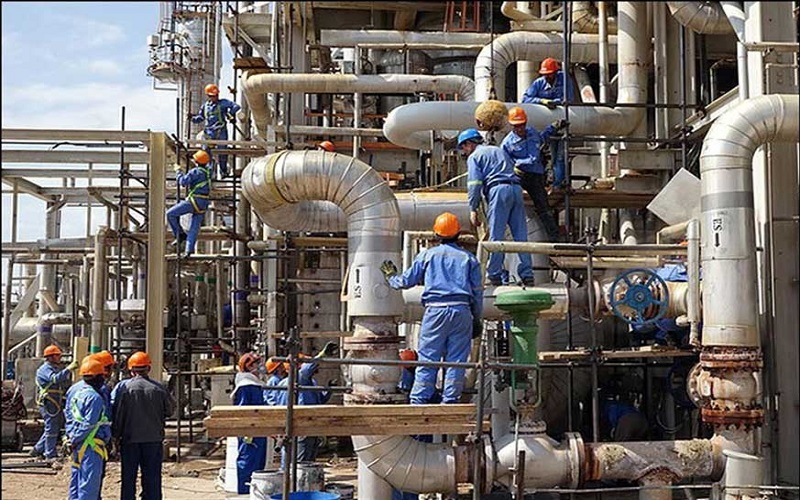

The alarming trend of skilled workers leaving Iran’s oil industry has reached a critical point, with officials expressing deep concern over the potential long-term consequences. On Sunday, several energy sector officials in Iran highlighted the accelerated migration of oil specialists and workers, emphasizing the urgency of addressing this issue.
Arash Najafi, a member of the Energy Commission of the Chamber of Commerce, conveyed his apprehensions to ILNA, a state-run news agency. “Unfortunately, we are losing skilled and specialized personnel at an alarming rate. Without serious intervention, we could face a significant shortage in the oil industry’s workforce,” he warned.
Najafi explained the profound impact of this brain drain, noting that it takes about 35 years to cultivate a skilled workforce in Iran. “A technical worker must study until the age of 25, then work professionally for 5 to 10 years to gain the necessary experience. This loss is equivalent to losing 35 years of human capital due to the emigration of skilled labor.”
One major factor driving this exodus is the disparity in wages. Najafi pointed out that a high-ranking manager in Iran earns approximately $1,700 per month, whereas a similar position in even the most ordinary companies abroad commands a salary of around $5,000. This stark income gap, coupled with comparable living costs in cities like Dubai, makes the prospect of working abroad much more attractive. As a result, professionals ranging from nurses to technical experts are increasingly drawn to Gulf countries and other neighboring regions.
Najafi criticized the Iranian government for its role in exacerbating the situation. “The government’s poor management of subsidies and liquidity has led to rampant inflation. Moreover, the lack of meritocracy means that those in charge of addressing these issues lack the necessary knowledge and expertise,” he said.
Nasser Ashuri, the secretary of the Oil Refining Employers Association, echoed these concerns. He revealed that the migration of skilled workers has already started to create operational challenges in some refineries. “Previously, our engineers sought opportunities abroad. Now, even the technical staff and repairmen at refineries are receiving invitations from neighboring countries, offering salaries of 600 to 700 million tomans per month,” Ashuri stated.
Alireza Daneshi, CEO of the National Company of Southern Oil-bearing Zones, also highlighted the severity of the personnel crisis during a press conference at the Tehran International Oil Exhibition. He urged the media to bring attention to the issue of emigration and its impact on the oil industry.
The discontent among Iran’s energy and oil workers has been palpable, with numerous protest rallies held in recent months. Workers have demanded a 79% increase in wages, timely payments, better working conditions, and improvements in insurance, commuting, food, health, and dormitory facilities.
The broader economic context in Iran has further fueled these protests. The country has experienced a dramatic increase in inflation, leading to a significant disparity between household incomes and expenses. This economic strain has prompted widespread protests and strikes from various groups, including workers, teachers, and retirees.
In a recent TV interview, Mohammad-Reza Bahonar, a politician from the regime’s principlist faction, discussed the ongoing inflation crisis. “We have been experiencing around 40% inflation for seven consecutive years. This has caused the prices of some goods to increase six or sevenfold. People with fixed incomes or modest annual raises of 20% at most cannot sustain a living,” Bahonar explained.
He lamented the erosion of Iran’s economic middle class, stating, “We are witnessing the decline of the middle class into poverty. They can no longer afford a normal life.”
The situation in Iran’s oil industry reflects broader economic challenges facing the country. Without decisive action, the continued migration of skilled workers could have devastating effects on Iran’s economy and its oil sector. Addressing the root causes of this exodus is imperative to stabilizing and revitalizing the industry.