


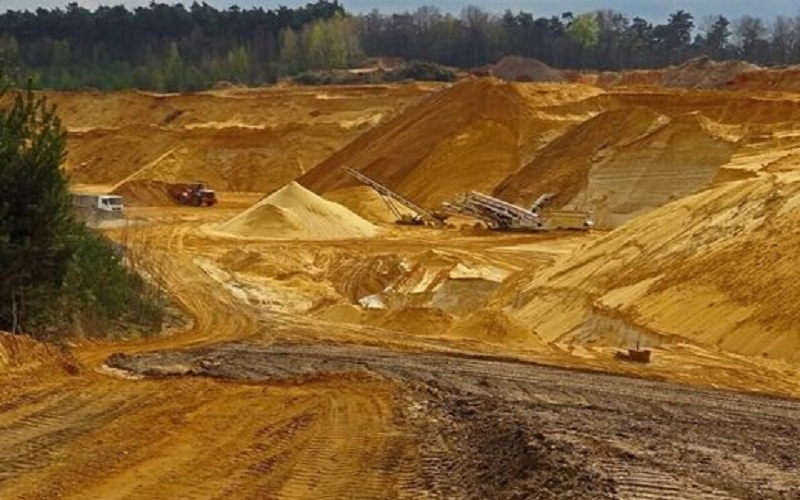

The opaque transfer of the Mazraeh-Shadi gold mine to a Chinese company has left Iranian workers in poverty and deprivation, while Iran’s gold wealth flows into China’s pockets.
A Non-Transparent Deal That Undermines Iranian Interests
The Mazraeh-Shadi gold mine in Varzeqan is a glaring example of the Iranian regime’s non-transparent dealings with Chinese companies. One of Iran’s most valuable mines was handed over to a foreign operator without a public tender, in clear violation of legal procedures. This secretive transfer has not only deprived local workers of fair wages but also allowed the Chinese company to exert complete control over the mine, preventing Iranian workers from even entering the site.
A History of Unlawful Transfers
Originally, the mine was transferred to Takado Company in 2007 through a non-transparent process without a public auction. Instead of actively developing the mine, Takado gradually sold the exploitation rights to a Chinese company and certain individuals, raising concerns about corruption and mismanagement. The lack of proper oversight enabled a pattern of exploitation, where the primary beneficiaries were foreign investors rather than the Iranian people.
Unfulfilled Promises and Exploited Workers
As part of the agreement, the Chinese company had pledged to establish a gold dust processing unit and transfer modern gold mining technology to Iran. However, after years of operation, none of these commitments have been honored. Meanwhile, Iranian workers endure harsh conditions and meager wages, while the Chinese operator refuses to disclose the actual amount of gold extracted from the mine.
Repeated protests by workers demanding fair wages and improved working conditions have been met with hostility. Instead of addressing their grievances, the Chinese company has escalated its oppressive tactics, going so far as to bar workers from entering the mine. The situation worsened when 60 workers were fired en masse for demanding their legal rights, exposing the Chinese employer’s blatant disregard for Iranian labor rights and human dignity.
Secrecy and Corruption: The Shadow of the Iran-China 25-Year Agreement
One of the biggest concerns surrounding the Mazraeh-Shadi gold mine transfer is the secrecy of the contract between the Iranian regime and the Chinese company. This mirrors the controversial 25-year Iran-China agreement, the full terms of which have never been disclosed despite public outcry. Iranian officials have repeatedly insisted that such agreements serve national interests, yet the reality suggests that they overwhelmingly favor China at the expense of Iran’s resources and workforce.
The 25-year agreement granted China extensive rights to exploit Iran’s natural resources, including its gold mines. The exact amount of gold extracted under these agreements remains undisclosed, further fueling suspicions of large-scale financial exploitation. Reports indicate that China has earmarked around $400 billion for investments in Iran, with $80 billion allocated to the mining sector—an arrangement that seems to benefit Chinese firms far more than the Iranian economy.
A Gold Mine Drained by Foreign Interests
The Varzeqan gold mine, the richest and most productive gold mine in Iran and the Caucasus region, has long attracted interest from domestic and foreign investors. Yet, rather than holding an open and competitive bidding process, the Iranian regime handed over its exploitation rights to a Chinese company through corrupt dealings and bribery within the Ministry of Industry, Mine and Trade.
The CEO and sole signatory of Zarkavan Arasbaran Company, which operates the mine, is a Chinese national. Under his leadership, the company has systematically violated contractual obligations by underpaying Iranian workers, barring their access to the mine, and causing significant environmental damage. Worse still, the Chinese operator refuses to report the actual gold extraction figures to Iranian authorities, further deepening suspicions of large-scale corruption.
Government Complicity and Economic Contradictions
Despite these flagrant violations, the Iranian regime has allocated substantial amounts of subsidized foreign currency to the Chinese company under the pretext of generating foreign exchange earnings for Iran. This contradiction exposes a deeper web of corruption, where regime officials enrich foreign entities while neglecting their own people’s economic well-being.
The case of the Mazraeh-Shadi gold mine is emblematic of a dangerous trend in Iran regime’s economic policies—one where foreign investors receive enormous privileges without any transparency or accountability. Unless fundamental reforms are enacted, such exploitative agreements will continue to drain Iran’s wealth while leaving its workers impoverished and powerless.