


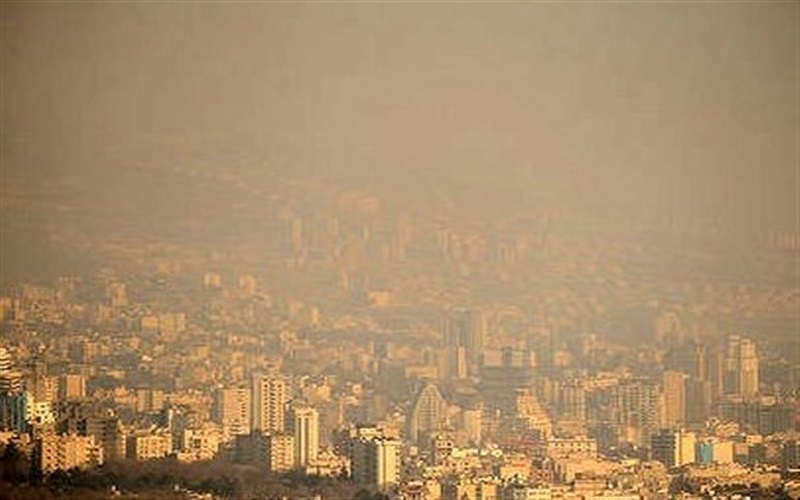

Air pollution in Iran has reached alarming levels, posing a serious threat to public health and economic stability. Mohammad Sadegh Hasanvand, head of the Air Pollution Research Center at Tehran University of Medical Sciences, recently revealed that air pollution accounts for approximately 12% of deaths in the country. With 450,000 deaths reported annually in Iran, 50,000 are directly attributed to this environmental hazard.
A Leading Cause of Death
In an interview with IRNA on November 23, Hasanvand highlighted that air pollution ranks as the fourth—and occasionally the third—leading risk factor contributing to mortality in Iran. He described it as the most significant environmental risk factor, endangering the health of millions across the country. The primary pollutant of concern is suspended particulate matter less than 2.5 microns in diameter (PM2.5), which has been monitored in Iran since 2010.
Shocking Levels of Pollution
Hasanvand noted that PM2.5 levels in Iran are approximately six times higher than the World Health Organization’s recommended limit. In Tehran, the situation is particularly dire, with PM2.5 concentrations measured at 5.5 times the global health standard and 2.5 times the national threshold of 12 micrograms per cubic meter. These hazardous levels of pollution result in an increasing number of unhealthy days and heightened risks of respiratory and cardiovascular diseases.
Economic and Social Costs
The economic burden of air pollution is staggering. Abbas Shahsavani, head of the Air Health and Climate Change Department at the Ministry of Health, estimated that the cost of deaths attributed to air pollution amounts to $12 billion annually. Of this, approximately 10% directly impacts the country’s healthcare system. Furthermore, Somayeh Rafiei, head of the parliamentary Environment Committee, reported that air pollution claimed 30,000 lives in 2023, up from 24,000 in 2022.
The Role of Automakers and Policy Failures
Iran’s automotive industry plays a critical role in this environmental crisis. Vehicles produced by Iran Khodro and Saipa, the country’s two largest automakers, contribute an estimated 70-80% of air pollution in urban areas. Critics argue that government policies, which include heavy tariffs and outright bans on car imports under the guise of supporting domestic production, have shielded these manufacturers from competition. This lack of accountability has allowed the production of outdated, inefficient vehicles that fail to meet modern environmental standards.
Observers have pointed to the government’s close ties with the so-called “car makers’ mafia” as a significant barrier to reform. The lack of regulatory oversight and the prioritization of corporate interests over public health have exacerbated both pollution levels and road fatalities.
A Call for Change
The escalating air pollution crisis in Tehran and other major Iranian cities requires urgent attention. Tackling this issue will demand a multi-faceted approach, including stricter environmental regulations, investment in cleaner technologies, and transparent governance within the automotive industry. Without decisive action, air pollution will continue to claim thousands of lives each year and impose a heavy economic burden on the country.
Iran stands at a crossroads. Addressing this crisis is not only an environmental imperative but also a public health and economic necessity. It is time for policymakers to prioritize the well-being of citizens over the profits of powerful industries.