



Friday, 27 June 2025
Updated: 20:00 PM CEST
Post-Ceasefire Tensions, Diplomatic Uncertainty, and Nuclear Ambiguity
Ceasefire Diplomacy and Strategic Talks
-
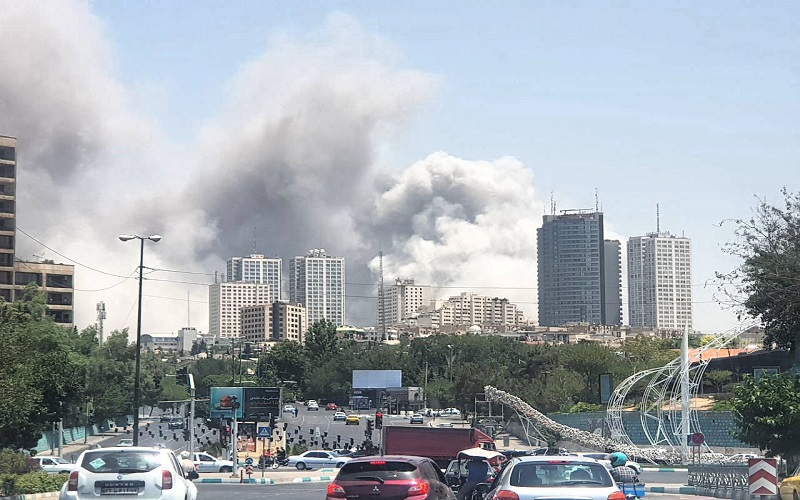
The U.S. State Department announced that Secretary of State Marco Rubio spoke with Pakistani Prime Minister Shehbaz Sharif regarding efforts to promote a lasting peace between Iran and Israel. Rubio emphasized in the call that “Iran must never obtain a nuclear weapon.” The phone call follows U.S. President Donald Trump’s announcement of a ceasefire earlier this week between Israel and Iran, ending a 12-day war that began with Israel’s first attack on June 13.
-
Iranian state media reported that the new law suspending cooperation with the IAEA was formally notified to regime’s President Masoud Pezeshkian by Parliament Speaker Mohammad Bagher Ghalibaf. According to Iranian regime law, the president must sign the legislation and forward it for implementation within five days, and it must be published within 72 hours of notification.
-
Foreign Minister Abbas Araghchi stated that no agreement has been reached to restart nuclear negotiations with the United States. He emphasized that while the regime is internally debating the issue, “no decision has yet been finalized,” and that future talks will be based on national interest, not emotional reactions—even in the face of military attacks.
Nuclear Program Damage and Assessments
-
Araghchi confirmed “serious damage” to Iran’s nuclear sites following U.S. and Israeli attacks. He said that investigations by the Atomic Energy Organization are still underway and that it is too early to determine whether negotiations will be successful, though policy reviews are ongoing.
-
Israeli military spokesperson Avichay Adraee said that the IDF intercepted over 86% of Iranian missiles and more than 99% of drones during the 12-day conflict. He claimed the operation achieved complete air superiority over Iran and destroyed three nuclear centers, thousands of centrifuges, and 11 nuclear experts, in addition to numerous missile bases, aircraft, and military command structures.
-
The New York Times, citing U.S. and European officials, reported that the fate of Iran’s enriched uranium remains unclear. While there are signs some material was relocated prior to the strikes, intelligence remains contradictory, and the current location is unknown. U.S. officials estimate that the Fordow centrifuges are likely no longer operational.
Reactions from U.S. and Global Leaders
-
U.S. Senator Lindsey Graham warned that while Iran appears weakened, the threat is not over. He expressed concern that the real issue lies not in physical destruction, but whether the regime’s intent to obtain nuclear weapons has been eliminated. Graham also noted that the 900 pounds of highly enriched uranium reportedly in Iran were not destroyed during the attack.
-
U.S. Defense Secretary Pete Hegseth said that Iran’s rhetoric about completing its nuclear program is primarily for internal consumption, and designed to maintain regime image after the attacks.
-
CNN reported that the Trump administration is evaluating a new nuclear diplomacy initiative. According to the report, plans include:
-
Providing up to $30 billion in aid for civilian nuclear development.
-
Easing sanctions and releasing frozen Iranian assets.
-
The non-negotiable condition of a complete halt to uranium enrichment.
These discussions have reportedly continued both during and after the conflict, though Tehran has historically rejected any enrichment freeze.
-
Security and Internal Reactions
-
Iranian authorities have claimed the discovery of Starlink internet terminals allegedly used by Mossad agents for espionage in southern Iran. The Revolutionary Guards’ Imam Sajjad Corps in Hormozgan Province said the devices were deployed in villages for intelligence gathering. Iran had previously cut internet access nationwide during the war, citing security concerns.
-
U.S. Immigration and Customs Enforcement (ICE) has arrested 130 Iranian nationals over the past week, bringing the total number of Iranians in ICE custody to 670, according to Fox News. The arrests are reportedly linked to concerns about potential “sleeper cells” being activated in response to U.S. military strikes. Several federal sources have confirmed the figures and security agencies have warned about the possibility of domestic retaliation.
European Response
-
French President Emmanuel Macron stated that while the U.S. strikes were “completely effective,” a possible Iranian withdrawal from the Nuclear Non-Proliferation Treaty (NPT) would be the worst possible outcome. Speaking to reporters after the EU summit in Brussels, Macron warned that such a move could jeopardize the integrity of the entire nonproliferation regime.
Ongoing Reactions and Consequences of the War – Internal and International Responses Intensify
- Government Narrative and Internal Messaging
Fatemeh Mohajerani, spokeswoman for the government of Masoud Pezeshkian, stated in an interview with Al-Mayadeen that Israel’s goals in the war ended in military, security, and diplomatic failure. She also announced that Iran’s cooperation with the IAEA would “take on a new form.” Meanwhile, regime Friday prayer leader Mohammad Hassan Abu Torabifard claimed that the confrontation with Israel marks a turning point in Iran’s history and declared that “Iran imposed defeat” on both the United States and Israel. Gholamreza Soleimani, head of the Basij, also emphasized the regime’s intention to continue its resistance, framing the killing of Iranian scientists and commanders as a failed attempt to halt Iran’s progress. - Military and Infrastructure Damage Updates
Gholamreza Salehi, head of the Housing Foundation of the Islamic Revolution, said that significant destruction occurred in Tehran, Tabriz (Bostanabad), and Gilan (Astaneh Ashrafiyeh), with approximately 3,500 to 3,600 residential units damaged. The Iranian University of Science and Technology confirmed that Soleiman Soleimani, a chemical engineering graduate referred to as a “nuclear scientist,” was killed in the Israeli attacks. - Political Statements and Regional Diplomacy
In his remarks to the Eurasian Economic Forum, President Masoud Pezeshkian said Iran’s military engagement was “legitimate defense” and warned that failure to respond could have led to regional escalation. He called for stronger international condemnation of Israeli actions, urging global institutions to abandon what he described as a policy of appeasement. - Military Assessment and Capabilities
A new report by the Jewish Institute for National Security revealed that the Iranian regime’s missile arsenal has been significantly depleted—from around 2,500 ballistic missiles to between 1,000 and 1,500. Additionally, more than 200 of the 350 rocket launchers were reportedly destroyed, reducing Iran’s missile-launching capacity from 20 per day to a maximum of five. Ahmad Rastineh, spokesman for the regime parliament’s Cultural Commission, claimed that Israel’s main goal in the initial 24 hours of attacks was to overthrow the Islamic Republic by targeting the country’s political and military command structures. Mohammad Mehdi Shahriari, another member of parliament, stressed the need to strengthen Iran’s air force, noting that while the missile program remains strong, weaknesses in other areas of defense require urgent attention. - Intelligence, Espionage, and Nuclear Facility Analysis
A state media expert confirmed reports that Mossad had contacted several Iranian military commanders and their families, urging them to defect within 12 hours. The expert claimed that this psychological operation failed and praised Supreme Leader Khamenei’s role in “reviving” Iran’s military command structure. Meanwhile, AI analysis by Germany’s IDOS think tank assessed that Khamenei may be facing deteriorating health and could experience full physical disability within six months. These revelations come as Iranian officials continue to dismiss international assessments about the damage inflicted by Israeli and U.S. attacks. - Conflicting Assessments on Nuclear Damage
The Daily Telegraph reported serious damage to Natanz and Fordow but said it remains unclear if enriched uranium and sensitive equipment were present at the time. Rafael Grossi, head of the IAEA, stated that Fordow’s centrifuges are no longer operational.
Conversely, the Financial Times, citing intelligence from European governments, reported that most of Iran’s enriched uranium—currently estimated at 408 kg—was not stored at Fordow during the U.S. strike. The uranium is said to have been dispersed across various undisclosed locations.
Speculation is mounting that the uranium may have been transferred to the Kolang Ghazla mountain complex, a facility believed to be buried so deep that it is immune to current U.S. bunker-buster bombs.
New Statements from Washington and Tehran: Disputes Over Nuclear Inspections and Future Strategy
- Trump: Iran Sites Were “Obliterated” – Open to More Strikes If Needed
US President Donald Trump stated on Friday that he would consider bombing Iran again if Tehran resumed uranium enrichment at levels deemed concerning to the United States. At a White House news conference, he emphasized that he fully supports renewed inspections of the bombed nuclear facilities by the International Atomic Energy Agency (IAEA) or another credible body, stating that he believes the sites were “obliterated” and should be examined to prove the success of the strikes. - Trump added that Iran’s Supreme Leader Ali Khamenei’s recent declarations of victory were false and delusional. In a lengthy Truth Social post, he attacked Khamenei for “lying,” claiming that Iran’s country, economy, and military had been devastated and that Iran had no future if it remained outside the international system. Trump revealed that he had ordered Israeli warplanes to turn back during the final moments of the war to prevent further casualties, declaring, “I saved him from a very ugly and ignominious death.” He repeated that the only path forward for Tehran was through reintegration into global diplomacy and peaceful behavior.
- Tehran Signals Rejection of Nuclear Inspections
At the same time, Iranian regime Foreign Minister Abbas Araghchi doubled down on Tehran’s position, indicating that Iran may reject any IAEA request to inspect bombed nuclear sites. He claimed that Director General Rafael Grossi’s insistence on inspections was “possibly malign in intent.” Araghchi reiterated Iran regime’s right to defend its sovereignty and stated that “safeguard” inspections after the strikes were unjustified. This stance follows the regime’s parliament passing legislation to suspend cooperation with the IAEA, now formally transmitted to the President for implementation. - Israel Declares Iran No Longer a Nuclear Threshold State
According to The Times of Israel, IDF Chief of Staff Eyal Zamir told senior officials that Iran can no longer be considered a country “on the verge” of nuclear weapons capability. The multi-national airstrikes by Israel and the United States have, according to this assessment, imposed a “multi-year setback” on Iran’s nuclear ambitions, despite the regime potentially retaining some parts of its infrastructure. - Domestic Repression and New Online Censorship
Sharq newspaper reported that the National Cyberspace Center has ordered a 50% reduction in WhatsApp bandwidth across Iran, causing significant access disruptions. This follows broader efforts by the regime to limit communications during and after the war, part of a strategy to prevent internal dissent, organize arrests, and control narratives surrounding the ceasefire and its aftermath. - US Leadership Calls for Direct Talks
In Washington, House Speaker Mike Johnson reiterated that the only way to achieve lasting peace is for Iran to engage directly with the United States. He called on the Iranian regime to return to the negotiating table, underscoring the need for a sustainable agreement that includes clear commitments on nuclear activities.