


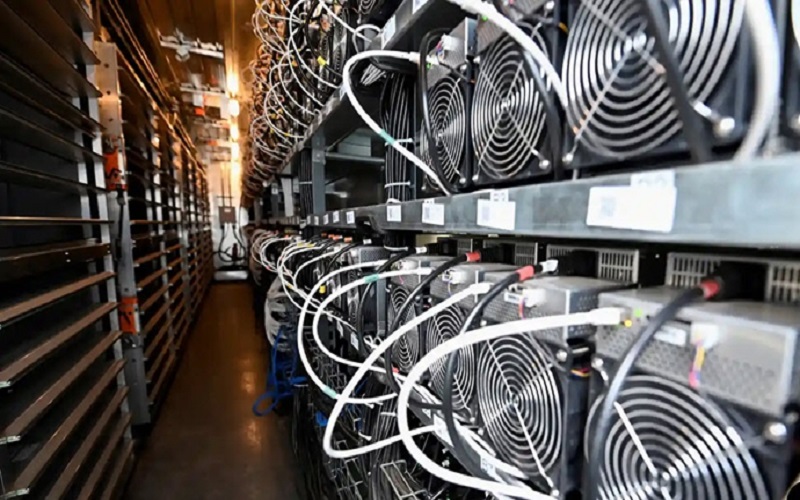

Iran is facing a deepening electricity crisis, not simply due to overconsumption or poor infrastructure, but as a direct result of state-sponsored cryptocurrency mining. Behind this crisis lies a powerful network often referred to as Iran’s “Bitcoin mining mafia,” which operates under the auspices of Supreme Leader Ali Khamenei and the Islamic Revolutionary Guard Corps (IRGC). Under the pretext of evading international sanctions, this mafia has siphoned off vast amounts of electricity, plunging the country into darkness and hardship.
Sanctions, Cryptocurrency, and Systematic Power Theft
The origins of this operation trace back to May 8, 2018, when the United States withdrew from the Joint Comprehensive Plan of Action (JCPOA) and reimposed sanctions targeting Iran’s oil exports and financial sector. In response, Iran regime’s leadership turned to cryptocurrency as a workaround to access foreign currency.
By 2019, reports of massive Bitcoin mining operations began surfacing, coinciding with unprecedented nationwide blackouts during that summer—an overlap too significant to be dismissed as mere coincidence.
Under direct orders from Khamenei, the IRGC launched extensive mining farms, many in cooperation with Chinese firms. These energy-intensive operations consumed staggering amounts of electricity, which in turn became the leading cause of rolling blackouts across the country.
Monopoly and Military Oversight
Cryptocurrency mining in Iran operates as a state-sanctioned monopoly. On July 28, 2020, the regime’s cabinet, led by then-Vice President Eshaq Jahangiri, officially placed all oversight of mining operations under the control of the Ministry of Intelligence. From an operational standpoint, however, the IRGC runs the show—leveraging its dominance over both the economy and national security apparatus to manage this illicit yet lucrative enterprise.
In 2020, then-Energy Minister Reza Ardakanian acknowledged foreign involvement, stating that any licensed entity could mine cryptocurrencies. Meanwhile, the state-run economic outlet Eghtesad Online confirmed that “the largest mining farms in Iran are in the hands of the Chinese, operating in cooperation with government institutions.” This collaboration further underscores the institutional nature of the operation, with direct support from the highest levels of power.
Institutional Endorsement of Exploitation
The regime’s enthusiasm for cryptocurrency mining is not merely tactical—it’s strategic. A 2019 report by the Strategic Research Institute of the Expediency Discernment Council promoted the expansion of Bitcoin mining, emphasizing its profitability: each Bitcoin required 2,150 kilowatt-hours of electricity—the energy equivalent of 20 barrels of oil. The report calculated that each barrel generated roughly $350 in profit for miners.
At the time, Bitcoin traded around $37,000. In 2025, with prices soaring to $100,000 per coin, the financial windfall from this state-backed operation has more than tripled. According to Borna News (February 2024), a staggering 95% of illegal mining farms are involved in electricity theft—further burdening an already strained national grid.
A Manufactured Crisis, Blamed on Citizens
Despite the clear role of state-sponsored mining in the country’s electricity shortages, regime officials have consistently shifted blame onto the public. Parliament and government bodies have even moved to legitimize cryptocurrency activities, while simultaneously accusing ordinary citizens of excessive energy use.
The absurdity of this narrative is evident in reports like one from the state-run ILNA news agency (May 13, 2025), which criticized a decision forcing students to begin school at 6 a.m.—requiring them to wake by 5 a.m. to conserve energy. “Under these conditions, what expectations are there for proper productivity and mental concentration of children?” the article questioned.
Regional Impacts: Golestan Province in Crisis
Nowhere is the human cost of this policy more visible than in provinces like Golestan. The regime’s own governor admitted that blackouts had knocked critical water wells offline, leaving agricultural trucks stranded in kilometer-long queues. Over 95% of the province’s water supply comes from underground sources, which require electricity to access. The resulting service disruptions have jeopardized both drinking water and agricultural productivity.
Conclusion
Iran’s electricity crisis is not merely the result of poor planning—it is the deliberate consequence of a regime that prioritizes illicit revenue generation over public welfare. The marriage of economic desperation, military control, and authoritarian secrecy has given rise to a Bitcoin mining mafia operating at the heart of the Islamic Republic. While regime insiders grow richer, ordinary Iranians are left in the dark—literally and figuratively.