


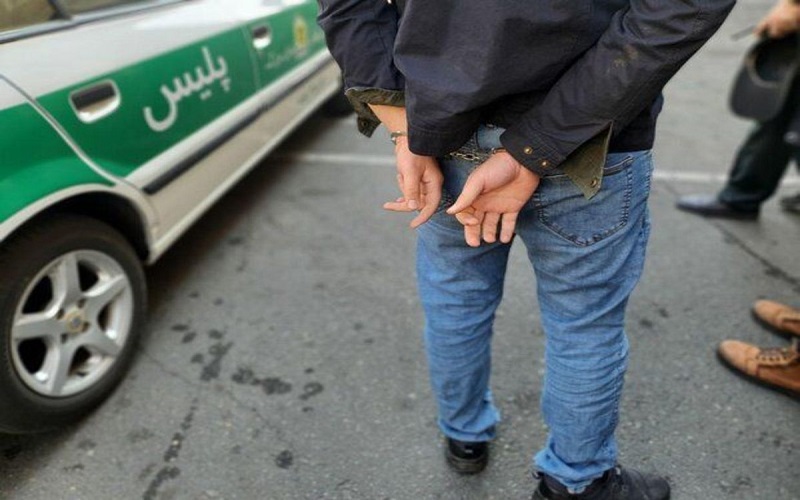

According to reports from Iran’s Statistical Center, the rate of theft in the country has increased nearly fourfold compared to the late 2000s. This alarming surge reflects broader socio-economic challenges gripping Iranian society.
On Thursday, May 15, while Iran’s regime leaders launched a coordinated media campaign to denounce Donald Trump’s recent criticisms of Iran’s economy, the Judiciary held a meeting on “Crime Prevention.” During this meeting, Judiciary spokesperson Asghar Jahangir admitted that approximately 80 percent of crimes in Iran stem from inflation and rising prices.
Citing research on the underlying causes of crime, Jahangir emphasized the critical role economic pressures play in fueling criminal behavior. He also warned that crime patterns are evolving, with cyberspace and digital communication platforms contributing to new forms of social harm.
Jahangir further identified several compounding factors—such as population density, rapid urbanization, the digital divide, and generational gaps between parents and youth—that are intensifying social disintegration and weakening the family structure.
While theft is a complex social issue with many contributing factors, numerous studies, including research from Amin University of Law Enforcement Sciences, confirm a direct correlation between economic conditions—especially inflation, unemployment, and sluggish economic growth—and rising theft rates. The findings suggest that theft is not merely a criminal issue but a symptom of deeper economic and social crises. Poverty, unemployment, class disparity, and family breakdown are cited as key drivers behind the surge in theft.
Despite the severity of the problem, institutions like the judiciary and police have failed to release transparent data on crime rates. Nonetheless, a growing number of street robbery videos—shared widely on social media—indicate a sharp increase in incidents targeting homes and businesses.
In a previous statement, Jahangir revealed that theft has remained the most common crime in Iran for the past 13 years. Statistics confirm that reported thefts have steadily increased in recent years, quadrupling since the late 2010s.
Additional data from the Iranian Prisons Organization shows that around 68 percent of incarcerated individuals are serving time for drug-related offenses or theft. Criminologists argue that these statistics highlight the direct impact of Iran’s deteriorating economy. Significantly, police figures show that 58 percent of thefts are classified as “petty theft”—a telling indicator of widespread financial desperation.
Despite the economic roots of many crimes, Iran’s judiciary continues to impose harsh, archaic punishments such as amputations and flogging, based on the regime’s medieval interpretation of Islamic law. These punishments violate international human rights norms and human dignity.
Under Iran’s Islamic Penal Code, the punishment for theft begins with the amputation of four fingers from the right hand for a first offense, followed by the left foot for a second offense, life imprisonment for a third, and even execution for a fourth. The law also mandates that multiple thefts be treated as a single offense until the prescribed “hadd” punishment is carried out.
What makes this situation even more paradoxical is that some of the most prolific thieves in Iran are the regime’s own officials. The Islamic Republic has fostered a plunder-based economy from the outset, siphoning off the nation’s wealth while leaving ordinary citizens impoverished. Over the past four decades, this systematic looting has pushed nearly 70 percent of Iran’s population below the poverty line.
This institutionalized corruption continues to drain the meager incomes of the people through overt and covert mechanisms. The regime’s economic policies and practices function less like a system of governance and more like a machinery of theft—one that punishes the poor harshly for minor offenses while allowing the powerful to steal with impunity.