


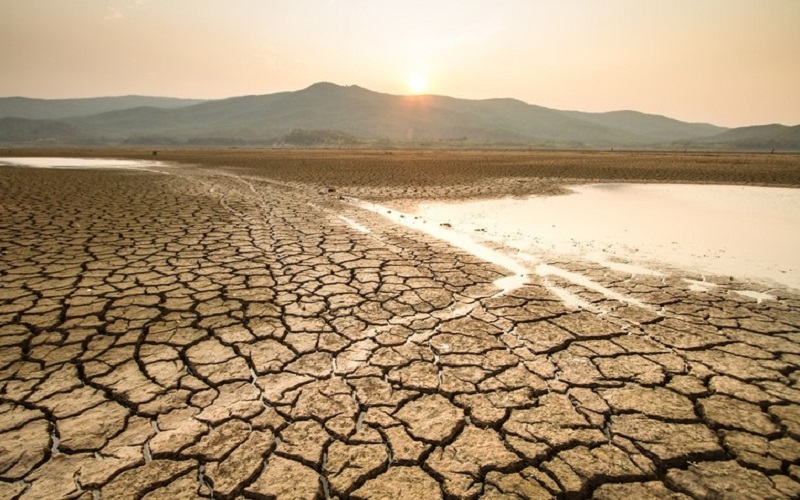

Iran is facing an escalating water crisis, with regime officials warning of severe shortages across the country. On Saturday, March 8, Iran’s Deputy Minister of Energy renewed his warning about the crisis, revealing that the water storage levels in several of the country’s most important dams have fallen to just 1 to 12 percent of their total capacity.
Simultaneously, Iranian regime President Masoud Pezeshkian acknowledged the severity of the situation, stating that the country is experiencing “severe water stress” and warning that “water cuts in Tehran and other cities in the near future are possible.”
Dams at Critically Low Levels
The Deputy Minister of Energy for Water Resources described the alarming state of Iran’s reservoirs. He reported that the Karaj Dam, a crucial source of drinking water for Tehran, is at only 7% of its total capacity, an unprecedented low. Additionally, Lar Dam is at just 1% capacity, while Latyan and Mamloo dams stand at 12%. “The emptiness of the Karaj Dam is unparalleled in its operational history and poses a significant threat to the sustainable water supply of the capital,” he stated.
Mohammad Javanbakht, another senior official, attributed this crisis to a 47% decline in rainfall in Tehran Province compared to long-term averages. He urged all citizens to take water conservation and management seriously to mitigate the crisis.
The Jahan-e-Sanat newspaper also reported that water reserves in Tehran’s five key dams have fallen to 272 million cubic meters, representing only 13% of their standard capacity.
Unprecedented Drought in Tehran Province
On last Friday, the CEO of Tehran Province Water and Wastewater Company, Mohsen Ardakani, issued a dire warning, stating that the province is experiencing its most severe drought in 57 years. “Since the beginning of this water year, Tehran Province has recorded its lowest rainfall in nearly six decades,” he noted. He further revealed that the combined water level of the Amirkabir, Latyan, Lar, and Mamloo dams—Tehran’s primary water sources—has plummeted to just 6% of total capacity.
Further exacerbating the crisis, reports emerged last Sunday of significant drops in water pressure and widespread outages across Tehran. Hesam Khosravi, Deputy Director of Tehran Water and Sewerage Company, confirmed the “worsening depletion of water resources” and acknowledged that authorities are being forced to regulate water pressure to manage supply. Some social media users reported that after contacting the Water and Sewerage Department, they were advised to “buy a pump and a water storage tank” to cope with the crisis.
Water Shortages Across the Country
While water shortages are affecting nearly the entire country, the situation appears to be most severe in Tehran, the northern provinces, and central regions such as Isfahan. Reports from Tehran, Mazandaran, and Gilan provinces indicate that residents have endured persistent water pressure drops and supply interruptions for several consecutive days. In some cases, the pressure has been so low that only ground-floor apartments can access running water at certain hours.
In the south, the crisis is equally dire. Abdolhamid Hamzepour, CEO of Hormozgan Province Water and Wastewater Company, warned that the province is facing a “critical” water supply situation. He noted that in the past five years, such an “unprecedented drought” has not been witnessed. The crisis has intensified over the last three years, and this year, rainfall has been insufficient. He confirmed that the Sar Ney, Esteghlal, and Nian dams in the south of the country are “on the verge of complete depletion.”
Root Causes: Beyond Climate Change
An analysis of climate data over the past three decades reveals a troubling trend: a simultaneous decline in rainfall and rising temperatures across Iran. However, experts stress that climate change and low precipitation are not the sole causes of the crisis.
Unregulated over-extraction of groundwater resources, poor watershed management, and inefficient water governance have played significant roles in worsening the situation. Since 2020, large portions of Iran’s wetlands and water bodies have either dried up or are at severe risk of disappearing. The environmental consequences have been devastating, with increasing dust storms and land subsidence posing additional hazards to communities across the country.
Experts have also pointed to the excessive and unregulated construction of dams as a major contributor to the crisis. Official data indicates that more than 600 dams have been built in Iran in recent decades, many without sufficient feasibility studies. These projects have disrupted natural river flows, drained wetlands, and accelerated land subsidence in downstream areas, further exacerbating the water shortage.
A Looming Crisis Demanding Urgent Action
The current water crisis in Iran is one of the most severe environmental challenges the country has faced in recent years. With dwindling reservoirs, worsening drought conditions, and mismanagement of resources, millions of Iranians are at risk of severe water shortages in the near future. Without immediate and effective intervention, the crisis could lead to devastating consequences for both the environment and the population.