

From foreign-currency allocation and raw-material imports to pharmaceutical production and distribution, a system dominated by regime-linked networks is driving up medicine costs, disrupting supplies, and forcing patients to choose between treatment and basic necessities.
Iran’s worsening drug crisis is exposing the human cost of a pharmaceutical system shaped by corruption, mismanagement, and the economic priorities of the ruling establishment. Medicines are becoming increasingly expensive and difficult to obtain, while patients with chronic and serious illnesses face growing uncertainty over access to essential treatments.
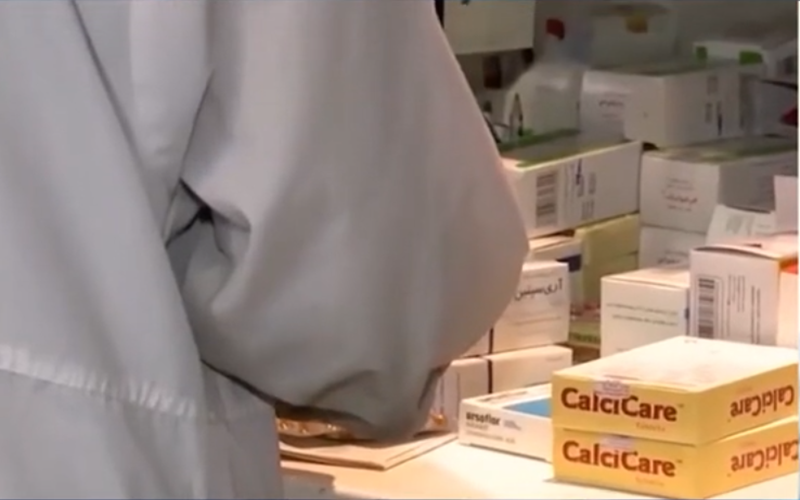
The crisis extends well beyond rising retail prices. Pharmaceutical imports have been disrupted, domestic manufacturers face shortages of raw materials and packaging supplies, and essential medicines for patients with special medical needs are increasingly difficult to find in state-regulated pharmacies. Meanwhile, some of these medicines remain available through the black market at exorbitant prices, putting them beyond the reach of even many middle-income families.
An examination of the crisis by pharmaceutical researcher Dr. Hossein Jahansouz, a postdoctoral researcher in biochemistry and medicinal chemistry and a member of the National Council of Resistance of Iran (NCRI), highlights how problems at every stage of the pharmaceutical supply chain contribute to the shortage and rising cost of medicines.
Foreign Currency Allocation: A Question of Political Priorities
Producing medicines requires a complex chain of operations, beginning with access to foreign currency to purchase active pharmaceutical ingredients, chemical compounds, and other essential materials.
According to Jahansouz, the currency allocated to domestic pharmaceutical production should be stable and protected from fluctuations in the exchange rate. Medicine production cannot function reliably if manufacturers are exposed to the continuous depreciation of the national currency and the resulting increases in import costs.
He contrasts the difficulties facing pharmaceutical companies with the regime’s ability to maintain funding for its security apparatus and regional proxy forces, including Iraqi militias, Yemen’s Houthis, Hamas, and Hezbollah.
The disparity, he argues, reflects the regime’s priorities. While the exchange rate has climbed from approximately 61,000 tomans per US dollar two years ago to around 270,000 tomans, funding for the regime’s security and proxy networks continues to receive priority.
Jahansouz argues that access to foreign currency for medicines should be treated as an essential public-health requirement, rather than being left vulnerable to the same financial instability affecting the wider economy.
Raw-Material Quality and the Pharmaceutical Mafia
Currency allocation is only the first stage of pharmaceutical production. Manufacturers also need a reliable supply of active ingredients, chemical compounds, and other materials required to produce tablets, capsules, injections, and syrups.
Jahansouz raises serious concerns about the quality of imported raw materials, particularly the presence of impurities in chemical substances purchased through networks allegedly connected to the Islamic Revolutionary Guard Corps (IRGC) and the Basij.
The issue is especially consequential for patients who must take medication continuously over months or years. Contaminated or substandard ingredients can compromise the safety and effectiveness of treatment. Depending on the nature of the impurities, exposure may also create additional health risks, including potential carcinogenic effects.
The problem does not end with the purchase of raw materials. Pharmaceutical companies must maintain appropriate manufacturing standards and ensure that finished medicines meet stringent quality requirements.
Jahansouz points to the involvement of regime-linked entities in the pharmaceutical sector, including the Barakat pharmaceutical group, as part of a broader structure in which politically connected networks exercise influence over different stages of the industry.
Distribution Failures and the Diversion of Medicines to the Black Market
Even when medicines are successfully manufactured, patients still depend on an effective distribution system to receive them safely.
Pharmaceutical products often require specific storage and transportation conditions. Some are sensitive to light, others to temperature or humidity. Failure to maintain the conditions specified by manufacturers can compromise the quality and effectiveness of medicines before they reach pharmacies.
These requirements are particularly important in Iran’s hot southern provinces. In Khuzestan, for example, summer temperatures can reach 50 degrees Celsius in the shade, making temperature-controlled transportation and storage essential for many pharmaceutical products.
Jahansouz also identifies the diversion of medicines from official distribution channels into the black market as a major source of shortages and inflated prices. He describes networks of regime-connected intermediaries who, instead of supplying pharmacies, divert medicines to smugglers and unauthorized sellers.
The consequences are direct: patients cannot find essential medicines in pharmacies but may encounter them through informal markets at several times their official price.
This creates a parallel pharmaceutical economy in which access to treatment increasingly depends on a patient’s ability to pay inflated prices or navigate unofficial distribution networks.
Insurance Cannot Protect Patients From Soaring Prices
Even when patients manage to find their prescribed medicines, the final price can make treatment unaffordable.
Health insurance offers limited protection when the underlying cost of medicines rises sharply. Jahansouz illustrates the problem with a simple example: if a medicine costs one million tomans and insurance covers 70 percent, the patient must pay 300,000 tomans.
But if the price triples to three million tomans while the insurance coverage ratio remains unchanged, the patient’s share rises to 900,000 tomans.
The insurance system may still formally cover the same percentage, but the actual financial burden on patients has tripled.
For families already struggling with inflation, declining purchasing power, and rising living costs, these expenses can force impossible choices between buying medicines and paying for food and other basic necessities.
Patients with chronic illnesses are particularly vulnerable because their treatment cannot simply be postponed or discontinued without potentially serious consequences.
A Public-Health Crisis Rooted in the Regime’s Priorities
Iran’s drug crisis cannot be understood as a simple shortage of imported products or a temporary disruption in pharmaceutical production. It involves interconnected problems at every stage of the supply chain: foreign-currency allocation, raw-material procurement, manufacturing standards, storage, transportation, distribution, and insurance coverage.
Jahansouz attributes responsibility for these failures to the regime’s control over the pharmaceutical sector and the influence of networks connected to the IRGC and other powerful institutions.
His assessment points to a fundamental contradiction in the regime’s economic priorities. Resources are directed toward maintaining its security apparatus and regional operations, while the system responsible for supplying medicines to the population is increasingly unable to guarantee affordability, quality, and availability.
The ultimate cost is borne by patients and their families. When essential medicines disappear from pharmacies, when prices rise beyond household budgets, and when insurance coverage fails to protect patients from escalating costs, the consequences extend beyond economic hardship to the safety and lives of millions.
A country’s pharmaceutical system should guarantee that patients can obtain safe, effective, and affordable treatment. In Iran, however, access to medicine is increasingly determined by purchasing power and proximity to networks controlling supply and distribution. This is not merely a pharmaceutical problem. It is another manifestation of a system in which the health and welfare of the population are subordinated to the interests of the ruling establishment.