



Joint statement to UN Human Rights Council urges immediate action as political prisoners and protesters face execution
Thirty human rights organizations have warned the United Nations Human Rights Council that Iran’s escalating use of the death penalty against political prisoners, protesters, and perceived opponents has become an urgent atrocity-prevention concern.
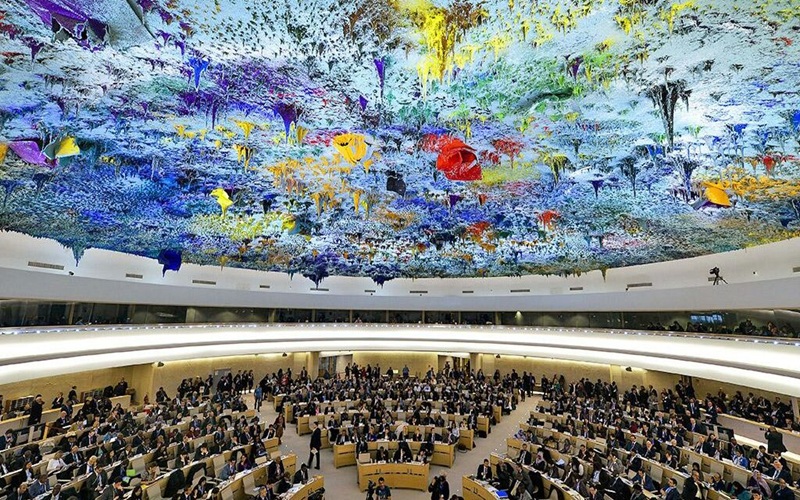
In a joint written statement submitted to the 63rd session of the UN Human Rights Council, the organizations said executions are increasingly being used to suppress dissent, intimidate society, and punish people for exercising their rights to freedom of expression, association, and peaceful assembly.
The statement argues that the current pattern should not be viewed as a series of isolated executions. Instead, the NGOs point to indicators identified in the United Nations Framework of Analysis for Atrocity Crimes, including a history of serious human rights violations, motives or incentives to target civilian populations, enabling conditions, and indications of widespread or systematic attacks.
Escalation Following the December 2025 Protests
The organizations cite the findings of the Independent International Fact-Finding Mission on Iran, which described a sharply deteriorating human rights environment following protests that began on December 28, 2025.
According to the joint statement, authorities responded with violence, mass arrests, an internet shutdown, and expedited death-penalty proceedings that violated fundamental rights to life, due process, and fair trial. The UN fact-finding mission also documented statements by senior judicial and prosecutorial officials that placed protesters at risk of capital punishment, including the characterization of protesters as having committed moharebeh, or “waging war on God,” a capital offense under Iranian law.
The repression intensified following the outbreak of armed conflict on February 28, 2026. UN experts warned on June 19 that Iranian authorities had moved aggressively against dissent, with thousands detained and reports of torture, enforced disappearance, mock executions, and forced televised confessions.
The NGOs argue that political prisoners, protesters, and members of ethnic and religious minorities remain at acute risk.
Young Protesters Among Those Executed
The statement highlights the so-called Alikhani Square case in Isfahan, where four defendants were reportedly executed in July. Erfan Esfandiari and Gol-Mohammad Mohammadi were hanged on July 19, followed by Abolfazl Sepahi Badjani and Amirhossein Safari Hosseinabadi, who were publicly hanged at Alikhani Square on July 28.
All four were reportedly in their teens or twenties. The NGOs also cite reports that the defendants were denied lawyers of their choosing and that other co-defendants remain under death sentences or face the risk of execution. The public nature of the July 28 executions, the statement says, appears to have extended the intimidation effect beyond those executed.
Amnesty International has also documented the executions of dissidents targeted over their actual or alleged affiliation with the People’s Mojahedin Organization of Iran (PMOI/MEK). Six people—Vahid Bani Amerian, Abolhassan Montazer, Babak Alipour, Pouya Ghobadi, Akbar Daneshvarkar, and Mohammad Taghavi Sangdehi—were executed between March 30 and April 4, reportedly in secret and without prior notice to them, their families, or lawyers.
The statement further cites the July 22 execution of political prisoner Mehdi Khanaki in Karaj. He was executed on charges of membership in the PMOI and participation in the January 2026 protests.
Capital Charges Used Against Dissent
The NGOs identify a broader legal pattern behind these cases. They say vaguely defined offenses such as moharebeh, baghi—armed rebellion against the state—and efsad-e fel-arz—spreading corruption on earth—are being used to turn dissent, protest activity, association, or alleged opposition links into capital offenses.
The joint statement also points to Iran’s 2025 espionage legislation, which the UN fact-finding mission said expanded the use of the death penalty through broad and undefined provisions, including offenses related to sharing images or videos with foreign media.
At the same time, resistance to executions continues inside Iran. The NGOs note that political prisoners have maintained the “No to Executions Tuesdays” campaign for more than 132 weeks across at least 59 prisons. In July, approximately 1,500 prisoners at Ghezel Hesar prison also participated in a sit-in strike lasting more than two weeks.
Warning Signs Linked to the 1988 Massacre
The statement places the current executions within the broader history of political repression in Iran, particularly the 1988 mass executions of political prisoners.
It cites the July 2024 legal assessment by then-UN Special Rapporteur Javaid Rehman, who concluded that the mass extrajudicial executions and enforced disappearances of 1981–1982 and 1988 amounted to crimes against humanity and genocide. The NGOs argue that those findings remain relevant because the current pattern is unfolding amid continuing impunity and the absence of truth, justice, and reparations for victims’ families.
They identify several present-day warning signs: the dehumanization of political opponents, the use of national-security charges to criminalize dissent, accelerated executions, secrecy surrounding executions, and rhetoric that appears to justify repeating past atrocities.
The statement specifically points to a July 2025 report by Fars News Agency, a state-affiliated outlet linked to the Islamic Revolutionary Guard Corps, which described the 1988 executions as a “successful historical experience” and argued for their repetition against contemporary political opponents. UN Special Procedures have also raised concerns over the destruction of gravesites associated with the 1988 massacre.
NGOs Urge Preventive Action
The organizations call on Human Rights Council member and observer states to demand an immediate halt to executions, particularly those involving political prisoners, protesters, ethnic and religious minorities, and people convicted under national-security charges.
They also call for independent legal counsel for detainees, protection against torture and ill-treatment, enhanced monitoring by the UN Special Rapporteur and Fact-Finding Mission, and an assessment by the UN Office of the Special Advisers on the Prevention of Genocide and on the Responsibility to Protect under the UN Framework of Analysis for Atrocity Crimes.
The NGOs further urge the preservation of evidence concerning executions, torture, arbitrary detention, enforced disappearance, and political persecution, as well as an independent international mechanism to address the 1988 mass executions and enforced disappearances.
Their central warning is that the international community should recognize the current indicators before they develop further. “Prevention, accountability and protection of the right to life,” the statement concludes, must be central to the Human Rights Council’s response.