


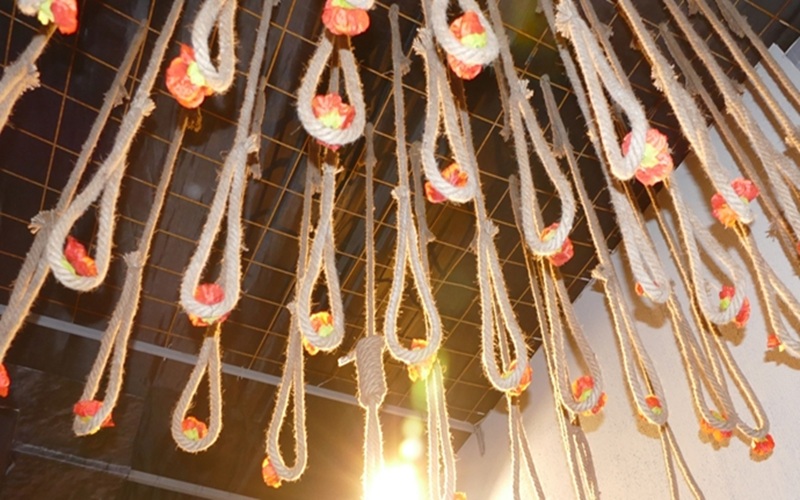

The 1988 massacre of political prisoners remains the Iranian regime’s deepest historical wound, fueling a nationwide justice movement that has outlived its architects and continues to challenge the regime’s legitimacy.
Thirty-eight years after the massacre of thousands of political prisoners in the summer of 1988, the crime remains far more than a tragic chapter in Iran’s history. It has become a living political reality—one that continues to haunt the Iranian regime and shape the struggle for freedom inside the country.
For decades, the regime has invested enormous effort in concealing the full scale of the massacre. It has hidden evidence, silenced witnesses, destroyed mass graves, intimidated families, and classified the truth as one of its most guarded state secrets. Even many officials within the ruling establishment have remained unaware of the full extent of the killings, reflecting how deeply the regime fears its own history.
Yet history has proven impossible to bury.
Instead of disappearing beneath censorship and intimidation, the memory of the victims has evolved into one of the most enduring forces challenging the regime’s legitimacy. Every attempt to erase the massacre has only strengthened the determination of survivors, families, and younger generations to demand accountability.
A Crime That Refuses to Fade
The Iranian regime believed that by executing thousands of political prisoners—many of them supporters of the principal democratic opposition—it could permanently extinguish organized resistance.
The opposite occurred.
The victims became symbols whose absence proved more powerful than the regime had anticipated. Their stories spread through families, communities, universities, and eventually across the international stage. What began as an attempt to eliminate an opposition movement gradually transformed into a nationwide campaign for truth and justice.
This explains why the 1988 massacre remains such a sensitive subject for Tehran. Unlike many historical atrocities that authoritarian governments eventually acknowledge or reinterpret, the regime continues to suppress discussion because it understands that the massacre represents more than a historical crime—it exposes the foundations upon which its system of repression was built.
From Prison Cells to the Streets
Modern Iranian history demonstrates that the struggle between freedom and dictatorship never ceased after the mass executions.
Throughout the 1980s, political prisoners became the principal front line of resistance inside Iran’s prisons while organized opposition challenged the regime on political and international fronts. The executions of 1988 were intended to end that confrontation once and for all.
Instead, they became the beginning of a new chapter.
The spirit of those executed has echoed through successive generations of protest—from the student demonstrations of 1999 to the nationwide uprisings that have repeatedly shaken the country in recent years. Each new generation has rediscovered the stories that authorities attempted to erase, connecting present-day demands for freedom with unresolved crimes of the past.
The pursuit of justice has therefore become inseparable from Iran’s broader democratic aspirations.
Why Dictators Fear Memory
Authoritarian governments often assume that time works in their favor. They believe that witnesses will disappear, documents will be destroyed, and younger generations will eventually forget.
Iran’s rulers miscalculated.
The architects of the 1988 massacre expected fear to become permanent. Instead, remembrance became permanent.
Every destroyed cemetery, every threatened family, every censored publication, and every effort to suppress discussion has reinforced public curiosity and strengthened calls for accountability. Rather than eliminating the memory of the victims, repression has transformed them into enduring symbols of resistance.
This dynamic helps explain why the regime continues to react so aggressively whenever the massacre is discussed internationally. The issue is no longer merely about past crimes—it raises questions about present legitimacy and future accountability.
Justice Delayed Is Not Justice Denied
For nearly four decades, the movement seeking justice for the victims of the 1988 massacre has continued despite arrests, censorship, and intimidation. Families have preserved the names of the victims, survivors have documented testimonies, and human rights advocates have ensured that the massacre remains part of the global conversation on impunity.
Inside Iran, this historical memory has merged with contemporary demands for democracy, human rights, and an end to authoritarian rule.
The regime may continue attempting to suppress the truth, but history suggests that collective memory is more resilient than political repression.
The story of the 1988 massacre is therefore not only about one of the darkest crimes in Iran’s modern history. It is also about the inability of tyranny to silence the demand for justice. Thirty-eight years later, the voices the regime sought to extinguish continue to resonate across Iran, reminding each new generation that accountability remains unfinished—and that the pursuit of justice has become an inseparable part of the country’s struggle for freedom.