


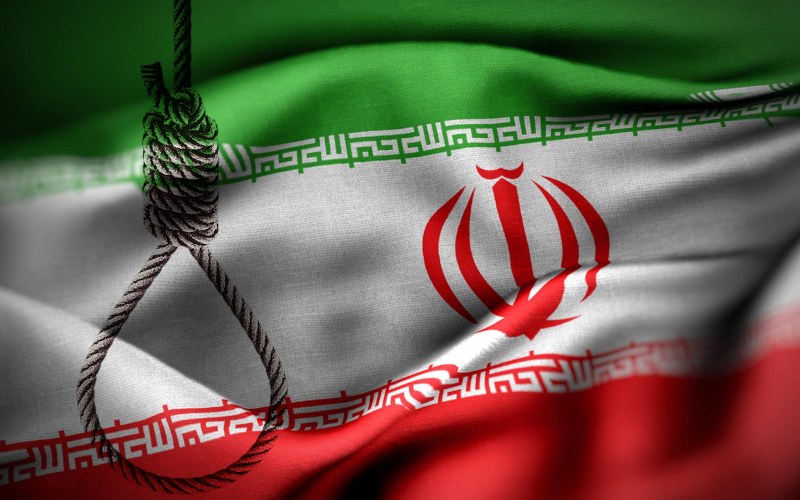

On the International Day Against Execution, the world turned its attention to the alarming rise of executions in Iran. As the Khamenei regime aggressively escalates its execution campaign, 1,500 prominent global figures have rallied together to call for an end to executions in Iran. Among those supporting this cause are 34 current and former presidents and prime ministers, 59 former ministers, 93 UN rapporteurs and ambassadors, 102 international judges and lawyers, 109 human rights experts, 46 Nobel laureates, 455 parliamentarians, 90 mayors, and 85 city council members. Their unified voice is a powerful stand against the death penalty and the atrocities committed by the Iranian regime.
This collective statement, released on October 10, the International Day Against Execution, marks a critical moment in the fight against capital punishment in Iran. According to Amnesty International, “Iran alone accounted for 74% of all recorded executions” worldwide in 2023, a statistic that has only worsened since the current president took office. In August 2024, more than 100 prisoners, including 10 women, were executed, further exemplifying the regime’s unyielding commitment to its execution agenda.
These executions include political dissidents, such as Reza Rasaei, who was arrested during the November 2022 uprising in Shahriar, Tehran province. The rapid and often unjust legal processes leading to these executions are deeply troubling. In March 2024, the Independent International Fact-Finding Mission on Iran (FFMI) reported that many of these death sentences were issued in hastily conducted trials, with state authorities pushing for swift executions. The report further stated that many of these human rights violations, including executions, amount to crimes against humanity—acts of murder, imprisonment, torture, and sexual violence.
Professor Javaid Rehman, the former United Nations Special Rapporteur on human rights in Iran, echoed these concerns in his July 2024 report, “Atrocity Crimes and Grave Violations of Human Rights.” He described the 1988 massacre, in which 30,000 political prisoners were executed, as both a “crime against humanity” and “genocide.” Rehman emphasized that these mass killings, along with other inhumane acts such as torture, were carried out with genocidal intent, particularly against members of the People’s Mojahedin Organization of Iran (PMOI).
The Iranian regime continues to use executions as a tool of political repression, aiming to instill fear and prevent future uprisings. The international community’s longstanding failure to adequately respond to these atrocities has emboldened the regime, allowing it to persist in its suppression, torture, and execution of its people. In 2024, political prisoners across 20 Iranian prisons began staging weekly hunger strikes as part of the “No to Executions” campaign, which has gained momentum both inside and outside Iran.
In this context, Maryam Rajavi’s call for the abolition of the death penalty in Iran resonates more strongly than ever. Her steadfast commitment to ending executions, outlined in her Ten-Point Plan for Iran’s future, has been a cornerstone of her advocacy for over two decades. At the International Jurists’ Conference in Paris on August 24, 2024, Rajavi once again reaffirmed this goal, urging the global community to unite against the death penalty in Iran.
As the world stood with the Iranian people on this year’s International Day Against Execution, it is clear that the call to end the regime’s brutal practices is growing louder. The fight to abolish the death penalty in Iran is not just a matter of human rights—it’s a global responsibility.