


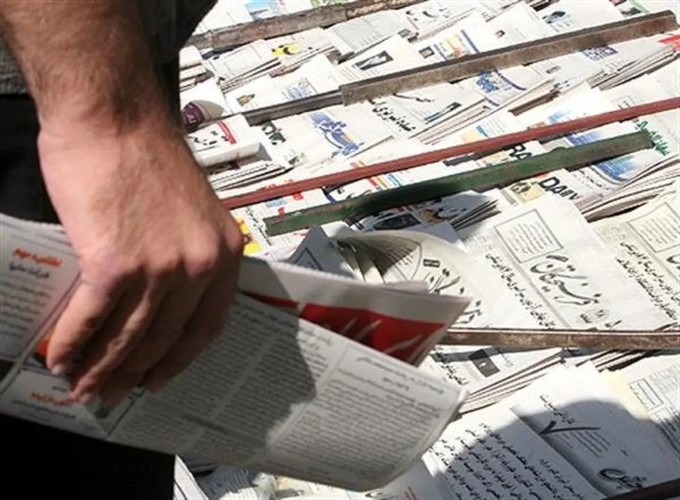

On the International Day to End Impunity for Crimes Against Journalists, Iran stands as one of the world’s most dangerous countries for reporters—where truth-telling is treated as a crime and justice is denied by design.
A Day to End Impunity — But Not in Iran
November 2 marks the International Day to End Impunity for Crimes Against Journalists, when global institutions like UNESCO, Reporters Without Borders (RSF), and the Committee to Protect Journalists (CPJ) call on governments to hold perpetrators of violence against reporters accountable.
But in Iran, impunity is not a failure of the system—it is the system. For over four decades, journalists have faced imprisonment, intimidation, and even death, while those responsible walk free under the protection of state power.
Where Journalism Is a Crime
In the 2025 World Press Freedom Index, RSF ranks Iran 176th out of 180 countries—a near-bottom position that reflects total state domination over the media. According to RSF, “Iran’s media operate under the absolute control of government and security institutions,” leaving no journalist safe from arbitrary arrest or threats.
Since the nationwide protests of 2022, the CPJ reports that at least 90 journalists have been arrested. Not a single official has faced consequences for these violations. The message is clear: in Iran, truth-telling is treason.
Laws That Legalize Repression
Iran regime’s Press Law, first passed in 1985 and repeatedly amended, allows authorities to close any outlet deemed “contrary to Islamic principles or national security.” This deliberately vague language gives the Ministry of Culture and its Press Supervisory Board unlimited power to silence dissenting voices.
Most journalists are tried in Revolutionary Courts, where judges appointed by the head of the judiciary preside over closed sessions without transparency or due process.
Charges like “propaganda against the system,” “actions against national security,” and “collaboration with hostile media” are routinely used to criminalize independent reporting. Defendants are often denied access to lawyers and evidence, making fair trials impossible.
Justice Denied, Lives Lost
The list of journalists who have suffered—and died—under this system is long, but justice has never followed.
In 2003, Zahra Kazemi, an Iranian-Canadian photojournalist, was arrested while photographing outside Evin Prison. She died in custody, and the court concluded her killer was “unknown.”
In 2022, Baktash Abtin, a poet and documentary filmmaker, died from COVID-19 after authorities allegedly delayed his transfer to a hospital. His family accused prison officials of negligence, while officials dismissed the outcry as “politicized.” No independent investigation was ever conducted.
These cases reflect a grim truth: in Iran, journalists can be silenced permanently—and the system ensures their stories end without accountability.
Security Agencies as Instruments of Fear
The persecution of journalists in Iran is driven less by courts than by security forces. The Ministry of Intelligence, the IRGC Intelligence Organization, and the Cyber Police (FATA) act as the regime’s enforcers.
They frequently operate outside judicial authority—arresting reporters, confiscating equipment, and interrogating them for weeks without access to lawyers. In some cases, the same agents later appear in court as witnesses or plaintiffs, serving simultaneously as interrogator, accuser, and judge.
This structure turns every act of journalism into a confrontation with the state’s machinery of control.
When Reporting Becomes “A Threat”
The arrests of Niloufar Hamedi and Elaheh Mohammadi, journalists from Shargh and Hammihan newspapers, exposed this machinery to the world. Both were detained after covering the death of Mahsa Amini in 2022—a story that ignited nationwide protests.
Their trials were held behind closed doors, and regime officials refused to disclose who ordered their arrests or what evidence justified their detention. No institution took responsibility. Their only “crime” was revealing what the regime wanted hidden.
From Print to Pixels: Repression Goes Digital
As social media platforms became vital for information-sharing, Iran regime’s authorities extended their reach into the digital sphere. The Cyber Police now monitor online activity, summoning and harassing journalists and media managers for posting critical views.
Security forces have adopted new tactics—hacking accounts, threatening family members, and leaking personal information to intimidate reporters into silence.
Since 2009, Iran’s regime has built an expansive internet surveillance and filtering system. Independent news outlets are blocked, and only accessible through VPNs. During protests, the regime routinely shuts down internet access to erase digital evidence of its own repression.
No Path to Justice
Within Iran, no independent mechanism exists to investigate journalists’ complaints against security or judicial abuses. The Supreme National Security Council, which helps dictate media policy, is itself one of the main censors.
Parliamentary oversight bodies like the Article 90 Commission and the National Inspection Organization have never intervened in such cases.
Internationally, UN Special Rapporteurs on Human Rights in Iran—including Javaid Rehman and his successors—have repeatedly called for independent investigations into abuses against journalists. Tehran has rejected every single request.
Silencing a Generation of Truth-Tellers
This entrenched impunity has driven hundreds of journalists into exile and forced many others to abandon the profession entirely. Independent media have been hollowed out, and access to reliable information within Iran has become increasingly rare.
Each silenced reporter represents not just a personal tragedy, but a loss for an entire society’s right to know. By criminalizing journalism, the Iranian regime has turned the pursuit of truth into an act of defiance—and those who continue to report, into symbols of resistance.