


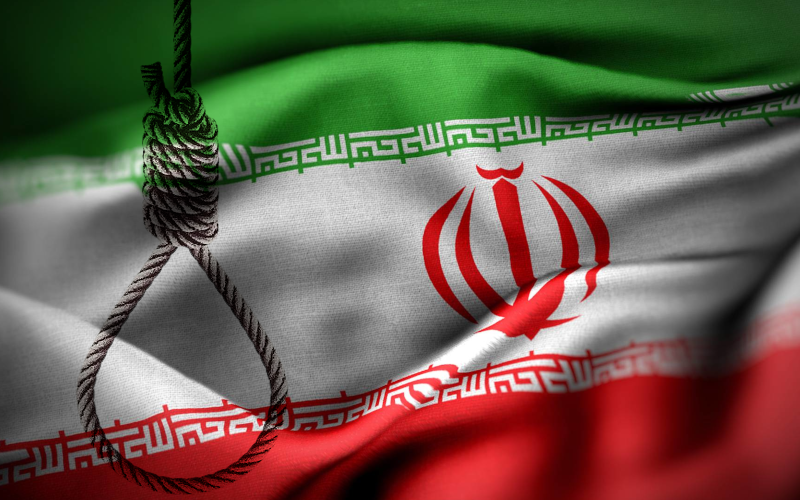

Wave of executions, including political prisoners, sparks international condemnation and warnings of a repeat of the 1988 massacre.
In a disturbing escalation of state violence, the Iranian regime has dramatically increased its use of executions in recent days, drawing sharp condemnation from international observers, legal experts, and political leaders across Europe.
Between August 3 and 6, at least 29 prisoners were executed across Iran, according to the Iranian Resistance. Among them were Behrouz Ehsani and Mehdi Hassani, both identified as political prisoners and supporters of the People’s Mojahedin Organization of Iran (PMOI/MEK). The Resistance accused Supreme Leader Ali Khamenei of accelerating a brutal and merciless killing machine and called on the United Nations to act immediately to stop the executions.
Maryam Rajavi Calls for Urgent International Action
Maryam Rajavi, President-elect of the National Council of Resistance of Iran (NCRI), issued an urgent appeal to the United Nations and relevant international bodies, urging them to intervene to save the lives of political prisoners on death row. “With the brutal mass executions on Sunday, August 3rd, the number of prisoners executed during Pezeshkian’s tenure has reached at least 1,515. Khamenei and the doomed Velayat-e Faqih regime, beset by relentless internal and external crises, are resorting to desperate measures—erecting gallows in cities across the country—in a futile attempt to quell rising public outrage and suppress the outbreak of another uprising,” she said.
With the brutal mass executions on Sunday, August 3rd, the number of prisoners executed during Pezeshkian’s tenure has reached at least 1,515.
Khamenei and the doomed Velayat-e Faqih regime, beset by relentless internal and external crises, are resorting to desperate…— Maryam Rajavi (@Maryam_Rajavi) August 4, 2025
European Parliament: “We Were Shocked”
The executions of Ehsani and Hassani sparked a wave of reactions in Europe. In a letter addressed to Antonio Costa, President of the European Council, and Kaja Kallas, the EU’s High Representative for Foreign Affairs and Security Policy, several Members of the European Parliament (MEPs) denounced the killings and urged immediate action.
“As committed advocates for HR and justice, were shocked to hear of the execution of political prisoners, Behrouz Ehsani, 70 and Mehdi Hassani, 49, at dawn on July 27, 2025,” the letter read. “The European Parliament issued a resolution w/ debate in their name in April 2025 to halt their death sentences. We write to express our deep alarm over the escalating wave of political executions in Iran — a brutal trend that evokes the darkest memories of the 1988 Massacre.”
Urgent Appeal to Stop Escalating Political Executions in Iran
MEPs, committed advocates for HR and justice, were shocked to hear of the execution of political prisoners, Behrouz Ehsani, 70 and Mehdi Hassani, 49, at dawn on July 27, 2025.#StopExecutionsInIran pic.twitter.com/QmHvyk3OrI— Friends of a Free Iran – EP (@FOFI_EP) July 29, 2025
The MEPs also highlighted an editorial published by Fars News Agency, a mouthpiece for Iran’s Islamic Revolutionary Guard Corps (IRGC), titled “Why the 1988 Executions Must Be Repeated”. The letter warned that this was not mere rhetoric, but a “direct call for mass state violence,” which has now been translated into action.
Since the appointment of Masoud Pezeshkian in August 2024, nearly 1,500 executions have been recorded in Iran—an “alarming surge in state-sponsored killings.”
Legal Experts Warn of Another 1988-Style Massacre
Five days before the executions of Ehsani and Hassani, over 300 international legal experts and human rights professionals issued a joint statement warning that Iran may be preparing to repeat the 1988 prison massacre, during which over 30,000 political prisoners, mostly affiliated with the MEK, were executed on the orders of then-Supreme Leader Ruhollah Khomeini.
The signatories included former UN officials, international court judges, former presidents and foreign ministers, Nobel laureates, and prominent human rights scholars. They urged the United Nations General Assembly to address the 1988 massacre in its upcoming resolution on Iran.
“In 1988, the world remained silent. This time, that mistake must not be repeated,” the statement emphasized.
Washington Post Publishes Warning from Former War Crimes Prosecutor
The warning from legal experts was echoed in an op-ed published by the Washington Post, written by Stephen J. Rapp, former Chief Prosecutor for the International Criminal Tribunal for Rwanda and a signatory to the joint statement.
“As a former international prosecutor, I am compelled to speak out against a pattern of escalating human rights violations in Iran ,” Rapp wrote. “A pattern that evokes the darkest chapters of that country’s history and demands a sustained international response. At stake is not only justice for the victims, but also the world’s credibility in preventing mass atrocities. If the present trajectory continues, Iran’s execution tally for 2025 could exceed any in modern memory — except, perhaps, for the horror of 1988. That summer, approximately 30,000 political prisoners were summarily executed. Their only crime was “holding onto their belief” in a democratic opposition. The death commissions responsible for those atrocities are now praised for their brutality.”
A Call for Accountability
The recent executions and the Iranian regime’s open endorsement of past atrocities mark a dangerous return to systematic political violence. With mounting evidence of crimes against humanity and a growing international consensus, the time for global silence has passed.
The brutal executions of Mehdi Hassani and Behrouz Ehsani, political prisoners in Iran, mark yet another alarming chapter in the regime's systematic repression. With 1,459 executions in a year, the Pezeshkian presidency offers no reform—only silence and suffering. The European… pic.twitter.com/lIQmtIL0BO
— European Democrats (@democrats_eu) July 29, 2025
As Maryam Rajavi and hundreds of global experts have warned, the international community must not allow history to repeat itself. Iran’s leaders must face justice—and political prisoners must be protected before more lives are lost.