


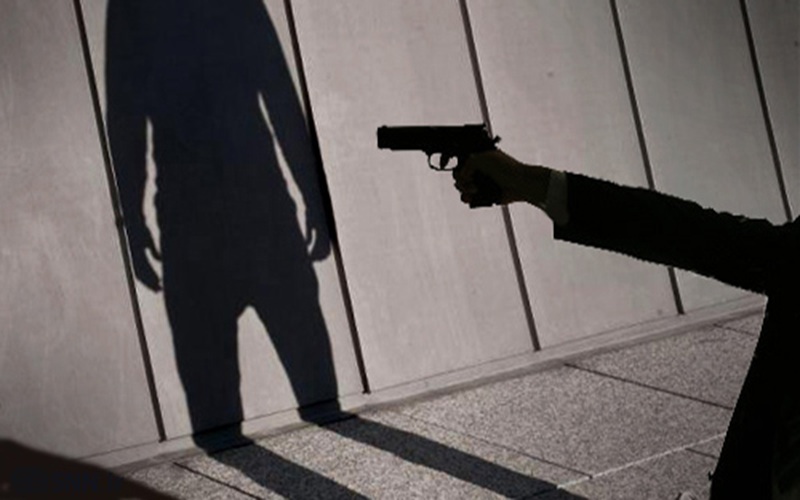

From ideological purges to external scapegoating, Tehran’s survival hinges on a perpetual state of threat—real or imagined.
Sometimes, nothing is more vital to a regime’s survival than the presence of an enemy. Whether real or fictional, the point is not authenticity—but fear. If people are afraid, if they believe there is a looming threat, then the regime has what it needs: a tool to suppress, deceive, and retain power.
Throughout history, many governments have depended on enemies to define themselves. To maintain their legitimacy, these regimes constantly pointed fingers outward, at forces allegedly conspiring to destroy the nation. These enemies—sometimes real, often imaginary—were invoked so frequently that eventually, even the regime itself believed in them.
These invented adversaries are rarely seen, never verified, yet omnipresent. Citizens are expected to curse them, fear them, and blame them for everything—from economic failure to civil unrest. The enemy may not exist in physical form, but its psychological presence is overwhelming. And that’s all it takes. Under this manufactured fear, freedoms are curtailed, dissenters are arrested, the press is muzzled, and all criticism is branded as betrayal.
Because in times of crisis, people don’t ask questions. Under the shadow of a threat, the regime is always “right.”
This is not fiction—it is a recurring story throughout history. Power has long had the capacity to conjure enemies from thin air. In the case of Iran, the clerical regime institutionalized enemy-creation as a central pillar of its survival strategy from the very beginning.
A simple glance at state slogans, official speeches, or the content of Iranian state media confirms the pattern. There is always an external force accused of plotting, sabotaging, infiltrating, or inciting: a force that must be blamed for discontent, unrest, or even economic failures.
In this system, if no enemy exists, one must be invented. Because without an enemy, who is left to blame for inflation, repression, censorship, corruption, discrimination, and systemic injustice?
Over the years, the list of “enemies” has grown steadily longer:
From the United States and Israel, to the European Union and the United Nations, from protesting women and independent journalists to labor unions, teachers, and even schoolchildren chanting in the streets.
These enemies change from one day to the next, but the policy remains constant. Yesterday’s enemy might have been liberals or leftists; today it could be someone marching for peace or questioning the legitimacy of war.
Groups like the Fedayeen and the MEK, who played a role in the 1979 revolution, were among the first to be targeted by the Iranian regime. They were soon demonized as “anti-revolutionary,” “foreign agents,” or “enemies of religion.” Thousands were arrested and tortured, and hundreds were executed—particularly during the 1988 massacre, one of the darkest chapters in modern Iranian history.
But the repression wasn’t merely physical. The regime also launched a campaign to erase the historical memory of the left. To this day, leftists are accused of infiltration, naivety, or complicity. It is a deliberate erasure—a rewriting of history meant to delegitimize any alternative political thought.
This pattern is not unique to Iran. Regimes that cannot tolerate dissent always manufacture threats. In Iran today, the strategy continues: enemy-building as a tool to suppress dissent, shift blame, and prolong authoritarian rule.
Until this cycle is broken, and people refuse to fear the shadows projected on the wall, real change remains elusive.