Tehran authorities escalate efforts to erase evidence of crimes against humanity by converting Section 41—resting place of thousands of executed dissidents—into a parking lot and construction site.
Reports and images from Tehran reveal that the Iranian regime has intensified its destruction of Section 41 in Behesht Zahra Cemetery, the burial site of thousands of members and supporters of the People’s Mojahedin Organization of Iran (PMOI/MEK) executed in the 1980s.
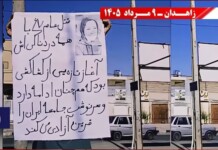
The area, already leveled and turned into a parking lot, has now been walled off, fitted with signs labeling it “Mersad Parking,” and subjected to new construction activities aimed at permanently erasing evidence of crimes against humanity.
According to eyewitness accounts, the regime has blocked filming and photography of the site, erecting barriers to conceal ongoing construction. The move follows widespread domestic and international condemnation after revelations in August 2025 that Section 41 had been bulldozed and flattened.
On August 11, 2025, the Secretariat of the National Council of Resistance of Iran (NCRI) warned that the destruction of Section 41 constituted an attempt to obliterate evidence of genocide and crimes against humanity. The NCRI emphasized that such actions are not only acts of desecration but also direct participation in those crimes.
Only days later, on August 19, Tehran’s Deputy Mayor Davoud Goudarzi brazenly admitted to the operation, stating: “Section 41 was just left like that, and we needed a parking lot. We got permission from officials and turned it into a parking area.” (Dideban Iran, August 19, 2025).
The NCRI underscored that Goodarzi’s admission reflects the involvement of the regime’s highest authorities. The term “officials” in theocratic Iran, the opposition stresses, points directly to Supreme Leader Ali Khamenei and his inner circle.
The Resistance further stated that the destruction of the graves was carried out under orders from Khamenei and other regime leaders, warning that under international law, the eradication of evidence of genocide and crimes against humanity constitutes a continuation of those crimes.
The NCRI has called on the United Nations and relevant international bodies to take urgent action to halt the regime’s ongoing desecration of mass graves, safeguard the memory of victims, and hold the perpetrators accountable before international justice.
The systematic effort to erase evidence comes as part of a decades-long campaign by the regime to conceal the scale of atrocities committed during the 1980s, particularly the 1988 massacre in which over 30,000 political prisoners, mostly MEK members, were executed and buried in unmarked or mass graves across Iran.