


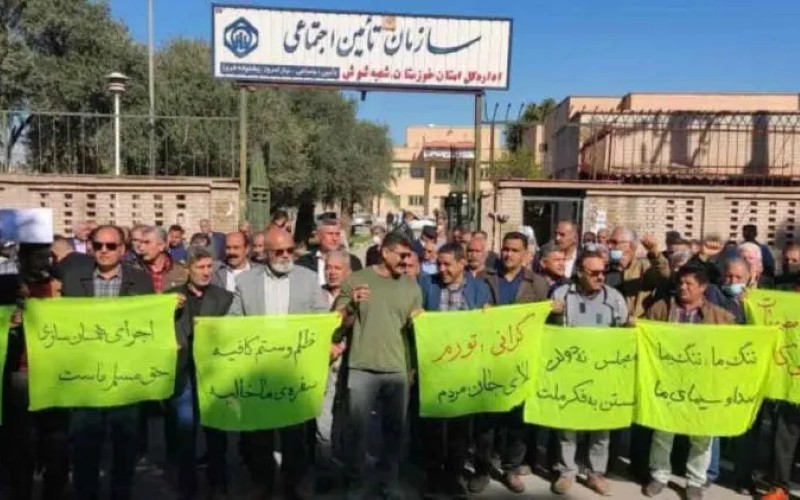

Widespread strikes and demonstrations expose the regime’s deepening crisis and growing public anger
Mounting Unrest Amid Economic and Political Deadlock
September 2025 was marked by an unprecedented wave of protests across Iran, as the regime’s deepening crisis and lack of solutions drove citizens from all walks of life into the streets. More than a year after Masoud Pezeshkian’s presidency began, it has become evident that his government, operating under Supreme Leader Ali Khamenei, cannot offer answers to the structural deadlock gripping the regime.
The 12-day war earlier in the month dealt a severe blow to Iran’s fragile economy, pushing the country deeper into recession. The reactivation of the United Nations snapback sanctions added further pressure, aggravating inflation, unemployment, and shortages. In this volatile environment, nationwide demonstrations grew in both scale and diversity.
267 Recorded Protests in September
At least 267 protest actions were recorded in September, spanning nearly every professional and social group in the country. The breakdown reveals the breadth of discontent:
- Workers: 120 protests
- Retirees: 68
- Students: 7
- Doctors: 5
- Truck drivers: 4
- Teachers: 3
- Farmers: 3
- Nurses: 3
- Bakers: 3
- Taxi drivers: 3
- Merchants: 2
- Engineers: 1
- Other groups: 45
Workers Lead the Uprising
Workers, especially in the oil, gas, and petrochemical sectors, were at the forefront of protests. From the offshore platforms of the Persian Gulf to refineries in South Pars and petrochemical plants in Ahvaz, they staged strikes over unpaid wages, insecure contracts, and cuts to benefits. Industrial workers in steel, aluminum, and manufacturing sectors joined them, underlining the regime’s inability to sustain its labor force.
Retirees and Pensioners Demand Survival
Retirees from the social security system, telecommunications, and the education sector protested inadequate pensions, unpaid allowances, and lack of medical coverage. Their demands reflected the harsh reality that pensions no longer cover even basic living expenses amid spiraling inflation.
Students Challenge Repressive Policies
University students in Tehran, Semnan, and Ahvaz rallied against unsafe conditions, rising dormitory and food costs, and arbitrary restrictions on housing and education. Their protests exposed growing dissatisfaction with repressive academic policies designed to limit student freedoms.
Medical Staff, Teachers, and Nurses Join In
Doctors and medical residents protested in Tehran, Shiraz, and Sari over unpaid wages and restrictions on professional certifications. Teachers and literacy instructors demanded job security and fair pay, while nurses in Tehran, Rafsanjan, and Tabriz demonstrated against delayed payments and unsafe working conditions.
Farmers, Bakers, and Transport Workers on the Streets
Farmers protested water shortages and fuel restrictions in multiple provinces, while bakers rallied in Ahvaz, Isfahan, and Mashhad over unpaid subsidies. Truck drivers and taxi drivers demonstrated in Tehran, Mashhad, Zahedan, and Chabahar against fuel rationing, unresolved transport problems, and import restrictions.
A Broad Spectrum of Social Protests
Protests also extended to merchants, engineers, patients facing medicine shortages, homeowners deceived in housing projects, and communities resisting environmental destruction. Residents in marginalized towns and villages organized demonstrations against discrimination, poverty, and government neglect.
Conclusion: A Regime on Shaky Ground
The September protests demonstrated that Iran’s social fabric is increasingly restless. From oil workers and retirees to students, doctors, and farmers, every segment of society is voicing dissatisfaction. With the economy collapsing under war damage and sanctions, and the regime responding with repression instead of solutions, the gap between state and society is widening to an unprecedented degree.
The persistence, diversity, and determination of September’s 267 protests reveal that Iranians are no longer willing to remain silent in the face of poverty, injustice, and authoritarian rule.