


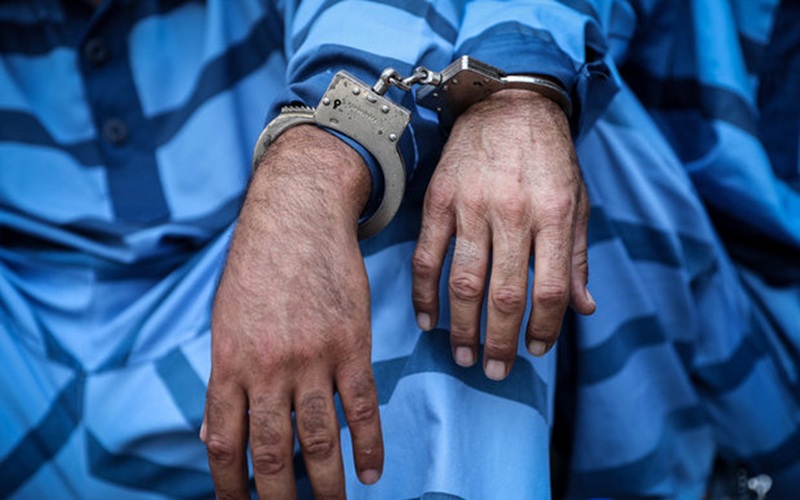

Three Men Mutilated in Urmia Prison Amid Growing International Outcry Over Iran’s Corporal Punishment Practices
On the night of July 30, 2025, the Iranian regime carried out the amputation of four fingers on the right hands of three prisoners—Hadi Rostami, Mehdi Sharafian, and Mehdi Shahivand—using a guillotine device at Urmia Central Prison. This act, witnessed by senior prison officials including prison head Peyman Khanzadeh and the deputy prosecutor, has provoked widespread condemnation from human rights groups and the international community, labeling it an act of torture and a blatant violation of international law.
A Chilling Execution of a Judicial Sentence
According to multiple reports, the amputations took place in the sentence implementation room inside the prison between 10 p.m. and midnight. Prior to the mutilation, the men were injected with anesthetic and were blindfolded, handcuffed, and shackled. After the amputations, they were briefly transferred by ambulance to a medical facility in Urmia, where their wounds were bandaged but not adequately treated. They were then returned to the prison’s intake ward without access to proper medical care or psychological support.
These three men had been arrested in August 2017 on charges of theft and sentenced in October 2019 by a juvenile criminal court to the amputation of four fingers. The sentence, imposed under Iran regime’s interpretation of Islamic criminal law, sparked urgent appeals from the United Nations and international rights groups to halt the inhumane punishment.
International Condemnation
Mai Sato, the UN Special Rapporteur on the situation of human rights in Iran, called the amputations “a glaring violation of fundamental human rights,” condemning the act as a state-sanctioned form of mutilation. “This punishment clearly amounts to torture, cruel, inhuman, and degrading treatment,” she stated. Sato emphasized that under Article 7 of the International Covenant on Civil and Political Rights (ICCPR)—to which Iran is a state party—such punishments are absolutely prohibited without exception. She revealed that she had formally corresponded with the Iranian government about the case, but the response was “grossly inadequate.”
طبق خبری که دریافت کردهام دیروز احکام قطع عضو آقایان هادی رستمی، مهدی شرفیان و مهدی شاهیوند اجرا شدهاند.
این اقدام مثلهسازی مورد حمایت حکومت از مصادیق نقض بارز حقوق اساسی بشر است. مجازاتهای بدنی از جمله قطع عضو، مصداق شکنجه، رفتار ظالمانه و غیرانسانی و تحقیرآمیز است. چنین… https://t.co/6QHHjJWxCQ
— Mai Sato (@drmaisato.bsky.social) (@drmaisato) July 31, 2025
Amnesty International also issued a forceful condemnation. Hussein Baoumi, Deputy Regional Director for the Middle East and North Africa, stated:
“The amputations carried out on Hadi Rostami, Mehdi Sharafian and Mehdi Shahivand are a stark reminder of Iran’s prolific use of corporal punishment and the inhumanity of a justice system that legalizes brutality. Amputation constitutes torture, which is a crime under international law, and is a flagrant and abhorrent assault on human dignity.”
Baoumi called on the Iranian regime to immediately halt all corporal punishments and to provide full reparations—including compensation, rehabilitation, and medical and psychological care—to the victims. He urged the international community to take firm action by investigating and prosecuting those responsible under the principle of universal jurisdiction.
Systemic Injustice and Torture
Amnesty International’s investigation revealed further disturbing details. The three men were convicted following unfair trials tainted by torture. They were denied access to legal representation, with Hadi Rostami reportedly never allowed a lawyer even during trial proceedings. Their convictions were based on forced confessions extracted under brutal conditions, including beatings, threats of rape, flogging, and suspension from their wrists and feet.
Such systemic abuses illustrate the entrenched nature of torture within Iran regime’s judiciary. As Amnesty stated, “Iran’s judicial system is a vital cog in the machinery of torture.” The group has documented numerous other cases of amputations in recent years, as well as sentences of flogging, blinding, and crucifixion-style executions that continue to raise global alarm.
A Pattern of Brutality
This is not an isolated case. In October 2024, two brothers, Shahab and Mehrdad Taymouri, were subjected to the same punishment—amputation of four fingers using a guillotine—also in Urmia Central Prison. Currently, two other prisoners—Kasra Karami and Morteza Esmaeilian—face imminent risk of the same fate. Karami is held in the same facility where Rostami, Sharafian, and Shahivand were mutilated; Esmaeilian is in Tabriz Prison.
The head of Iran regime’s judiciary, Gholamhossein Mohseni Eje’i, a sanctioned human rights violator, has publicly defended such sentences. On November 27, 2024, Eje’i boasted that under his leadership, Iran had implemented more amputations than in previous years, calling the punishment “a divine decree” that would continue “despite international pressure.”
Legal and Moral Outrage
Iran’s regime is one of the very few countries in the world that still implements corporal punishments such as amputation. Despite being a party to the ICCPR, the regime has refused to ratify the Convention Against Torture (CAT) and continues to reject its obligations under international human rights law.
The use of amputation as a punishment directly violates the fundamental principle of human dignity, enshrined in international treaties and the Universal Declaration of Human Rights. Legal experts, human rights defenders, and international institutions uniformly consider such sentences a form of torture that cannot be justified under any circumstances.
Urgent Calls to Action
The international community faces growing calls to hold Iranian regime officials accountable. Amnesty International and UN experts are urging governments worldwide to:
- Condemn Iran’s use of corporal punishment in the strongest terms;
- Invoke universal jurisdiction to prosecute officials involved in acts of torture;
- Pressure the regime diplomatically and economically to abolish these punishments;
- Support victims with rehabilitation, medical and legal aid, and protection from further harm.
The brutal finger amputations carried out in Urmia are a shocking manifestation of institutionalized cruelty under Iran’s judicial system. As long as such punishments are tolerated and go unpunished, the cycle of abuse will continue. The world must speak with one voice: torture is never justice. Accountability is not optional—it is a legal and moral imperative.