


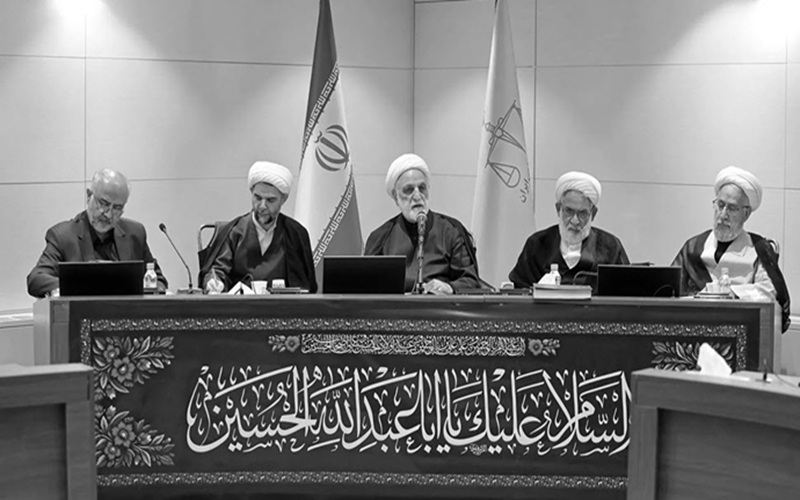

Tehran prosecutors threaten legal action against critics of executions, highlighting growing concern over expanding domestic opposition to capital punishment.
Tehran Prosecutor Escalates Crackdown on Critics
The Iranian regime has expanded its crackdown beyond political activists by threatening legal action against individuals who publicly oppose executions, a move that reflects mounting concern over the growing anti-death penalty movement inside the country.
According to the regime’s judiciary-affiliated Mizan News Agency, the Tehran Prosecutor’s Office announced criminal proceedings against individuals who condemned the recent executions of prisoners accused of involvement in the January 2026 nationwide protests and the subsequent conflict earlier this year.
The statement accused critics of showing direct or indirect support for what it described as “rioters” and warned that those expressing opposition to the executions would face decisive legal action without leniency.
Expanding Opposition Challenges the Regime’s Narrative
The announcement comes as public opposition to executions has become increasingly visible across Iran. Families of death-row prisoners, human rights activists, and civil society groups have repeatedly protested outside prisons, demanding that executions be halted.
At the same time, the “No to Execution Tuesdays” campaign has continued to expand inside the country’s prison system. What began in only a handful of prisons has now spread to dozens of detention facilities, with imprisoned participants maintaining weekly hunger strikes and coordinated protests despite the threat of retaliation.
The campaign has become one of the most persistent organized challenges to the regime’s execution policy.
Signs of Official Anxiety
The decision to prosecute critics suggests that authorities are no longer focusing solely on suppressing political dissent but are also attempting to silence public debate over the use of capital punishment itself.
Recent developments indicate that the regime has become increasingly sensitive to domestic reactions following several high-profile executions. Public criticism has intensified on social media, while human rights organizations have repeatedly warned that Iran continues to rank among the world’s leading executioners.
Rather than reducing criticism, the latest warning from Tehran appears intended to deter further expressions of solidarity with prisoners facing execution.
Repression Cannot Silence Growing Resistance
The regime has long relied on executions as one of its principal instruments of political intimidation. However, the continued expansion of organized opposition—including prison-based protests and public campaigns against capital punishment—suggests that this policy is facing growing resistance despite intensified repression.
By criminalizing even peaceful opposition to executions, the authorities have underscored the extent to which the issue has evolved from a human rights concern into a broader political challenge. Instead of containing public anger, the latest prosecutorial threats illustrate the regime’s increasing reliance on coercion at a time of deepening social discontent.