Iranian regime forces carried out a ground and air assault in Isfahan province, killing eleven impoverished Baluch fuel carriers from the same family, amid contradictions and fabrications in the official narrative.
A Shocking Massacre in Isfahan’s Desert
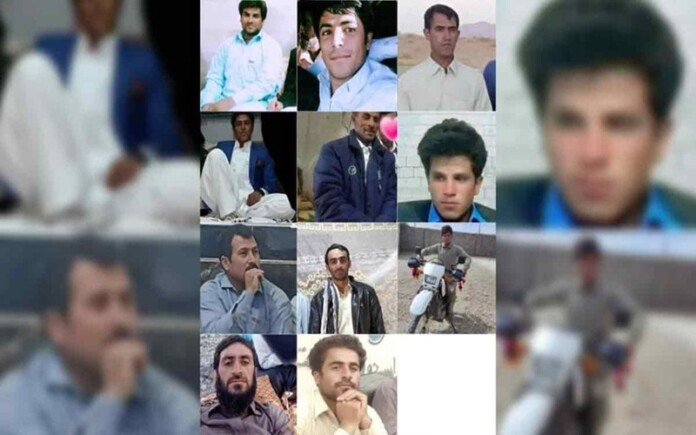
On July 25, 2025, a brutal military and security operation in the desert areas of Isfahan province left eleven members of a single Baluch family dead. The victims, all from the Qanbarzehi clan, were killed in a coordinated assault by regime forces from Isfahan, Yazd, and South Khorasan provinces.
Those killed included four brothers, four nephews, and three other close relatives. Far from being hardened criminals, they were impoverished workers and fuel carriers struggling to provide for their families. Their deaths, carried out with both ground forces and aerial strikes, have been described by activists as one of the most harrowing crimes against the Baloch community in recent years.
Details of the Victims and Funeral
The slain men, all originally from Zahedan, were denied the dignity of a timely burial. Authorities withheld their bodies for 18 days before releasing them to families under suspicious circumstances. The funeral, held on August 13 in Shandak village near Zahedan, drew widespread participation from the local community. Heart-wrenching images showed their graves prepared side by side in a mass burial.
Reports from families indicate severe mutilation of the bodies. Some were burned, others bore signs of close-range gunfire, and at least one, Javad Qanbarzehi, was shot execution-style from behind the head. These findings suggest the possibility of extrajudicial killings rather than combat deaths.
Official Narrative Under Scrutiny
Regime media framed the assault as a joint operation against “armed bandits and drug traffickers,” claiming the seizure of four tons of narcotics and heavy weapons including an RPG-7 and machine guns.
However, glaring contradictions undermine this account:
- No clear evidence or verifiable footage of the alleged narcotics or weapons has been presented.
- If such stockpiles existed, authorities would likely have paraded them as a propaganda victory.
- Capturing suspects alive would have provided intelligence on trafficking routes—yet all were killed.
- One vehicle reportedly destroyed in an airstrike still contained an undamaged machine gun, raising suspicion of staged evidence.
These inconsistencies fuel suspicions that the regime fabricated the story to cover up what appears to be a deliberate massacre.
Non-Official Accounts and Evidence of Staging
Independent sources challenge the regime’s claims. Witness accounts and forensic evidence suggest that the victims fell into an ambush, with several shot at close range. Reports also indicate that the first vehicle was destroyed by aerial bombardment—possibly from a drone or helicopter—while survivors of a second vehicle may have been detained and executed.
Families also described the psychological toll of the 18-day delay in releasing the bodies. One grieving mother reportedly suffered a fatal stroke after repeated visits to the morgue without being allowed to bury her son.
Broader Context of Repression
For years, impoverished Baluch fuel carriers—known as soukhtbaran—have faced deadly crackdowns by the regime under the pretext of countering smuggling. In reality, fuel carrying is often the only livelihood available in the poverty-stricken Baluchestan region. Instead of addressing unemployment and deprivation, the regime responds with violence and collective punishment.
Human rights activists emphasize that the victims were ordinary workers, not drug traffickers or armed insurgents. The tragedy underscores how systemic discrimination and militarized policies target ethnic minorities, particularly the Baloch.
Growing Outrage and Calls for Accountability
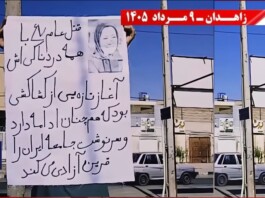
The funeral of the eleven victims became a rallying point for grief and anger across Zahedan and beyond. Human rights defenders and Baluch activists condemned the killings, demanding an independent and transparent investigation into the massacre.
The contradictions in the regime’s account, the evidence of staging, and the deliberate delay in returning the bodies highlight a broader pattern: Tehran’s use of fabricated narratives to justify extrajudicial killings.
The massacre of the Qanbarzehi family stands as a stark reminder of the regime’s violent policies toward marginalized communities. International human rights organizations are urged to investigate and hold the perpetrators accountable, as this tragedy epitomizes the systemic abuse of Baloch citizens under Iran’s clerical regime.