


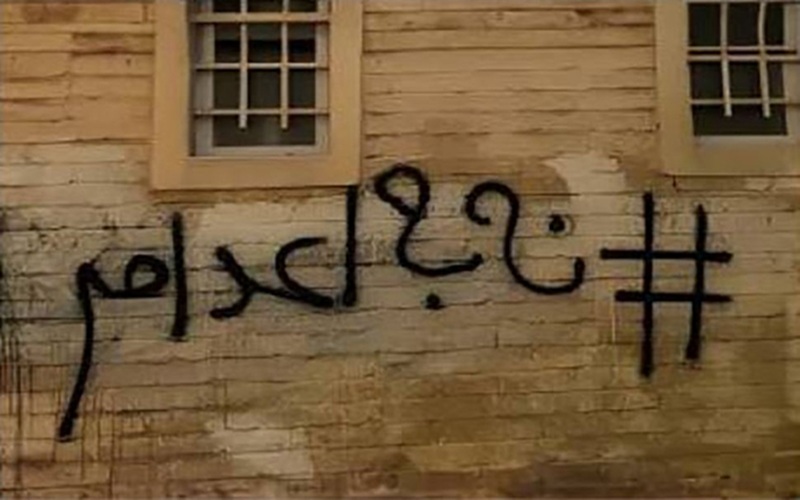

Public protests, prisoner resistance, and expanding social solidarity are challenging the regime’s reliance on executions as a tool of intimidation, forcing rare concessions and strengthening the nationwide “No to Executions” campaign.
Three Developments That Challenged the Regime’s Execution Strategy
As the Iranian regime has intensified executions of political prisoners and protesters under the cover of regional conflict, three significant developments over the past two days have highlighted growing resistance to its policy of state executions.
Taken together, these events suggest that public opposition to capital punishment is becoming increasingly organized and capable of challenging one of the regime’s principal instruments of repression.
The first came in the northern city of Rasht, where demonstrators gathered in solidarity with striking prisoners and chanted in unison:
“Until the death sentences are abolished—we will stand until the end.”
In Isfahan, another act of defiance unfolded when residents confronted an ongoing public execution at Ali Khani Square. Witnesses reportedly denounced the executioners by chanting “Shameless! Shameless!” as authorities attempted to carry out the hanging in public.
The third development occurred inside Qezel Hesar Prison in Karaj, where prisoners conducting a two-week hunger strike succeeded in forcing the authorities to suspend the imminent executions of six inmates. The prisoners, who had already been transferred to solitary confinement in preparation for execution, were reportedly returned to the general ward after the authorities backed down.
Public Defiance Weakens the Politics of Fear
For decades, the regime has relied on executions—particularly public executions—as a means of spreading fear and discouraging dissent. Instead of intimidating society, however, recent events suggest that this strategy is increasingly producing open resistance.
The public response in Isfahan demonstrated that executions no longer guarantee silence. Rather than watching in fear, citizens openly challenged those carrying out the punishment, signaling a growing willingness to confront the regime’s methods of intimidation.
Similarly, the solidarity shown in Rasht reflected the expanding connection between imprisoned dissidents and wider society. What was once largely confined to prison walls is increasingly becoming a public cause embraced by communities across the country.
“No to Executions Tuesdays” Continues to Expand
The momentum also reflects the steady growth of the “No to Executions Tuesdays” campaign, which has continued uninterrupted for nearly three years despite escalating repression.
What began as a prison-based protest has evolved into a broader social movement, drawing support from families of prisoners, civil society activists, and growing segments of the Iranian public.
The campaign’s message is now spreading rapidly across social media, where the hashtag #NoToExecutions continues to gain visibility. As awareness expands, opposition to executions is increasingly being framed not only as a human rights issue but also as a broader rejection of state repression.
A Rare Retreat Demonstrates the Impact of Collective Resistance
The developments at Qezel Hesar Prison carry particular significance because they demonstrate that sustained collective action can produce tangible results.
The authorities’ decision to return six prisoners from solitary confinement to the general prison population represents a rare instance in which organized resistance appears to have delayed planned executions.
While such reversals remain exceptional, they reinforce the belief among campaign supporters that coordinated pressure—both inside prisons and throughout society—can limit the regime’s ability to use executions without challenge.
The events also illustrate an important dynamic: when the voices of imprisoned protesters reach the public through demonstrations, families, and online activism, the demand to halt executions becomes a national concern rather than an isolated prison issue.
Executions Reflect a Regime Under Pressure
The current escalation in executions comes as the Iranian regime faces mounting domestic discontent alongside increasing international scrutiny over its human rights record.
Critics argue that the authorities have sought to compensate for growing political vulnerability by intensifying repression, using executions to discourage further protests while regional tensions divert public attention.
Yet recent events suggest that this strategy is becoming less effective. Each public protest, each act of solidarity, and each successful campaign against an execution further erodes the climate of fear upon which the regime has long depended.
Building a Broader Front Against Executions
Supporters of the anti-execution campaign argue that its future strength lies in expanding cooperation among prisoners’ families, students, workers, women, youth, and other sectors of society.
The recent protests demonstrate that opposition to executions is evolving into a broader movement centered on justice, human rights, and accountability. As this solidarity grows, the campaign increasingly represents more than resistance to capital punishment alone—it reflects wider demands for fundamental political change.
The experience of recent days has shown that organized resistance and sustained public support can compel even an authoritarian system to retreat. For many Iranians, these developments reinforce the belief that breaking the cycle of executions requires not only defending individual prisoners but also challenging the political system that continues to rely on state violence as a means of survival.