Outrage and Grief Over Europe’s Silence as Iranian Regime Executes Two PMOI Members
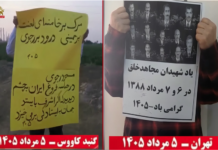
In yet another horrifying display of brutality, the Iranian regime executed two political prisoners—Behrooz Ehsani, 69, and Mehdi Hassani, 48—at dawn on Sunday, July 27 (5 Mordad), in what can only be described as a savage and calculated act of repression.
These executions, carried out under the orders of the regime’s judiciary, were announced without shame. Both men were members of the People’s Mojahedin Organization of Iran (PMOI/MEK)—the principal opposition group long targeted by the regime’s apparatus of terror. Their only “crime” was their unwavering commitment to a free Iran.
Behrooz Ehsani was arrested in Tehran on December 6, 2022, and subjected to torture in the notorious Evin Prison. Mehdi Hassani was detained on September 11, 2022, in Zanjan and likewise transferred to Evin’s Ward 209, reserved for political prisoners, where he endured weeks of physical and psychological torment.
Their death sentences were issued by Iman Afshari, the infamous head of Branch 26 of Tehran’s so-called Revolutionary Court—a kangaroo court that has turned injustice into a system. They were charged with absurd and politically motivated accusations: “baghi” (armed rebellion), “moharebeh” (waging war against God), “corruption on earth,” membership in the MEK, collecting classified information, and conspiring against national security.
These are not legal charges—they are ideological weapons used to annihilate dissent.
Before his execution, Behrooz Ehsani delivered a powerful message to the people of Iran:
“This regime of executions can do nothing else. I will not bargain over my life. I am ready to offer my insignificant life for the freedom of the Iranian people.”
His final words are a testament to the unwavering resolve of a people crushed under the boot of dictatorship—and to the horrifying cost of that resistance.
Despite repeated warnings and urgent appeals from international human rights organizations—including UN Special Rapporteurs and Amnesty International—to halt these executions, the Iranian regime went ahead. The Resistance had long urged the United Nations, the European Union, and democratic governments to take immediate and tangible action to prevent the execution of political prisoners. They failed. Again.
And that failure has a price—paid in blood.
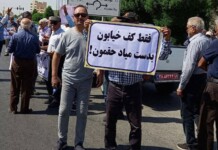
These executions are not isolated acts of cruelty. They are part of a broader campaign of repression designed to instill terror, especially in the aftermath of mass protests and rising dissent within the country. The regime feels threatened. And its response, as always, is death.
But what makes this moment even more unbearable is the deafening silence of the West. Governments that claim to stand for human rights continue to engage with this blood-soaked regime—negotiating nuclear deals, sending envoys, opening channels—while political prisoners hang at dawn.
This is not diplomacy. It is appeasement. And appeasement of tyrants is complicity in their crimes.
The executions of Behrooz Ehsani and Mehdi Hassani are not just tragedies. They are crimes against humanity, committed in full view of the world. Their blood now stains the hands not only of the regime that killed them but of every government that chose silence over solidarity, interest over justice.
History will not forget. Nor will the people of Iran.