


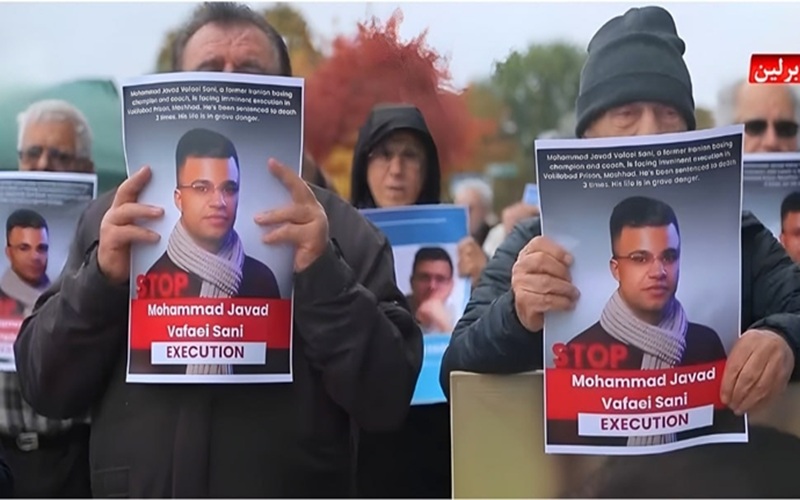

How the death penalty sustains a violent regime — and why a nationwide “No to Executions” movement can end it
For decades the Islamic Republic has relied on the death penalty not only as a tool of punishment but as a political instrument: to terrorize society, to silence dissent, to legitimize rule by fear, and to channel wealth and power into a ruling elite. Over the past two years that strategy has intensified, producing a staggering rise in executions and a renewed urgency for mass resistance. A broad, sustained movement anchored in the slogan “No to Executions” can expose and dismantle the machinery that keeps the regime alive.
Executions as a pillar of rule
Executions in Iran are not isolated acts of criminal justice. They function as the regime’s blood economy — a method of political and social control that supplies oxygen to ailing institutions. When the judiciary becomes an arm of the supreme leadership, the gallows transform into a policy instrument: deterrence for the population, reward for clientele, and a spectacle that normalizes state violence. The effect is cumulative: each execution deepens fear, depletes civic life, and signals to the international market that the state remains willing to crush internal opposition to stay in power.
This is not abstract rhetoric. Independent monitors and rights organizations have documented a sharp increase in executions in recent years, with reports showing dramatic rises across 2024 and 2025. These figures underline that executions are a deliberate, systemic policy rather than occasional judicial excess.
The political economy of death
Beyond repression, executions are woven into a political economy: they help preserve patronage networks and protect assets accumulated under the shadow of force. When death sentences and public terror guarantee stability for a narrow elite, investment and loyalty flow toward those who control that apparatus. Blocking that pipeline — cutting off the financial and reputational returns of mass executions — would weaken one of the regime’s central props.
The moral and social cost
There is a human ledger that the state cannot erase: families bereaved, communities traumatized, the shrinking space for dissent and creative life. Public ritual executions and secret hangings both degrade the moral fabric of society. They normalize state-sanctioned killing as an everyday news item and replace the possibility of political negotiation with a permanent threat. The repetition of the word “execution” across headlines and mourning posts has itself become a kind of social violence: the constant strike of a bell announcing loss.
Why a “No to Executions” movement can win
History shows that regimes relying on terror are brittle when that terror becomes too visible, too costly, and too contested. The “No to Executions” campaign — which in Persian has previously trended globally under hashtags such as #اعدام_نکنید — demonstrates how collective outrage can cross borders, reach diasporas, and force international scrutiny. Social-media mobilization, mass protests, diasporic advocacy, and targeted lobbying of foreign governments and international bodies can convert moral outrage into political pressure.
A mass movement built around this clear, focused demand — a nationwide rejection of executions and a call for an immediate moratorium — achieves three things at once: it delegitimizes the practice domestically, it complicates the regime’s international standing, and it offers a concrete, achievable rallying point for broad coalitions (women’s groups, students, labor networks, lawyers, families of the executed, and the diaspora).
Tactics and framing
- Nationwide solidarity days: Turn localized protests and vigils into national moments (for example, “No to Execution Tuesdays”) so that every act of mourning becomes also a political statement.
- Amplify family voices: Publish testimonies from families of those executed; human stories cut through propaganda and mobilize external actors.
- Targeted international advocacy: Push for UN attention, sanctions on individuals who mastermind execution campaigns, and travel/asset restrictions on judiciary officials who oversee death sentences. Recent UN and rights-group reporting provides leverage for these demands.
- Digital campaigns: Reintroduce and sustain hashtags and online actions that force global platforms and foreign media to cover each execution and the pattern behind them.
- Expose the political economy: Publish investigations showing how executions protect elite assets and how cutting that protection undercuts the regime’s rentier networks.
A final argument: delegitimization by mass refusal
When the people of Iran — inside the country and in the diaspora — refuse to accept executions as inevitable, they strip the practice of its political utility. Mass refusal makes the gallows politically toxic: it raises the reputational and financial costs for those who rely on killing to stay in power. If a movement of millions declares, loudly and persistently, “No to executions,” that declaration will reverberate through the courts, the markets, and the corridors of power.
Conclusion & call to action
The call is simple and non-negotiable: stop the executions. Build and broaden the “No to Executions” movement. Elevate the voices of victims’ families. Take the demand to international institutions. The moral case is undeniable; the strategic case is strong. A focused, sustained campaign can break the regime’s reliance on executions and open space for a different political future for Iran.