Factional infighting in parliament reflects the regime’s internal decay as society moves further ahead, leaving both conservatives and reformists without legitimacy.
As Iran struggles with the aftermath of its twelve-day war and escalating social and economic pressures, the clerical regime finds itself in an increasingly fragile position. Even insiders within the system, through their media outlets, are sending urgent signals to the Supreme Leader that “something must be done.” Yet, the reality is that Ali Khamenei’s words no longer carry the weight they once did, even among his own loyalists.
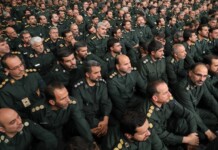
A glance at the escalating disputes inside parliament and between lawmakers and the government reveals the weakening authority of the Supreme Leader. Despite repeated warnings to regime factions not to air their disagreements in public, MPs who are sworn followers of Khamenei openly ignore his advice. This dynamic has laid bare the erosion of his influence within the very structure of power.
What appears as mere factional disputes is in fact a reflection of a deeper societal shift. The intensification of infighting within the regime demonstrates how the growing distance between Iranian society and the ruling establishment is reverberating inside the halls of power. Fear of collapse has pushed regime factions into increasingly hostile confrontations, worsening the political deadlock.
In the post-war environment, the clerical establishment struggles to maintain balance by leaning on its rival factions. Yet even within, only voices of doubt can be heard. The core reason lies in the complete disconnect between the people and the ruling system. As the reformist daily Shargh admitted on September 18, 2025, citing prominent theorist Mohammadreza Tajik:
“Society is ahead of political currents.”
The loss of social capital is the most devastating blow to the regime. No amount of propaganda can replace the absence of youth support, traditionally the backbone of any government or political movement. According to Tajik:
“The reformist movement has completely lost its past social capital. It does not understand the demands of the younger generation, and society today is several steps ahead of political groups.”
When social capital vanishes, the regime “sows the wind and reaps the whirlwind.” Calls for a referendum, once floated as a potential safety valve, are now viewed as outdated. Even reformist thinkers concede that Iran’s society has moved beyond such proposals:
“Those calling for a referendum feel that even the survival of the current order depends on a radical reconstruction. We cannot solve the crisis with mild or conservative reforms. We know the people are moving steps ahead of the reformist movement.”
Iran’s society is increasingly radical in its rejection of the entire system. Reformist theorists who once sought to preserve the regime now find themselves admitting that the youth see no representative in any political current:
“The demands are far more radical than what domestic factions put forward. Our young generation does not see itself represented by any current.”
The clerical regime, deprived of its last remaining resource—social legitimacy—faces accelerating decline. Its internal disputes, once carefully concealed, now reflect a system losing both cohesion and purpose in the face of an advancing society.