



Global media outlets have reported that a severe cold front is expected to envelop much of the Northern Hemisphere, impacting countries across Asia and Europe in the coming days. This weather phenomenon is likely to exacerbate existing energy challenges, particularly in Iran, where a shortage of fuel and electricity could lead to a serious crisis for both citizens and businesses.
Iran’s Energy Crisis Amid Ample Oil Reserves
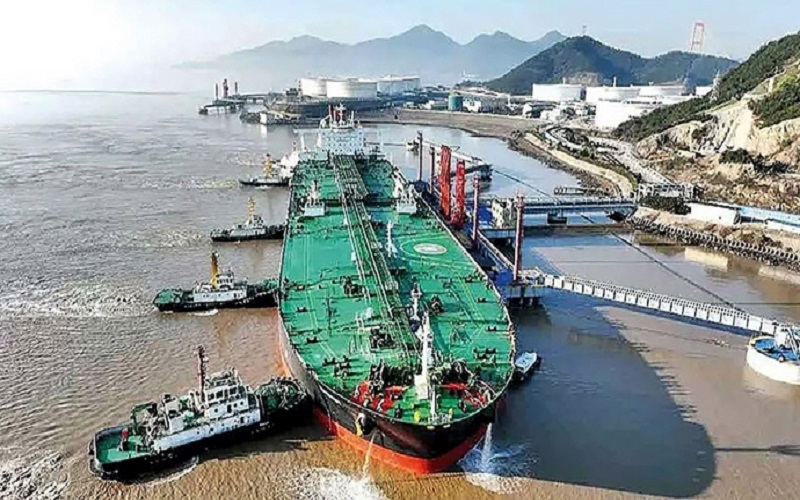
Iran faces a paradoxical situation: while struggling with internal energy shortages, the regime has stored approximately 25 million barrels of oil in Shandong Port, China. Recent reports indicate that with China’s agreement, Iran has withdrawn several million barrels from these reserves to sell in global smuggling markets and convert them into cash.
State-run daily Iran Didban reported on January 8:
“Shandong Port Group in China has banned the entry of US-sanctioned oil tankers to the ports of this province in eastern China. This province is the focal point of the activity of independent Chinese refineries, which are the largest importers of oil from countries under US sanctions. Last year, this province imported about 1,740,000 barrels of oil daily from Iran, Venezuela, and Russia, which accounted for approximately 17% of China’s oil imports.”
According to sources familiar with the matter, Iran removed nearly 3 million barrels of oil from its Chinese storage to fund activities, including supporting allied militia groups in the Middle East. These reserves had been stored in 2018, anticipating sanctions under the Trump administration. In late 2023, after discussions with Chinese officials, Iran received permission to withdraw and ship part of these reserves.
The Regime’s Financial Pressures
Iran’s desperation to auction its oil stems from two key factors:
- The weakening of its regional proxies, especially after the fall of the Assad regime in Syria.
- The regime’s domestic financial crisis, marked by chronic high inflation and economic instability.
These additional oil revenues come at a critical time for the regime. They are being funneled to bolster groups like Hamas and Hezbollah, which have faced setbacks due to ongoing conflicts. Moreover, the collapse of the Assad regime severed a crucial land route for supplying Hezbollah with funds and weapons. Internally, the regime’s inability to address soaring inflation and stagnating growth has deepened public discontent.
The Role of Chinese Companies
Iran’s oil reserves in China appear to be managed by private companies, but these entities are increasingly wary of secondary sanctions imposed by the United States. As a result, these companies are now hesitant to facilitate the regime’s access to revenues. Iran’s oil is stored in ports such as Dalian and Zhoushan. Recent reports confirm that two tankers, Madestar and CH Billion, have transported significant quantities of oil from these ports.
A Critical Question
Despite having surplus crude oil reserves, why does the regime refuse to use this resource to alleviate domestic energy shortages? Why not prioritize heating and electricity for its citizens during this crisis?
Supreme Leader Ali Khamenei’s reluctance to ease public suffering raises questions about the regime’s strategic calculus. Providing relief could curb growing public fury and stabilize the situation temporarily. Instead, the regime appears to follow a strategy of deliberate neglect, exacerbating hardships for ordinary Iranians.
The “Wolves” Theory
In 2019, the state-run website Diplomacy Irani offered insight into this mindset. It described a strategy where regimes “throw their people to the wolves” of economic and social problems, breaking their spirits without direct oppression. This approach aims to suppress dissent by creating overwhelming despair. However, the site also warned that this strategy could backfire, leading to societal anger and unrest.
Lessons from 2022
The protests of 2022 illustrated the risks of Khamenei’s strategy. Public frustration over economic hardships and political repression culminated in widespread uprisings. If the current trajectory continues, this winter’s energy crisis could ignite even greater unrest, potentially destabilizing the regime further.
Conclusion
Iran’s refusal to address domestic energy shortages while prioritizing external ventures reflects a regime increasingly out of touch with its people’s needs. As temperatures drop and discontent rises, the government’s strategy of neglect risks triggering a new wave of protests. Whether the regime adjusts course or doubles down on its current policies remains to be seen, but history suggests that prolonged public suffering often leads to unpredictable consequences.