


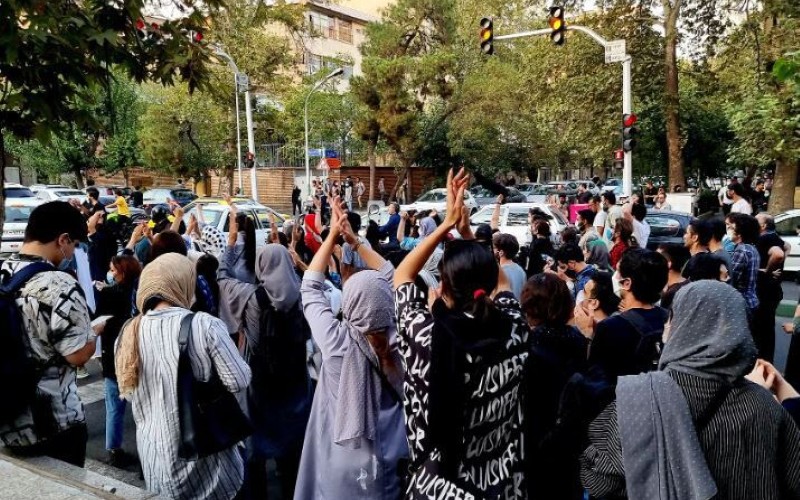

Insider admissions reveal a society that has withdrawn its consent, a ruling system stripped of authority, and a crisis no longer solvable through reform or repression.
Iran’s regime is now encircled—internally and externally—by multi-layered, structural, and increasingly irreversible crises. While such descriptions are often used loosely, recent statements from figures long considered part of the regime’s “internal critics” offer unusually stark clarity. These assessments do not describe a temporary setback or a policy failure, but rather a condition approaching systemic collapse.
On December 21, 2025, the state-run outlet Entekhab published remarks by Alireza Alavitabar, a political theorist long associated with the so-called regime reformists, alongside comments by Azar Mansouri, head of the regime’s Reformist Front. Their statements are notable not for proposing solutions, but for openly acknowledging the depth of the crisis—and the absence of viable exits.
An Angry Society Beyond Reform
Alavitabar, years after Iran’s protest generations had already reached this conclusion, effectively conceded the end of the reform project within the system. He described Iranian society as deeply unstable and combustible:
“With a majority that is intensely angry, with a society on the brink of crisis, it is very difficult to advance any reform project. This society is deeply angry. The new generation is extremely angry.”
This is not merely a comment on public dissatisfaction. It is an admission that the social base required for controlled, top-down reform no longer exists. The anger is generational, widespread, and no longer channelable through institutional politics.
More strikingly, Alavitabar openly questioned the regime’s legitimacy:
“We have a ruling minority that fundamentally is not the product of elections and comes to power through other processes.”
This acknowledgment dismantles the core narrative the system has relied on for decades: that its authority is derived from popular consent, however limited or managed.
From Governance to Survival
The language used by Alavitabar goes further still. Governance is no longer presented as a matter of policy or reform, but of survival:
“We are now on the brink of catastrophe. We are constantly praying that the government understands how critical the situation is, that the core of power understands this.”
When a political system’s continuity is framed in terms of prayer rather than policy, it signals the exhaustion of institutional capacity. Appeals to the “hard core of power” reveal not authority, but dependence—and fear.
A Historic Rupture Between Society and Power
Azar Mansouri’s remarks reinforce this picture from another angle. She described what she called the widest gap ever between society and the ruling structure:
“Iranian society has lost trust in the idea that the government can move beyond this bad form of governance.”
She emphasized that society has moved beyond the regime’s ideological framework:
“Our society has passed beyond duty-based obedience. Society is now violent. It is waiting for something to happen—something that ends this situation and creates a new one. This is extremely dangerous.”
What is described here is not reformist pressure within the system, but societal disengagement from the system as a whole. A society that is “waiting for an event” is no longer invested in gradual change; it anticipates rupture.
Collapse of Ideological Authority
Perhaps the most consequential admission concerns ideology itself. Mansouri acknowledged that nearly 70 percent of Iranian society has become secular, calling the loss of political legitimacy the most dangerous threat a ruling system can face. She further admitted that the regime’s internal authority has eroded, while its regional influence has been sharply curtailed.
This amounts to an implicit verdict on four decades of ideological governance—one that has delivered repression, economic plunder, regional militarization, and deep social stratification, while failing to sustain legitimacy at home.
Not a Factional Crisis, but a Structural One
These statements are often framed as internal debates within the regime. That framing is misleading. What emerges from these admissions is not a rivalry between conservatives and reformists, but a shared recognition that the structure itself is failing.
When even long-standing insiders describe society as angry, secularized, detached, and poised for rupture, they are not diagnosing a fixable political impasse. They are documenting the terminal phase of a system that can neither reform itself nor return to its past.
Beyond the Point of Return
In such a context, warnings, prayers, and appeals to the “hard core of power” reflect exhaustion, not strategy. A system whose survival depends on recognizing how dire its condition has become has already lost the tools required to govern.
This is no longer a theoretical debate about change. It is the lived reality of a society that has withdrawn its consent and a ruling order that has lost both legitimacy and capacity. What remains is not a question of whether a transition will occur, but how—and at what cost.