


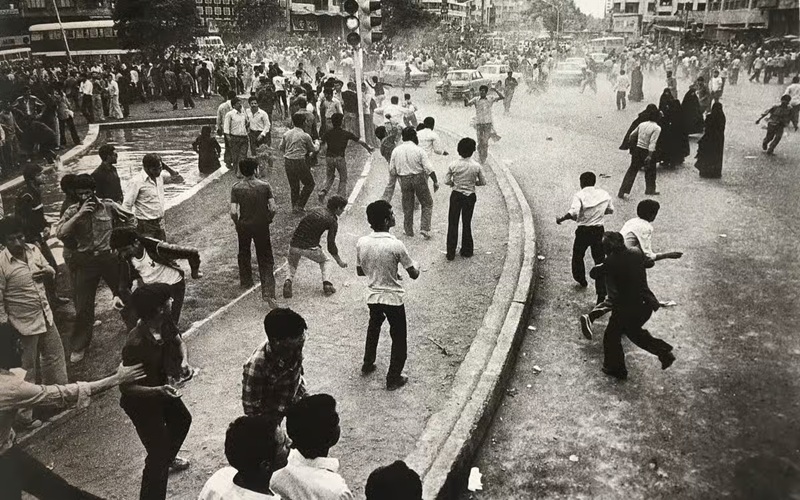

Forty-five years later, the lessons of June 20, 1981, remain central to understanding how Iran’s democratic aspirations were crushed and why the struggle for freedom continues today.
When historians search for the moment Iran’s post-revolutionary future was decided, they often return to a single date: June 20, 1981.
Many events have shaped modern Iran, but few carry the historical weight of that day. It was the moment when the fundamental question facing the country after the 1979 revolution received a definitive answer: Would Iran become a pluralistic republic based on political freedom, or an absolute theocracy centered on the rule of one man?
The answer delivered by Ayatollah Ruhollah Khomeini and the emerging Islamic Republic was unmistakable.
The question was freedom. The response was repression.
A Different Future Was Possible
History is full of moments when nations stand at a crossroads. Iran was no exception.
The 1979 revolution mobilized millions of Iranians from diverse political, social, and religious backgrounds. Many believed they were fighting for freedom, democracy, social justice, and an end to dictatorship.
But the years immediately following the revolution revealed a growing conflict between those aspirations and Khomeini’s doctrine of Velayat-e Faqih—the absolute rule of the Supreme Religious Jurist.
The tragedy of modern Iran is that another path was possible.
Had political pluralism been allowed to flourish, had independent parties been permitted to operate freely, had freedom of expression and assembly been respected, and had differing interpretations of religion and politics been tolerated, Iran’s history could have taken a dramatically different course.
Instead, power became increasingly concentrated in the hands of a ruling clerical establishment determined to eliminate political alternatives.
The Road to June 20
By 1981, opposition groups faced mounting restrictions. Newspapers were shut down. Public meetings were prohibited. Political organizations were harassed. Dissenting voices were increasingly portrayed as enemies of the state.
Among the most prominent targets was the People’s Mojahedin Organization of Iran (PMOI/MEK), which had supported the overthrow of the Shah but opposed the establishment of a new religious dictatorship.
The confrontation between the regime and its opponents was not merely a political dispute over power. It reflected a deeper disagreement about the nature of the state itself.
Could citizens freely choose their political future?
Could opposition movements operate legally?
Could freedom of thought, speech, and organization survive under the new system?
These questions became impossible to avoid.
The Choice Facing the Opposition
Critics of the resistance movement have often asked whether confrontation could have been avoided.
In theory, perhaps it could have.
Opposition groups could have accepted increasing restrictions. They could have abandoned public rallies. They could have dissolved their organizational structures. They could have remained silent in exchange for limited survival within the system.
But such concessions would have required accepting the principle that political freedom was subordinate to the authority of the Supreme Leader.
For many opponents of the regime, this was not a compromise but a surrender of the very goals for which the revolution had been fought.
As opposition leader Massoud Rajavi warned in a speech one year before June 20, 1981, a society without freedom risks losing its very humanity.
Whether one agrees with his political vision or not, the underlying question remains relevant today: What happens when citizens are denied the right to choose their future?
June 20, 1981: The Point of No Return
On June 20, 1981, large demonstrations erupted as political tensions reached their breaking point.
The regime responded with force.
What followed was a period marked by mass arrests, executions, political imprisonment, and the systematic elimination of organized opposition. The repression that began in those years would eventually culminate in some of the darkest chapters of the Islamic Republic’s history, including the mass executions of political prisoners in the 1980s.
For many Iranians, June 20 therefore represents far more than a protest. It symbolizes the moment when the regime made its choice against political freedom and in favor of absolute clerical rule.
The Legacy Forty-Five Years Later
The significance of June 20 is not confined to the past.
The debates that defined 1981 continue to shape Iran today. The country’s recurring waves of protests—from the student demonstrations of 1999 to the nationwide uprisings of recent years—reflect the same unresolved demand for political participation, accountability, and freedom.
Forty-five years later, Iranians are still confronting the consequences of the decision made by the ruling establishment in 1981.
The question that stood before the nation then remains before it now:
Should political authority belong to the people, or should it remain concentrated in the hands of an unelected religious elite?
June 20, 1981, was the day that question was answered by force.
The struggle of millions of Iranians since then has been an effort to answer it differently.